Easy-Going and Straightforward Alsatian Riesling

Today’s Story: Maison Trimbach

Maison Trimbach is one of the most notable winemakers in Alsace, established in 1626 by Jean Trimbach. Today Trimbach is under the guidance of Hubert Trimbach and his nephews Jean and Pierre, rounding out 12 generations of family ownership and shared knowledge. Pierre’s daughter Anne, the oldest of the 13th generation, also now works in the family business. Though Trimbach’s world recognition greatly expanded in 1898 when Frédéric Emile Trimbach earned the highest marks at the International Wine Fair in Brussels, Trimbach is largely famous for the legendary Clos Sainte Hune vineyard. Located in the Rosacker Grand Cru vineyard, Clos Ste Hune has belonged to the Trimbach family for over two centuries and produces some of the most exquisite Alsatian Riesling in existence.

The Trimbach estate consists of 40 hectares (about 100 acres) encompassing 50 parcels across six villages that include Bergheim, Ribeauvillé, and Hunawihr. Trimbach also operates as a négociant business to produce additional non-estate wines. All of Trimbach’s winegrowing practices are sustainable and they try to preserve the natural environment of the vineyards. Trimbach practices close pruning and soil tilling while encouraging moderate yields and rigorous fruit selection come harvest which is accomplished entirely by hand. When the grapes are gently crushed at the winery, juices flow via gravity and Pierre vinifies and matures the wines adhering to centuries of tradition with both finesse and focus on the terroir. After being bottled each spring, the wines are released by maturity with some spending 5 to 7 years in the cellars to achieve balance before release.

I previously wrote about the 2016 Gewurztraminer and 2014 Clos Ste Hune from Trimbach.

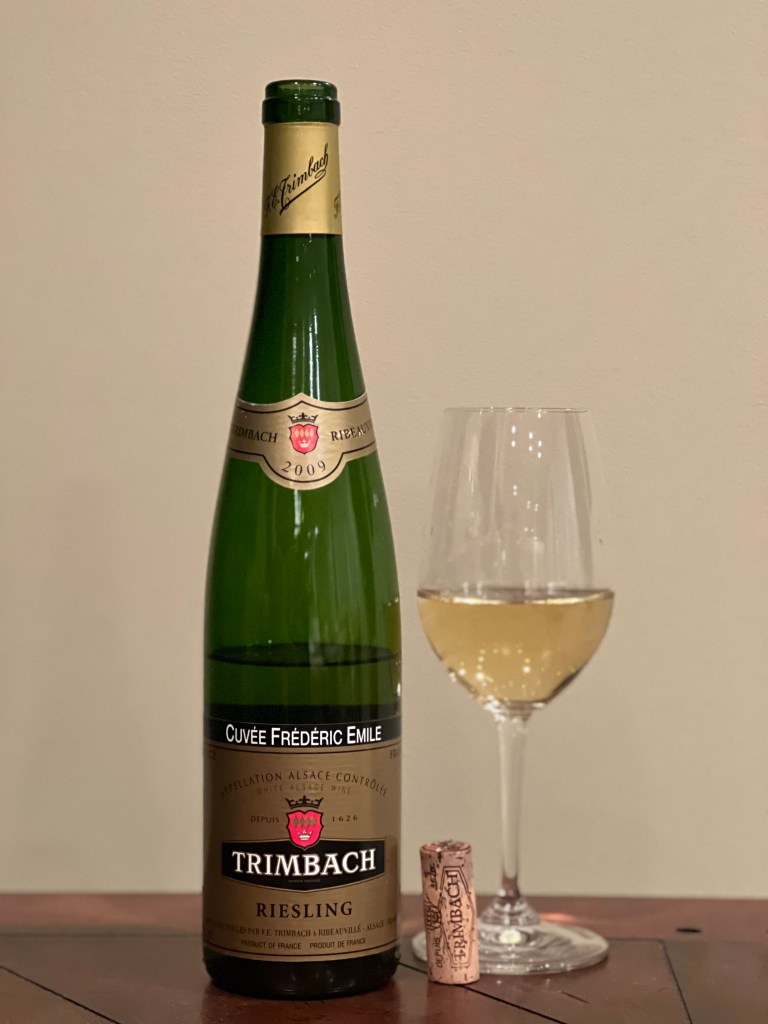
Today’s Wine: 2009 Riesling Cuvée Frédéric Emile

100% Riesling; 13.5% ABV

The 2009 Riesling Cuvée Frédéric Emile is pale gold in color. The aromas are of medium (+) intensity, but the nose is rather straightforward offering up notes of peach, yellow apple, apricot, lime zest, petrol, slate, and mineral. Meanwhile the flavors are also of medium (+) intensity and the palate showcases classic notes of peach, ripe pear, apricot, lime, white florals, limestone, and petrol. This dry Riesling is medium- to full-bodied with medium (+) acidity, medium alcohol, and a long finish. This is a very good and straightforward wine, though I think there are stronger vintages of the Cuvée Frédéric Emile.

Price: $65. This is in a very competitive price-point to where I do think there are better values out there when it comes to dry Riesling. Whether it be bottlings a fraction of the cost or Grand Cru options around this price, there are a number of options. Though that’s not to be said without admitting this is a very high-quality bottling from a world-renowned producer.
Entry-Level Riesling From a Legendary Rheinhessen Producer

Today’s Story: Weingut Keller

Weingut Keller is a highly-regarded German winery established in 1789 by Johann Leonhard Keller. Located in the Flörsheim-Dalsheim municipality of the Rheinhessen, Keller commenced with property in the remarkable Hubacker Vineyard that is now classified Erste Lage by the VDP. Though the Keller family business has quite a history, its current leader Klaus-Peter Keller catapulted the wines to new heights after taking over in 2001. Klaus-Peter studied oenology and viticulture in Geisenheim, though he cut his teeth working with wine in South Africa and at the incredible estates of Domaines Hubert Lignier and Armand Rousseau in Burgundy. Klaus-Peter, over the past couple decades, has helped revitalize the Rheinhessen as well by producing some of the most serious and highly sought-after Rieslings in the world. Working with the incredible sites of Hubacker, Bürgel, Kirchspiel, Morstein, and Abtserde coupled with his insatiable focus on vineyard work itself this is no surprise.

In terms of winemaking, Klaus-Peter made a few changes from his father but largely puts most of his focus in the vineyards themselves. One of the more pronounced changes in winemaking, though, is that now the Rieslings ferment more in old oak fuder versus stainless steel. Klaus-Peter also allows maceration of many of his white wines to last from 30-40 days before pressing the fruit and running the juice off into fuder. When possible, he also utilizes native yeast fermentation. For his higher level wines, like the Grosses Gewächs for example, he allows extended time on the lees before bottling. These wines are often held back longer before release as well, and generally command eye-popping prices.

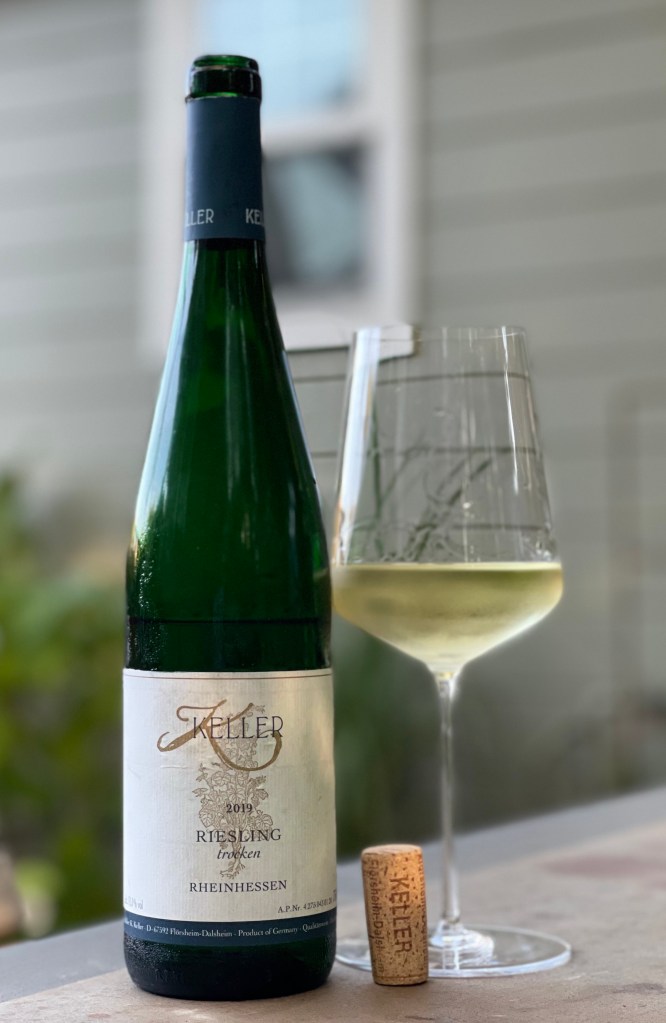
Today’s Wine: 2019 Riesling Trocken

100% Riesling; 11% ABV

The 2019 Riesling Trocken is medium straw in color. The aromas are of medium (+) intensity, with the nose showcasing notes of lemon pith, lime zest, white peach, pear, white flower blossom, petrol, and slate. Meanwhile the flavors are also of medium (+) intensity and the palate displays notes of lemon, green apple, lime zest, stone fruit, honeysuckle, crushed rock, mild smoke, and mineral. This dry white is medium-bodied with high acidity, low alcohol, and a medium (+) length finish.

Price: $30. I think this is a very fair price-point for this bottling, though there is no denying there are better “values” out there closer to the $20 mark. That being said though, I’ve had the privilege of enjoying some of the Keller GG bottlings and this offers a nice glimpse into the prowess of Klaus-Peter for the price.

Strong Value Proposition From a Stalwart of German Riesling

Today’s Story: Weingut Dr. Loosen

Weingut Dr. Loosen is a storied wine producer located just outside Bernkastel in the Mosel region of Germany. The winery has been in the Loosen family for over 200 years, making them one of the most well-known producers of Riesling not only throughout Germany but throughout the world. The winery and vineyards came to Ernst “Erni” Loosen in 1988, and he immediately set about improving the quality of wines that ungrafted 60+ year-old vines in some of the Mosel’s best vineyards can produce. Erni believes that great wine should be both a sensual and intellectual pleasure, with each bottle showcasing the unique terroir, passion of the winemaker, and a snapshot of history. This philosophy feeds through to his winemaking style, where Erni strives to balance traditional and family-honed winemaking practices with experimental studies (such as time on lees) to make the best and most transparent wine possible. Nonetheless, all the Dr. Loosen wines ferment spontaneously in wooden barrels and see a minimum of 12 months on lees with no racking and no bâttonnage so as to not add excess weight or cover any nuances provided by the variety or site.

Dr. Loosen has been part of Germany’s VDP (Verband Deutscher Prädikatsweingüter) since 1993, showcasing the incredible pedigree of their vineyards. What’s more, seven of the Dr. Loosen vineyards are designated VDP Grosse Lage (Grand Cru) and these wines are bottled as single vineyard bottlings since 1988. Any other wines produced by Dr. Loosen are labeled Estate or Village Rieslings. The vineyard sites under the Dr. Loosen umbrella include Bernkasteler Lay, Bernkasteler Johannisbrünnchen, Graacher Himmelreich, Graacher Domprobst, Wehlener Sonnenuhr, Ürziger Würzgarten, Erdener Treppchen, and Erdener Prälat. As a whole, the variety breakdown is 98% Riesling and 2% Pinot Blanc.

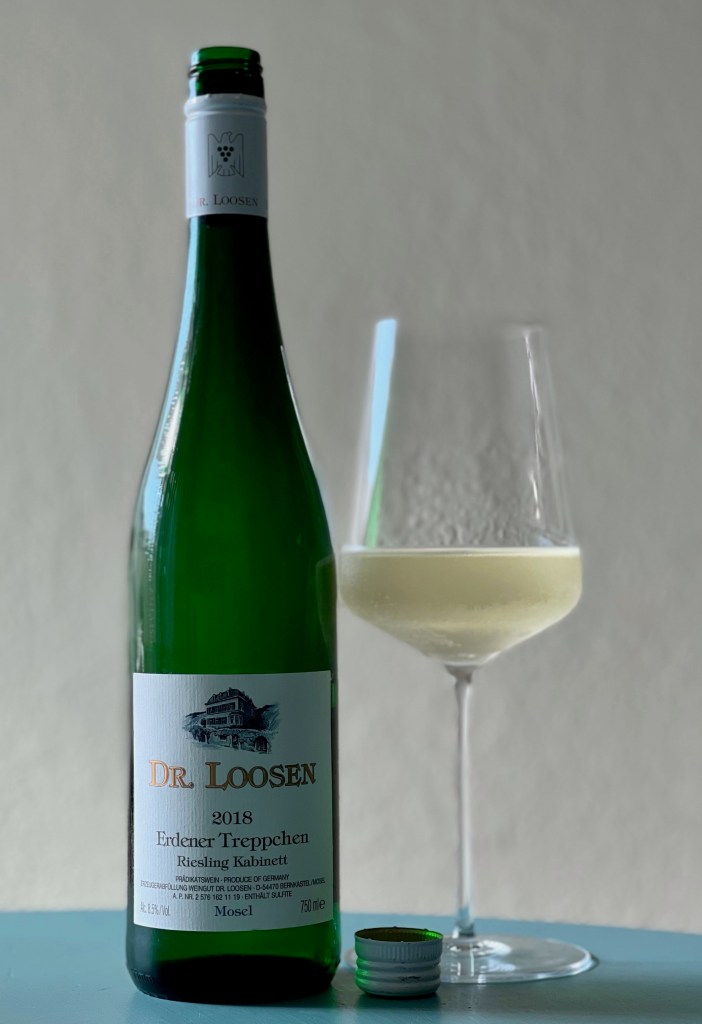
Today’s Wine: 2018 Erdener Treppchen Riesling Kabinett

100% Riesling; 8.5% ABV

The 2018 Erdener Treppchen Riesling Kabinett is medium straw in color. This takes some time in the glass to blossom, but once it does the aromas are of pronounced intensity and the nose showcases notes of green apple, pear, white peach, orange zest, chamomile, honey, and saline mineral. Meanwhile the flavors are of medium (+) intensity, with the palate displaying notes of green apple, lime, ripe pear, nectarine, white florals, and stony mineral. This medium sweet white is medium-bodied with high acidity, low alcohol, and a medium (+) length finish. Very good and a serious bottling for Kabinett.

Price: $25. I think this offers solid value. While there are cheaper Rieslings around the $15-18 range that I’ve enjoyed about as much as this one, the balance, intensity, and length certainly showcase the high quality here especially relative to all the Riesling I’ve tried.

High Quality Kabinett Riesling From a Historic German Estate

Today’s Story: Weingut Reichsrat von Buhl

Reichsrat von Buhl was established in 1849 by Franz Peter Buhl, and the estate quickly became a benchmark of quality for Forster Riesling. Thanks to uncompromising quality, von Buhl Rieslings became some of the most expensive in the world and even filled the glasses of those toasting the opening of the Suez Canal in 1869. Even Otto von Bismarck became a loving fan of von Buhl wines and praised their Ungeheuer which is sourced from the best plot of the 29 hectare Grand Cru Ungeheuer vineyard.

In 1909, Franz Eberhard Buhl (the son of Armand von Buhl and Juliane Schellhorn-Wallbillich) orchestrated the marriage of the von Buhl and Schellhorn-Wallbillich wineries, establishing one of the largest privately owned German wine estates at over 200 hectares. At this point, Franz Eberhard changed the winery name to Reichsrat von Buhl (adding his title as a member in the house of Lords in the kingdom of Bavaria). Franz Eberhard passed away young in 1921 and his widow Frieda Piper von Buhl adeptly ran the estate until her death in 1952. With no familial heirs to the estate, Reichsrat von Buhl went to Georg Enoch Freiherr von und zu Guttenberg who was a political friend of Franz Eberhard.

Over time, Reichsrat von Buhl decreased in size to about 52 hectares of vineyard land thanks to financial challenges, though they maintained ownership of some of the greatest sites in Deidesheim and Forst. From 1989 to 2013, von Buhl was leased to Japanese business man Toyohiro Tokuoka but changed ownership in 2005 to a local businessman named Achim Niederberger. When Tokuoka’s lease ended in 2013, von Buhl went back to being a family-run estate and winery.

All vineyards owned by Reichsrat von Buhl are certified organic and the current team is unified behind natural and sustainable viticulture. All white wines from von Buhl are Riesling (except for two noble sweet wines) and all red wines and rosé are made from Pinot Noir. Of all the land planted to vine that von Buhl owns, 45% is classified as either VDP.Erste Lage® (Premier Cru) or VDP.Grosse Lage® (Grand Cru) – source. For more on this historic German estate, check out the website here.

I previously wrote about von Buhl’s 2014 Forster Ungeheuer Riesling Großes Gewächs.

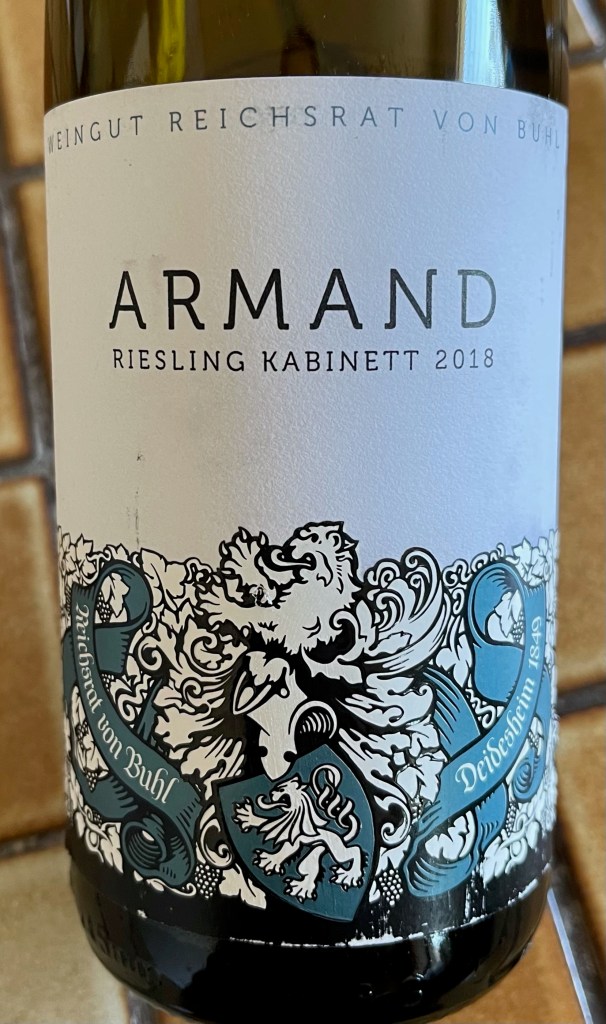
Today’s Wine: 2018 Armand Riesling Kabinett

100% Riesling; 9% ABV

The 2018 Armand Riesling Kabinett is pale gold in color. Aromas are of pronounced intensity, with the nose showcasing notes of white peach, apricot, lemon peel, honeysuckle, petrol, and white pepper. Meanwhile the flavors are also of pronounced intensity and the palate displays notes of yellow apple, white peach, tangerine, jasmine, honey, and flint. This off-dry Riesling is light- to medium-bodied with high acidity, low alcohol, and a medium (+) length finish.

Price: $17. I think this is very well-priced and offers solid value. While it’s not the most complex wine, it is rather young and still offers great intensity and length that I desire in a Riesling. Quality here is definitely significant as well for the level of wine.

Off-Dry Riesling From California’s North Coast

Today’s Story: Benevolent Neglect

Benevolent Neglect is a small passion project of winemaking friends Matt Nagy and Ben Brenner. As the name implies, winemaking here is best called minimal intervention as Matt and Ben believe a winemaker is meant to translate what the vineyard provides and not come in with a heavy hand in the cellar. The team rarely uses new oak, they don’t use oak substitutes, and eschew additives common in many corners of the winemaking world. They also refrain from adding water or acidity to alter the wines’ natural balance. All reds are unfined and unfiltered, while some of the whites only see filtering. Benevolent Neglect sources their fruit from the Central and North Coasts of California as well as Napa/Sonoma, producing a range of wines that stretch from Chardonnay and Cabernet Sauvignon to Rhône varieties and Ribolla Gialla.

Today’s Wine: 2018 Riesling

100% Riesling; 11.3% ABV

The 2018 Riesling is medium straw in color and transparent. Aromas are of pronounced intensity, with the nose displaying notes of lime, white peach, grapefruit, green apple skins, honeysuckle, and a small hint of petrol. Meanwhile the flavors are of medium intensity, while the palate displays notes of green apple, lemon and lime zest, crisp pear, honey, and saline. This off-dry Riesling (RS of 15g/L) is medium-bodied with high acidity, medium (-) alcohol, and a medium (+) length finish.

Price: $28 (often found closer to $40). I think for $28 this is a solid Riesling and a fun one to try given the minimally invasive winemaking style and region where it comes from. It lacks in intensity on the palate for me, but overall it’s an enjoyable and fun Riesling to try.

New Zealand Riesling That Offers Exceptional QPR

Today’s Story: Te Whare Ra

Te Whare Ra is a small family-owned winery established in 1979 but under the guide of winemakers Anna and Jason Flowerday since 2003. TWR’s vineyard is one of the oldest in Marlborough and consists of 11 hectares planted to Gewürztraminer, Riesling, Sauvignon Blanc, Pinot Gris, Chardonnay, Pinot Noir, and Syrah. Anna and Jason manage their vineyard adhering to organic and biodynamic principles, while also practicing minimal intervention in the cellar. The duo keeps their yields low, all fruit is hand-picked and hand-sorted, no chemicals are used in the vineyards, and the wine is made as naturally as possible with no fining agents, chemical tannins, or chemical yeast nutrients added. TWR is a founding member of Marlborough Natural Winegrowers (MANA) and is certified organic by BIOGRO NZ. To learn more about TWR’s farming and winemaking practices, explore their portfolio, or meet the team (including their cows and dogs), check out the website here.

I previously wrote about the 2014 Pinot Noir SV5182 from TWR, which is another very solid value and beautiful representation of terroir.

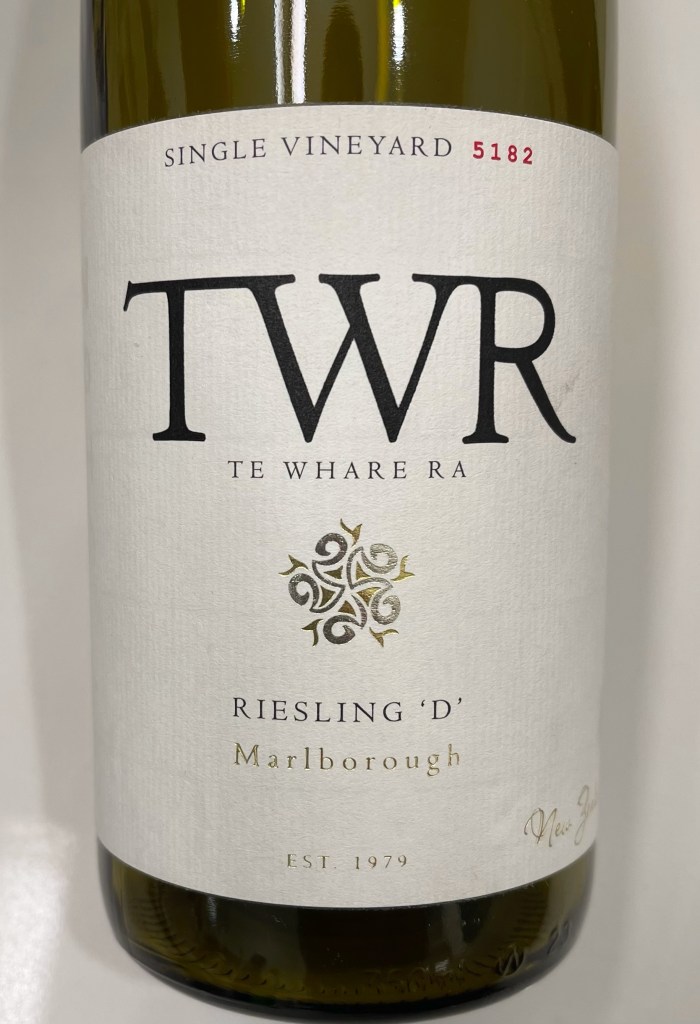
Today’s Wine: 2018 Riesling “D” SV5182

100% Riesling; 12.5% ABV

The 2018 Riesling “D” SV5182 is medium straw in color. Aromas are of pronounced intensity, and the nose showcases notes of lime zest, white peach, grapefruit, jasmine, petrol, limestone, and saline. Meanwhile the flavors are of medium (+) intensity, and the palate displays notes of lemon, lime zest, grapefruit, white florals, exotic white spice, and beeswax. This dry Riesling is light- to medium-bodied with high acidity, medium alcohol, and a long finish. 235 cases produced.

Price: $20. This is a very, very strong value play and should only get better with a few more years of cellar age. This wine’s balance, length, and intensity team up to strike above the price-point and, though this is hard to find, I’d buy it if you come across it.

Long-Lived Mosel Riesling Showing No Signs of Slowing Down

Today’s Story: Weingut Joh. Jos. Prüm

Joh. Jos. Prüm, situated in the village of Wehlen on the banks of the Mosel in Germany, is one of the most highly-regarded wine estates in the region and perhaps all of Germany. Though the Prüm family lived in Wehlen back to the year 1156, the estate as we know it today started to take shape during the 1800s under Sebastian Alois Prüm. Joh. Jos. Prüm itself, however, was established in 1911 when Johann Josef Prüm received part of the family estate which was split between him and his siblings. Joh. Jos. Prüm wasn’t in the greatest of health when his son Sebastian took over in 1920, and it again passed to Sebastian’s son Dr. Manfred Prüm in 1969. Joh. Jos. Prüm remains a family estate to this day, as Manfred’s oldest daughter Katharina now runs the show with minimal but ready input from her father.

The Joh. Jos. Prüm estate consists of about 14 hectares (35 acres) of vineyards, with important holdings in Wehlener Sonnenuhr, Graacher Himmelreich, Zeltinger Sonnenuhr, and Bernkasteler Badstube. The Prüms exclusively produce Riesling in a range of styles, and an amazing 70% of their vines are ungrafted. The winemaking style here is rather traditional and harvest occurs on the later-end, ultimately resulting in wines that are delicate and restrained yet incredibly long-lived. Annual production typically hovers around 13,000 cases, and these are highly prized and collectible wines once they hit substantial levels of bottle age.

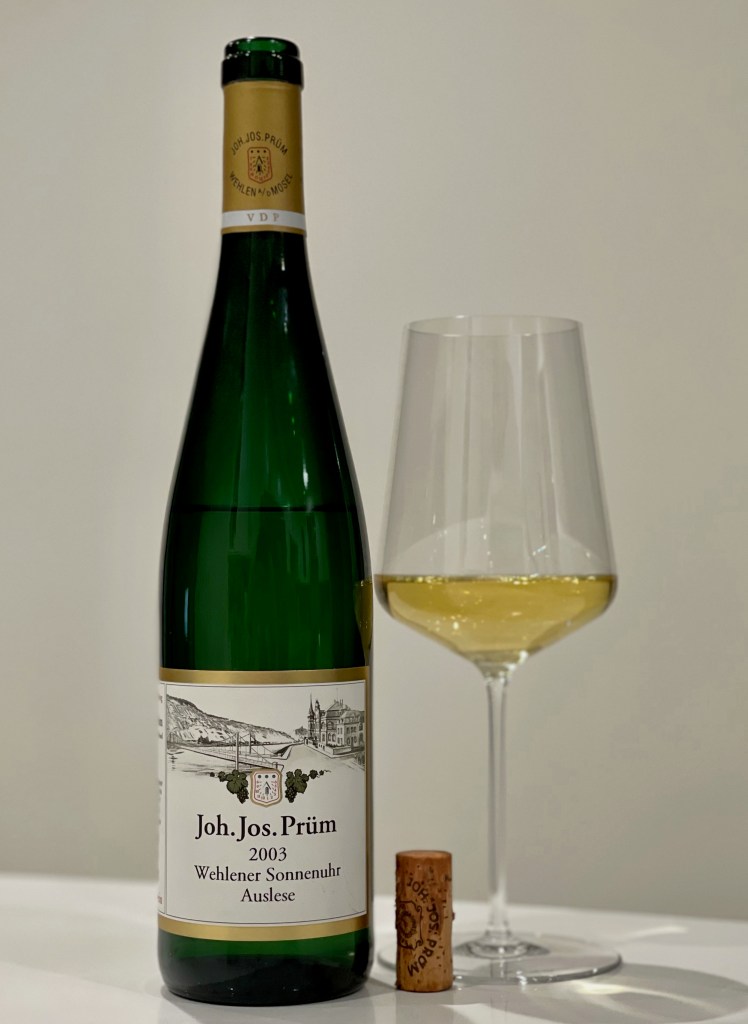
Today’s Wine: 2003 Wehlener Sonnenuhr Riesling Auslese Goldkapsel

100% Riesling; 7% ABV

The 2003 Wehlener Sonnenuhr Riesling Auslese Goldkapsel is medium gold in color. The aromas are gorgeous and of pronounced intensity, with the nose showcasing apricot, peach, yellow apple, pear, honeysuckle, petrol, dried herbs, and slate. Flavors are also of pronounced intensity, and the palate displays notes of mango, peach, apricot, dried pineapple, chamomile, honey, vanilla cream, almond, and saline mineral. This sweet Riesling is medium- to full-bodied with high acidity, low alcohol, and a long finish. Outstanding bottle of wine that has at least 10 years left to improve and probably another decade after to drink.

Price: $120 (I got it for $75). This actually offers very, very solid value given the age, intensity, balance, and length of the wine. It’s an absolutely beautiful bottle, and I got it for a steal of a price.

Fun and Easygoing Riesling From Northwest Italy

Today’s Story: Oddero

Oddero is one of the great, historical producers of Barolo and Barbaresco, with the family owning property in Piedmont dating back to the 18th century. This being said, Giovanni Battista Oddero started producing wines in the commune of La Morra sometime between the 18th and 19th centuries, kicking off what today marks seven generations of winemaking for the Oddero family.

As Oddero’s wines found their way into the world, first by small barrels, bottling began in 1878 under Giacomo Oddero and the winery recently discovered that their Barolo was exported to the Americas via small barrels as early as the late 19th century. This is in stark contrast to today’s winery, which is impacted immeasurably by another Giacomo (grandson of the above).

The second Giacomo worked tirelessly during the 1950s to renovate the farm and winery, meanwhile fighting to demonstrate the quality of Piedmont wines to the world. In doing so, Giacomo helped lay the foundation for DOC and DOCG certifications for wines of the Langhe and guided agricultural regulation for products such as cheese, nuts, and vegetables.

Today, Oddero is led by his daughter Mariacristina and two grandchildren, Isabella and Pietro. Together they work 35 hectares (about 86 acres) of vineyards of which 16.5 hectares are planted to Nebbiolo in Barolo and Barbaresco. Oddero started experimenting with organic farming practices in 2008, ultimately becoming certified organic in their Nebbiolo, Barbera, and Dolcetto vineyards while the Moscato and Riesling vineyards are still sustainably farmed.

I previously reviewed a couple of Oddero’s wines, first the 2010 Oddero Barolo and then the 2012 Barolo Riserva Bussia Vigna Mondoca.

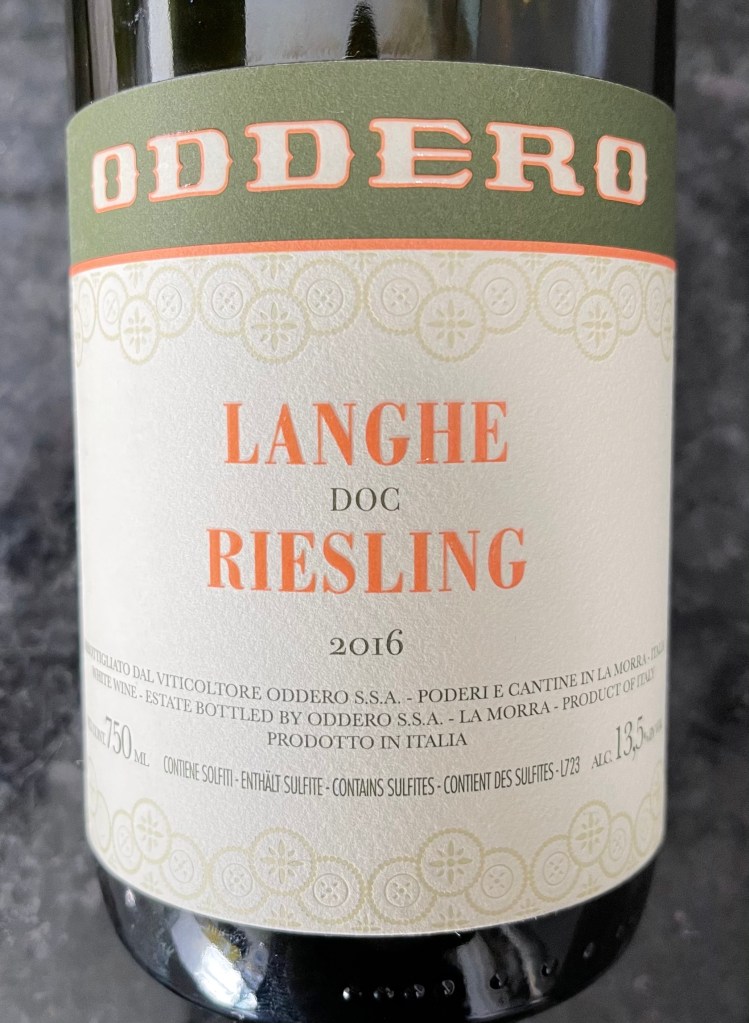
Today’s Wine: 2016 Langhe Riesling

100% Riesling; 13.5% ABV

The 2016 Langhe Riesling is pale yellow in color. Aromas are of medium intensity, showcasing notes of tropical citrus, tangerine, white peach, yellow apple, white floral blossom, petrol, and stony mineral. Meanwhile the flavors are also of medium intensity, with the palate displaying notes of white peach, pineapple, lemon zest, stone fruit, honeysuckle, and crushed rock. This dry Riesling is medium- to full-bodied with medium (+) acidity, medium alcohol, and a medium (+) length finish. This is a very easy-drinking wine, quite enjoyable for patio sipping. It’s not too complex and not as intense as other Rieslings, but it’s a fun wine. Roughly 333 cases produced.

Price: $25. I think this is pretty fairly priced, but there are better values out there in terms of complexity and intensity. It’s a fun wine with an uncommon variety in its region, and as I mentioned a great patio sipper.

Legendary Alsatian Riesling With a Long Life Ahead

Today’s Story: Maison Trimbach

Maison Trimbach is one of the most notable winemakers in Alsace, established in 1626 by Jean Trimbach. Today Trimbach is under the guidance of Hubert Trimbach and his nephews Jean and Pierre, rounding out 12 generations of family ownership and shared knowledge. Pierre’s daughter Anne, the oldest of the 13th generation, also now works in the family business. Though Trimbach’s world recognition greatly expanded in 1898 when Frédéric Emile Trimbach earned the highest marks at the International Wine Fair in Brussels, Trimbach is largely famous for the legendary Clos Sainte Hune vineyard. Located in the Rosacker Grand Cru vineyard, Clos Ste Hune has belonged to the Trimbach family for over two centuries and produces some of the most exquisite Alsatian Riesling in existence.

The Trimbach estate consists of 40 hectares (about 100 acres) encompassing 50 parcels across six villages that include Bergheim, Ribeauvillé, and Hunawihr. Trimbach also operates as a négociant business to produce additional non-estate wines. All of Trimbach’s winegrowing practices are sustainable and they try to preserve the natural environment of the vineyards. Trimbach practices close pruning and soil tilling while encouraging moderate yields and rigorous fruit selection come harvest which is accomplished entirely by hand. When the grapes are gently crushed at the winery, juices flow via gravity and Pierre vinifies and matures the wines adhering to centuries of tradition with both finesse and focus on the terroir. After being bottled each spring, the wines are released by maturity with some spending 5 to 7 years in the cellars to achieve balance before release.

I previously wrote about Trimbach when I reviewed their 2016 Gewurztraminer, so feel free to check that out if you missed it!

Today’s Wine: 2014 Clos Ste Hune

100% Riesling; 14.5% ABV

The 2014 Clos Ste Hune is pale yellow in color with greenish hints. Aromas are of pronounced intensity and laser-focused, with the nose showcasing lemon, crisp green apple, tropical citrus, white peach, honeysuckle, petrol, a hint of smoke, and crushed rock mineral. Meanwhile flavors on the palate are also of pronounced intensity, displaying notes of green apple, lemon zest, pineapple, white peach, white florals, petrol, mild smoke, and saline mineral. This Riesling is bone dry and full-bodied with razor-sharp high acidity, high alcohol, and a long finish. Outstanding with a long, long life ahead but this is already showing incredible precision and balance.

Price: $300. This is another wine with a value proposition that’s difficult to discuss, simply because there are better “values” out there for significantly less money. That being said though, these wines are truly legendary and perhaps the greatest Riesling the Alsace region has to offer. It’s certainly the best Riesling I’ve had to date, by a mile.

Gorgeous Mosel Riesling to Stock up on for the Summer

Today’s Story: Weingut Fritz Haag

Weingut Fritz Haag is a historic family-owned wine estate established by the Haag family in 1605 in Brauneberg of the Mosel winegrowing region of Germany. In its more recent “modern” history, Fritz Haag was under the leadership of Wilhelm Haag beginning in 1957 when he returned to help his ill father. An expected one-harvest stay turned into full-time winemaking for Wilhelm, ultimately resulting in exceptional quality wines being produced by the estate which garnered international acclaim and earned Wilhelm the German Winemaker of the Year title in 1994 by Gault Millau’s Guide to German Wines. Wilhelm passed the reins onto his son Oliver in 2005, and he runs the estate to this day with his wife Jessica.

The Fritz Haag estate consists of 19.5 hectares, with the vineyards planted entirely to the Riesling variety on very steep slopes along the Mosel River. As part of their holdings, Fritz Haag owns substantial holdings in the highly regarded Brauneberger Juffer and Brauneberger Juffer Sonnenuhr vineyards which produce their highest quality fruit for the Grosses Gewächs wines and Prädikatswein. Fritz Haag produces a range of Rieslings, going from dry all the way to sweet wines made with botrytis-affected grapes but they keep production to around 5,500 cases per year with mild fluctuations due to vintage conditions.

To preserve the pronounced aroma and flavor characteristics of their wines, Fritz Haag utilizes stainless steel and some old oak during the winemaking process. Fermentations occur only with indigenous yeasts, and the name of the game is to produce exceptionally pure wines that show true sense of place.

To explore Weingut Fritz Haag further, you can check out their website here.

Today’s Story: 2019 Riesling

100% Riesling; 11% ABV

The 2019 Riesling is transparent pale straw in color. This wine leaps out of the glass with pronounced intensity, offering up aromas of green apple, lime zest, white peach, white florals, petrol, jasmine, and slate. Meanwhile the palate is also of pronounced intensity, showcasing notes of lemon, lime, white peach, crisp green apple, elderflower, a hint of beeswax, and saline minerality. This slightly off-dry (feinherb style) Riesling is light-bodied with gorgeous high acidity, medium (-) alcohol, and a medium (+) length finish. A perfect summer bottle with great balance and just a touch of sweetness to help balance the mouthwatering acidity.

Price: $22 (cheaper in Europe). I think this offers very solid value for Mosel Riesling and it was an absolute pleasure to drink. The acidity is gorgeous, the style is beautifully balanced, and the aromas and flavors mesh seamlessly into a refreshing wine. I’ll be buying more of this.