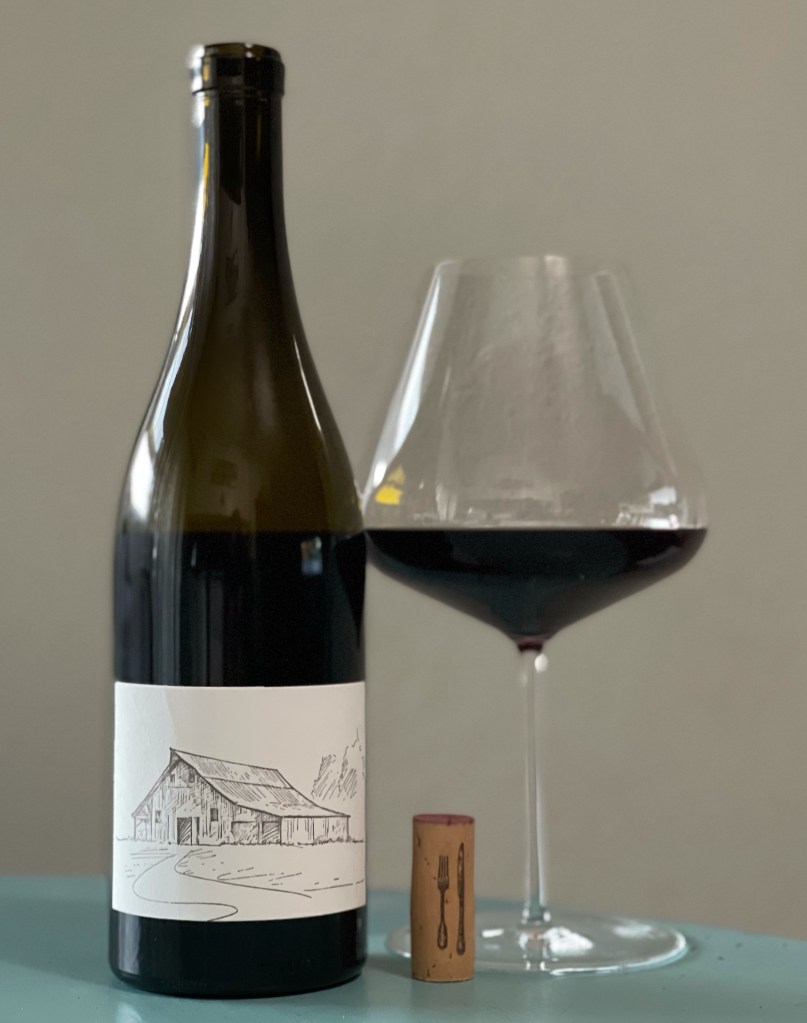
Light and Easy-Going Summer Sipper

Today’s Story: Kapcsándy Family Winery

Kapcsándy Family Winery was established by Lou Kapcsándy and is a small, family owned and operated estate in Yountville of the Napa Valley. An immigrant from Hungary, Lou arrived in the United States in 1956 and worked as a chemical engineer and manufacturer in the Bay Area of California and Seattle. Wine became a focal point for Lou during his successful career thanks to colleagues in the wine business, however his desire to establish his own winery one day came after a visit to Château Leoville Las Cases with his wife Bobbie in 1998. With their son Louis Jr., Lou and Bobbie started searching for property in the Napa Valley when they stumbled upon the 20 acre State Lane Vineyard in Yountville which had been destroyed the previous year by phylloxera. In May 2000, the Kapcsándy family closed on this historic property (it was the source of fruit for Beringer’s Private Reserve Cabernet Sauvignon) and embarked on massive replanting of the vineyards. They planted the main Bordeaux varieties of Cabernet Sauvignon, Merlot, Cabernet Franc, and Petit Verdot, though also planted several acres to Hungarian Furmint. When the winery was completed in 2005, Lou’s vision was finally realized and both he and Louis Jr. remain highly involved today.

Kapcsándy wines are inspired by Bordeaux both in terms of vineyard management and winemaking style, resulting in lower-alcohol wines made from 100% estate-grown fruit. With both Lou and Louis Jr. active in the vineyards and estate management everyday, Kapcsándy practices sustainable farming with great appreciation for their soil and the environment. The family constructed nesting boxes, perch poles, and songbird houses to avoid the use of chemicals for pest control, and they also add compost to the vineyards and natural fertilizers to supply bacteria, photo nutrients, and trace elements which prove beneficial for vine growth. Further, Kapcsándy plants cover crops between the vines to prevent erosion and encourage beneficial insects to inhabit the vineyards and enhance this natural ecosystem. For more, check out the Kapcsándy website here.

I previously reviewed the 2014 Estate Cuvée and 2005 Estate Cuvée from Kapcsándy.
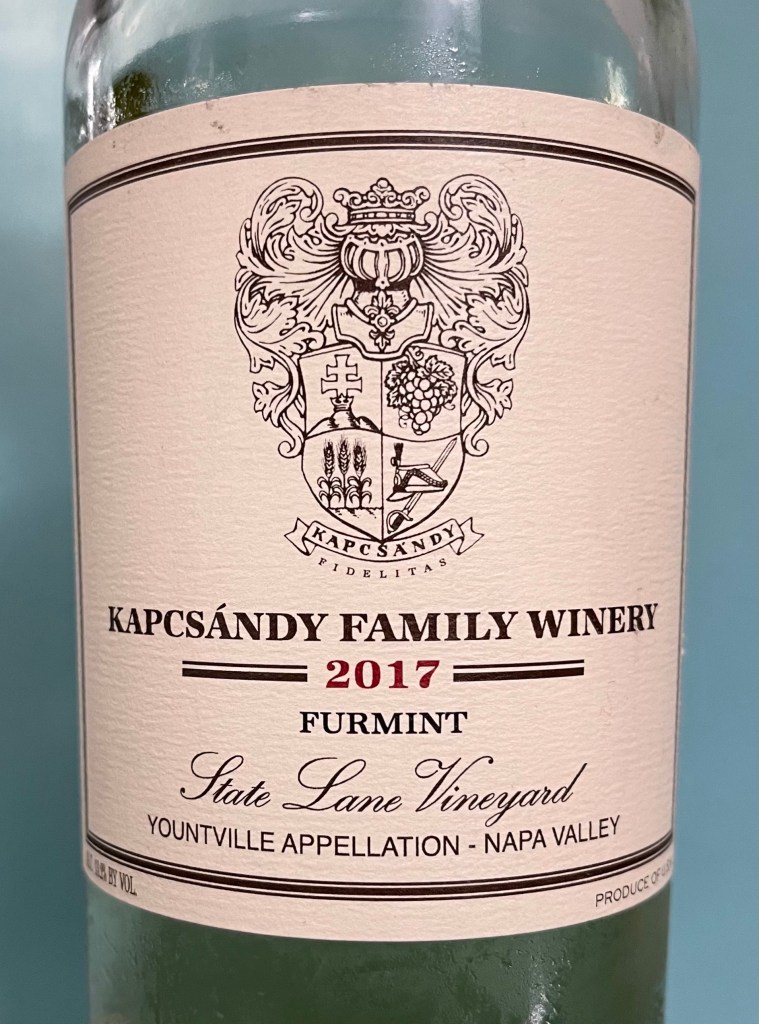
Today’s Wine: 2017 Furmint

100% Furmint; 13.2% ABV

The 2017 Furmint is pale yellow in color with greenish hues around the rim of the glass. This is an easy-going wine with aromas of medium intensity and a nose that showcases notes of lemon zest, ripe pear, green apple, lychee, honeysuckle, and wet stone. Meanwhile the flavors are also of medium intensity and the palate displays notes of green apple, grapefruit, guava, lemon, white florals, and ginger. This dry white is light- to medium-bodied with high acidity, medium alcohol, and a medium (+) length finish. Typically 100 or so cases produced.

Price: $30. While this may not necessarily be the most exciting white wine, it’s very high quality and well-made. It’s an easy-going summer sipper that’s fun to try, and is a highly unusual variety to find in the Napa Valley. If you like the Kapcsándy wines, this is worth trying at least once.

An Etna Rosso to Introduce You to Etna Rosso

Today’s Story: Girolamo Russo

Girolamo Russo is a family-owned and operated wine estate located near the town of Passopisciaro on the north side of Mt. Etna in Sicily, Italy. The estate was “re-established” by Giuseppe Russo in 2005 who, though formerly a pianist, desired to continue his family’s tradition of winegrowing and named the estate in honor of his father. Girolamo Russo consists of 18 hectares of vineyards situated between 650 and 780 meters (2,132 and 2,559 feet) above sea level, with all farmed adhering to organic viticulture. Russo grows fruit in the crus of San Lorenzo, Feudo, and Feudo di Mezzo with many vines being a century old. In culmination with a minimally invasive winemaking philosophy that includes fermentation with indigenous yeasts and minimal oak influence, the wines are often described as pure representations of place.

Today’s Wine: 2018 Etna Rosso ‘a Rina

94% Nerello Mascalese, 6% Nerello Cappuccio; 13.5% ABV

The 2018 ‘a Rina is medium garnet in color with hints of pale ruby. I decanted this for about an hour but drank it over several. The aromas are of medium (+) intensity, with the nose showcasing notes of red cherry, stemmy strawberry, orange rind, a hint of rose petal, thyme, volcanic earth, mild smoke, and slight peppery spice. Meanwhile the flavors are of medium intensity and the palate displays notes of dried cherry, cranberry, dried strawberry, licorice, tobacco, leather, crushed gravel, cracked pepper, and stony mineral. This dry red is medium-bodied with medium (+) acidity, medium but fine-grained tannins, medium (+) alcohol, and a medium (+) length finish.

Price: $32. I think this offers pretty solid value for Etna Rosso, as it demonstrates good balance, intensity, complexity, and an obvious sense of place. Though it isn’t the best Etna Rosso I’ve had, for the price this is worth trying.

Perfectly Aged Napa Valley Cab

Today’s Story: Robert Mondavi Winery

Robert Mondavi is a historical and world-renowned Napa Valley winery established by Robert Mondavi in 1966. With the immense history and promise Mondavi felt with the To Kalon Vineyard in Oakville, he set up his winery there amongst the vines and set out to craft Napa Valley Cabernet Sauvignon that could compete with the greatest wines in the world. Mondavi did not only set his sights on Cabernet Sauvignon, however, releasing his first Fumé Blanc (made with Sauvignon Blanc) in 1968 which is the wine that ultimately became his signature bottling. As Mondavi’s prowess started to show in those early years, he also expanded into the Stags Leap District by acquiring the Wappo Hill Vineyard planted to Sauvignon Blanc, Merlot, and Cabernet Sauvignon in 1969. In 1970, Mondavi met for the first time with Baron Philippe de Rothschild and the duo voiced an idea of creating a joint venture that ultimately became Opus One, established in 1978 with an inaugural vintage of 1979.

As Mondavi’s wines grew in prominence, so did his reputation almost like a father to Napa Valley winemaking. He was instrumental in bringing music to the Valley with his Summer Music Festival, showcased his philanthropic mindset by helping to pioneer Auction Napa Valley, and advanced the magic of food and wine pairing by creating the Mission Tour, Great Chefs of France, and Great Chefs of America programs. Robert Mondavi’s impact on Napa Valley and the wine world beyond is as strong and steadfast now as it was back then, and the world of California winemaking will forever thank him.

I previously reviewed the 1981 Reserve Cabernet Sauvignon and 1980 Reserve Pinot Noir.

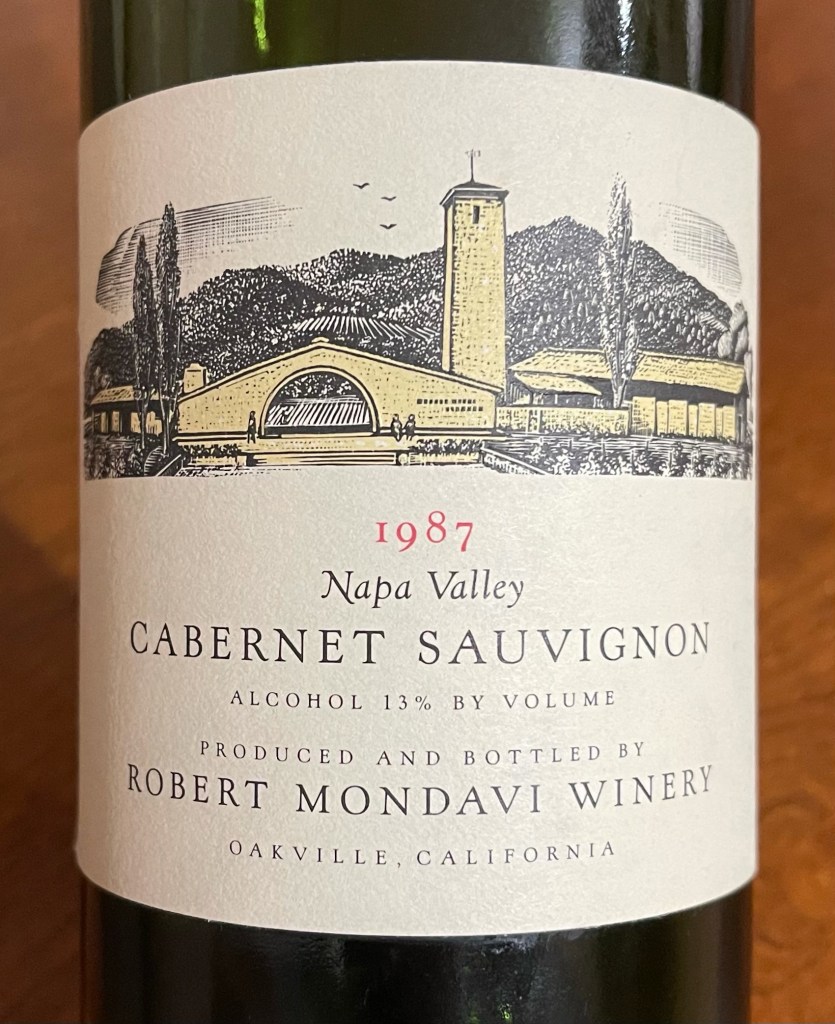
Today’s Wine: 1987 Cabernet Sauvignon

87% Cabernet Sauvignon, 8% Cabernet Franc, 5% Merlot; 13% ABV

The 1987 Cabernet Sauvignon is medium to deep garnet in color. I drank this as a pop and pour, and there really wasn’t a huge amount of sediment in the bottle. Given a short time in the glass, the wine blossoms with aromas of pronounced intensity and a nose of redcurrant, blackcurrant, forest floor, violet, graphite, green bell pepper, eucalyptus, clay, and cedar. Meanwhile the flavors are also of pronounced intensity and the palate displays notes of blackberry, redcurrant, mushroom, dried tobacco, charred green herbs, green bell pepper, crushed rock, and oaky spice. This dry red is medium-bodied with medium (+) acidity, mature medium tannins, medium alcohol, and a medium length finish.

Price: $110. This is a very fun wine to try and it’s showing very well, but I’d say it’s more of an experience wine than necessarily a “value wine.” The balance, intensity, and complexity are all great, but the shorter length of the finish does detract slightly from the overall experience of the wine.

Budget-Friendly Pinot Noir From Trader Joe’s

Today’s Story: Cotillion (Trader Joe’s)

Out of curiosity and at the urging of a friend, I decided to try a few wines from Trader Joe’s and this is one of them. It’s a light day background-wise, as this seems to be one of the many bottlings made for Trader Joe’s specifically and I cannot gather much information beyond the back label. The wine I’m reviewing today is a Pinot Noir vinted and bottled by Ashford Court in American Canyon within Napa County, though the fruit comes from Monterey County (56%), Sonoma County (33%), and Santa Barbara County (11%).

Today’s Wine: 2018 Cotillion Pinot Noir

100% Pinot Noir; 13.8% ABV (seems like it could be higher)

The 2018 Cotillion Pinot Noir is pale ruby in color and rather transparent. Given some time in the glass, the aromas blossom with medium (+) intensity and the nose showcases notes of black cherry, black raspberry, blood orange rind, leather, cola, baking spice, a hint of vanilla, and oak. Meanwhile the flavors are of medium intensity and the palate displays notes of strawberry, raspberry, red cherry, sweet tobacco, licorice, charred green herbs, and vanilla. Though the profile is exactly what I was expecting (fruity and with more oak influence than my personal preferred taste) this is better than I expected given the price. This dry red is medium- to full-bodied with medium (+) acidity, medium (-) tannins, high alcohol, and a medium-length finish.

Price: $10. Though not a wine I’d personally buy again, I think this is actually quite good given the accessible price-point. It has broad consumer appeal and offers better complexity and balance than many wines in the same ballpark. It seems to be pretty good quality overall as well.

Easygoing Malvasia Bianca From Contra Costa County

Today’s Story: Erggelet Brothers

Erggelet Brothers is a small wine producer which, as the name implies, was established by brothers Julian and Sebastian Erggelet. Julian and Sebastian grew up in southern Germany, and though Julian studied Medicine and Sebastian studied Philosophy & Economics the two picked up an appreciation and passion for wine along the way. Sebastian went back to school for Viticulture & Enology while Julian finished up his medical degree, and afterwards the brothers embarked on travels around the world and worked wine harvests, in cellars, and in kitchens to hone their palates in France, Switzerland, Australia, and Spain. The brothers journeyed to California in 2014 and worked at OVID, Seven Stones, and Martin Estate before ultimately starting their own winemaking project in 2015.

Today Julian and Sebastian source fruit from Contra Costa County in California, as well as some Pinot Noir from Oregon. The brothers put a major emphasis on farming, particularly “intentional” and organic farming. Julian and his wife Alli run an organic farming project called The Urban Edge in Brentwood, CA as well where they not only farm the Cecchini Family Vineyard but also grow 25 acres of mixed stone fruit, 5 acres of mixed vegetables, and 5 acres of asparagus. They also keep a watchful eye over ducks, chickens, goats, sheep, and rabbits.

Within the Contra Costa County, the Erggelet brothers source from two vineyards: Cecchini Family Vineyard and Del Barba Vineyard. They receive their Malvasia Bianca from Cecchini Family Vineyard, and Del Barba provides them with Carignane, Mataro, and Zinfandel. All wines ferment with indigenous yeasts and there are zero additions throughout the winemaking process. Come bottling, each wine is bottled unfined and unfiltered.

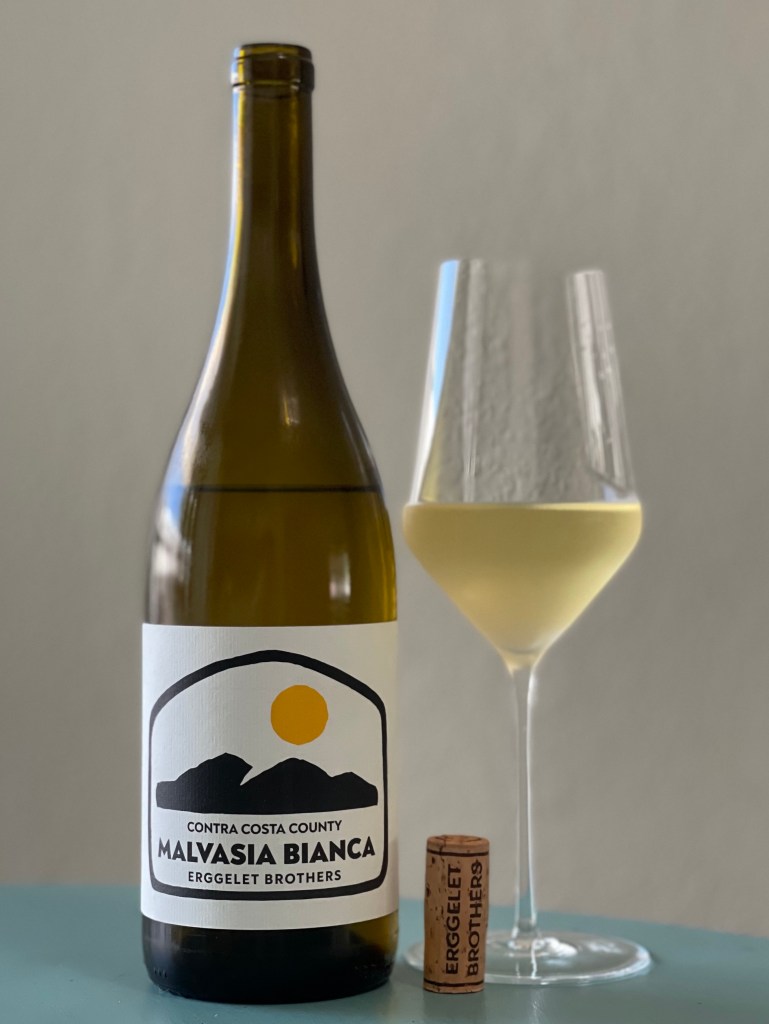
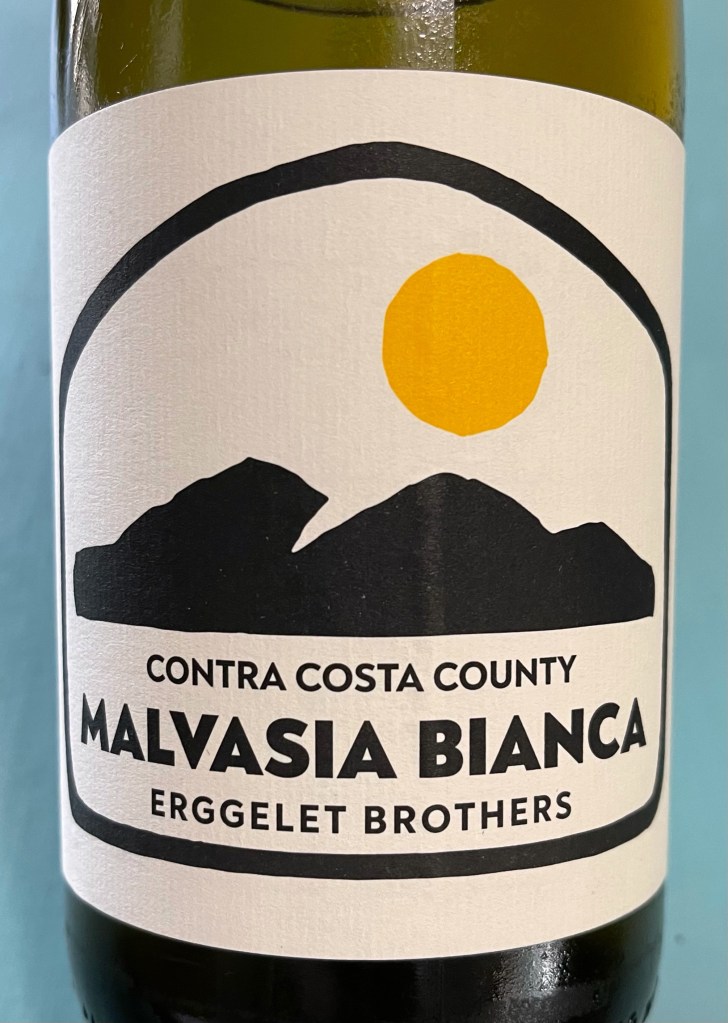
Today’s Wine: 2019 Cecchini Family Vineyard Malvasia Bianca

100% Malvasia Bianca; 12% ABV

The 2019 Cecchini Family Vineyard Malvasia Bianca is pale to medium yellow in color. Aromas are of medium intensity, and the nose showcases delicate aromas of peach skins, lime zest, yellow apple, white floral blossom, beeswax, and rosemary. Meanwhile the flavors are also of medium intensity and the palate displays notes of peach, apricot, lime, white florals, honeycomb, wax, and sage. This dry white is light- to medium-bodied with medium (+) acidity, medium alcohol, and a medium (+) length finish. This is a very good and fun wine that didn’t last long once the cork was pulled. 100 cases produced.

Price: $25. I think this is incredibly fairly-priced and offers good value given the balance, structure, and solid complexity. The only Malvasia I’ve had has always been Madeira, so I was excited to try this and it was everything I hoped for.

Off-Dry Riesling From California’s North Coast

Today’s Story: Benevolent Neglect

Benevolent Neglect is a small passion project of winemaking friends Matt Nagy and Ben Brenner. As the name implies, winemaking here is best called minimal intervention as Matt and Ben believe a winemaker is meant to translate what the vineyard provides and not come in with a heavy hand in the cellar. The team rarely uses new oak, they don’t use oak substitutes, and eschew additives common in many corners of the winemaking world. They also refrain from adding water or acidity to alter the wines’ natural balance. All reds are unfined and unfiltered, while some of the whites only see filtering. Benevolent Neglect sources their fruit from the Central and North Coasts of California as well as Napa/Sonoma, producing a range of wines that stretch from Chardonnay and Cabernet Sauvignon to Rhône varieties and Ribolla Gialla.

Today’s Wine: 2018 Riesling

100% Riesling; 11.3% ABV

The 2018 Riesling is medium straw in color and transparent. Aromas are of pronounced intensity, with the nose displaying notes of lime, white peach, grapefruit, green apple skins, honeysuckle, and a small hint of petrol. Meanwhile the flavors are of medium intensity, while the palate displays notes of green apple, lemon and lime zest, crisp pear, honey, and saline. This off-dry Riesling (RS of 15g/L) is medium-bodied with high acidity, medium (-) alcohol, and a medium (+) length finish.

Price: $28 (often found closer to $40). I think for $28 this is a solid Riesling and a fun one to try given the minimally invasive winemaking style and region where it comes from. It lacks in intensity on the palate for me, but overall it’s an enjoyable and fun Riesling to try.

Complex and Ageworthy Howell Mountain Cab

Today’s Story: Red Cap Vineyards

Red Cap Vineyards’ story begins in 1998 with Tom and Desiree Altemus when they purchased a 10.5 acre property on Howell Mountain. Though Tom’s background is originally in finance working for IBM, he grew an appreciation for fine wine during business trips and ultimately quit to pursue a career as a chef in 1991. After graduating from the California Culinary Academy in San Francisco, Tom worked for famed chefs and restauranteurs including Michel Richard and Bradley Ogden before settling in at Brava Terrace in St. Helena. With the birth of the couple’s first child, Tom left the restaurant industry and the birth of their second child created the need to expand from Napa to Howell Mountain.

Having purchased their property, the Altemus family started planning their vineyards in 2000 with viability studies and archeological, biological, and botanical surveys. Due to seemingly endless regulations, the land was finally cleared and prepped in 2003 and the first vintage of Cabernet Sauvignon released in 2005 with 50 cases. Having personally visited the property, I can attest that the land is not only beautiful but the vineyard rows are stunning to look at. The vineyards are planted on iron-rich volcanic soil that in person is very red and rocky, while all fruit is grown organically and hand-farmed.

I previously reviewed Red Cap’s 2014 Cabernet Sauvignon, though I’ve consumed many bottles of their wine across vintages and including the Sauvignon Blanc as well.

Today’s Wine: 2015 Cabernet Sauvignon

100% Cabernet Sauvignon; 15% ABV

The 2015 Cabernet Sauvignon is deep ruby in color, though incredibly opaque and nearly black at its core. I decanted this for about six hours, as these wines tend to need quite some time at this youthful stage. The aromas are of pronounced intensity, with the nose showcasing notes of blackberry, plum, blueberry, black cherry, violet, licorice, graphite, tobacco, cola, cedar, and chocolate. Meanwhile the flavors are also of pronounced intensity and the palate displays notes of blackberry, blueberry, cassis, anise, violet, tobacco, cola, chocolate, and baking spice. This dry red is full-bodied with medium (+) acidity, medium (+) but fine-grained tannins, high alcohol, and a long finish. 310 cases produced.

Price: $120 ($102 as a member). I’m a huge believer that these wines offer great value, especially with the club pricing. The wines are deep, concentrated, and complex beasts that need time in the cellar or plenty of air, but they always perform above their price-point to me.

An Unusually Approachable Dunn Howell Mountain Cab

Today’s Story: Dunn Vineyards

Dunn Vineyards dates to 1979 when Randy and Lori Dunn purchased a 14 acre parcel in Angwin with about 5 acres planted to Cabernet Sauvignon. Though Randy worked as a winemaker in Rutherford for his day job, he spent the nights and weekends with Lori and their young son Mike farming their vines. The Dunn family also farmed Harry Frank’s adjacent vineyards and purchased the fruit resulting in a first harvest of 9 tons of fruit. With an additional purchase of 3 tons from Beatty Ranch, the Dunn’s were on their way to producing their first vintage.

The family moved onto their property shortly thereafter with another young child, Jennifer, and Dunn Vineyards was officially bonded in 1981. After their second daughter, Kristina, was born, Randy was still working in Rutherford when the winery’s success picked up and encouraged him to leave his job in 1985 to move into a new family house and put all of their effort into Dunn Vineyards. By the late 1980s, Randy was consulting for other wineries, their wine was selling out, and the family needed to burrow into the mountain in 1989 to create more room for barrels.

Mike returned in 1999 and three years later became a full-time employee at Dunn Vineyards and after Kristina graduated from Cal Poly with a degree in winemaking and viticulture she joined as well. Today, Kristina’s daughters play in the vineyards and Mike’s son helps bottle the wines, making it seem the family tradition at Dunn Vineyards is set to continue into three generations and beyond. Today, the family farms 42 acres of Cabernet Sauvignon high up on Howell Mountain and the resulting wines are elegant yet profound and built for cellaring.

I previously reviewed the 2014 Napa Valley Cabernet Sauvignon from Dunn, which is a generally more accessible bottling made from mountain and valley floor fruit.

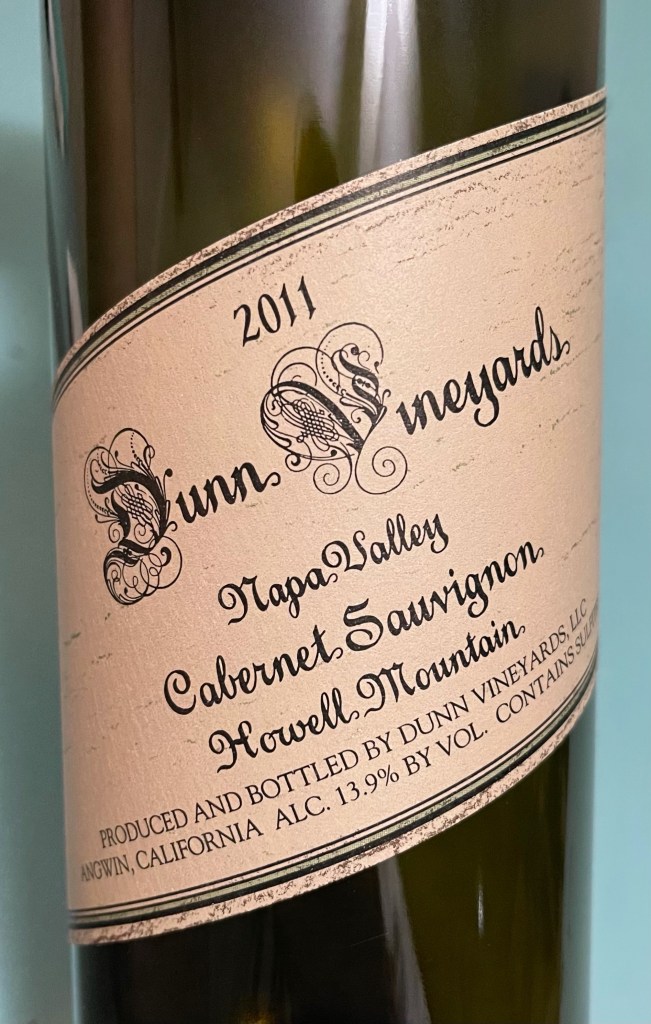
Today’s Wine: 2011 Howell Mountain Cabernet Sauvignon

100% Cabernet Sauvignon; 13.9% ABV (though it seems like it’s actually slightly higher)

The 2011 Howell Mountain Cabernet Sauvignon is deep ruby in color and opaque. Given a couple hours to decant, this wine blossoms into a complex and approachable bottling. The aromas are of pronounced intensity, with the nose showcasing notes of blackberry, blueberry, cassis, anise, menthol, lavender, leather, tobacco, and chocolate. There’s a touch of brett as well but not enough to detract. Meanwhile the flavors are also of pronounced intensity and the palate displays notes of black cherry, plum, blueberry, blackberry, dried tobacco, menthol, licorice, dried green herbs, and a touch of oak-driven spice. This dry red is medium- to full-bodied with medium acidity, medium (+) but refined tannins, medium (+) alcohol, and a medium (+) length finish.

Price: $160 (I paid $112). I’ve long been a fan of Dunn’s wines, and I think they offer solid value next to their counterparts in other mountain AVAs and especially those on the valley floor. Though you have to be very patient with the Howell Mountain bottlings, this 2011 was rather approachable given the vintage conditions and I will certainly try to buy more.

A Refreshing and Minimal Intervention Chenin Blanc

Today’s Story: Lo-Fi Wines

Lo-Fi Wines was established in 2014 by lifelong friends Mike Roth and Craig Winchester. Centered in a belief wines should be honest and transparent representations of their vintage and variety, Lo-Fi wines are meant to be consumed as everyday drinkers to pair with a broad range of foods and not locked away in the cellar. Through minimal intervention winemaking, Lo-Fi wines ferment naturally with native yeasts and see minimal to zero sulfur additions and no pH adjustments. The wines age in neutral oak barrels and are mostly bottled unfiltered, with the final product an easy-drinking and low alcohol wine. A number of the wines also see whole cluster fermentation and carbonic maceration.

I previously reviewed the 2020 Gamay / Pinot Noir from Lo-Fi.

Today’s Wine: 2020 Jurassic Park Vineyard Chenin Blanc

100% Chenin Blanc; 12.5% ABV

The 2020 Jurassic Park Vineyard Chenin Blanc is pale gold in color. Aromas are of medium intensity, with the nose showcasing notes of yellow apple, pear skins, stone fruit, honey, white florals, and wet stone minerality. Meanwhile the flavors are also of medium intensity and the palate displays notes of pear, yellow apple, lemon zest, peach, chamomile, honey, and saline. This dry white is medium-bodied with medium (+) acidity, medium alcohol, and a medium (+) length finish. Easy drinking though it’s slightly funky/reductive particularly on the nose. 195 cases produced.

Price: $26. I haven’t had a ton of Chenin Blanc yet and it’s a variety I’m trying to explore more, but for the price this is a solid and fun one to try. While not the most intense wine, this offers a good array of aromas and flavors wrapped into an easy-drinking and enjoyable bottle. Enjoyable on its own or paired with food.

Young but Complex Oregon Pinot Noir From the Yamhill-Carlton AVA

Today’s Story: Big Table Farm

Big Table Farm is a relatively small winery and farm established in the Willamette Valley of Oregon in 2006 by winemaker Brian Marcy and artist/farmer Clare Carver. Brian worked with wine in Napa Valley prior to starting Big Table Farm, spending a decade with stints at heavyweights like Turley Wine Cellars, Neyers Vineyards, Blankiet Estate, and Marcassin to hone his craft. Meanwhile Clare is a gifted artist and designs wine labels, many of which have been awarded.

Dedicated to Pinot Noir, Chardonnay, and small amounts of Pinot Gris and Syrah, Big Table Farm commenced with only 150 cases of wine and has grown to a few thousand cases today. The wines are made in a minimal style, designed to showcase each unique source’s terroir and all wines are bottled unfined and unfiltered. With a major emphasis on sustainability and Clare’s passion for farming, the duo’s 70 acre property also acts as a working farm where they produce seasonal vegetables and raise animals. A visit to the property will not only showcase the wines, but you will see hens, pigs, goats, draft horses, and cows wandering about with an area dedicated to bee hives as well.

I recently wrote about the 2020 Laughing Pig Rosé from Big Table Farm, though I previously reviewed the 2014 Willamette Valley Chardonnay and 2019 The Wild Bee Chardonnay as well.

Today’s Wine: 2018 Yamhill-Carlton Pinot Noir

100% Pinot Noir; 14.5% ABV

The 2018 Yamhill-Carlton Pinot Noir is pale ruby in color with purple hues. I let this open up in the glass for about 45 minutes and the wine needed every second given its youth. The aromas are of pronounced intensity, with the nose showcasing notes of blueberry, blackberry, spiced plum, black raspberry, violet, leather, black olive, pine, crushed rock, and cedar. Meanwhile the flavors are also of pronounced intensity, and the palate displays notes of raspberry, dried strawberry, black cherry, blueberry, blackberry, violet, dried tobacco, cola, and underbrush. This dry red is medium- to full-bodied with medium (+) acidity, medium (-) tannins, high alcohol, and a long finish. 234 cases produced.

Price: $62. I think this is in the arena of very fairly priced to offering great value. I love the BTF Willamette Valley Pinot Noir at a lower price-point, but this Yamhill-Carlton bottling is certainly above and beyond. The intensity, complexity, and length in this Pinot are all profound and this is a bigger wine that certainly needs a few more years of age.