Solid Aged Volnay, but Over the Peak

Today’s Story: Maison Nicolas Potel

Maison Nicolas Potel was established in 1997 as a négociant business by Nicolas Potel following the passing of his father Gérard Potel of Domaine de la Pousse d’Or. Thanks to his father’s influence and respect within Burgundy for helping to improve quality, ripeness, and concentration in the region’s wines, Nicolas was able to access some of the great 1er and Grand Crus of the Côte de Nuits and Côte de Beaune. For example, Roumier, Lafon, and Jean-Marc Boillot (all who looked up to Gérard) sold Nicolas fruit to help jumpstart his namesake venture. By 2002, Nicolas was making wines from 50 different appellations. Shortly thereafter, however, Nicolas ran into cash flow issues during the global economic uncertainty and sold his Maison (including naming rights) to the Cottin brothers of négociant Labouré-Roi in 2004. Nicolas stayed on until 2009 when tensions boiled over, with the Cottin brothers saying his side projects competed with Maison Nicolas Potel and Nicolas saying they disagreed with his philosophy of quality over quantity. Though Nicolas moved on and established Domaine de Bellene with his own vineyards, Maison Nicolas Potel continues making wines under his name to this day.

A traditionalist and staunch proponent of quality over quantity, Nicolas worked with 35+ year old vines whose growers often practice organic or biodynamic viticulture. In the cellar, he practiced minimally invasive winemaking which included pressing with a vertical wine press, maturing the wines for 12-16 months on the lees without racking, and adding minimal SO2. All told, Nicolas adapted each wine to the vintage but at his core wanted to make wines as naturally as possible so they could express each terroir in the truest sense. Though this philosophy remains at Maison Nicolas Potel after he left, the wines bearing Nicolas’ name naturally don’t seem to be the same.
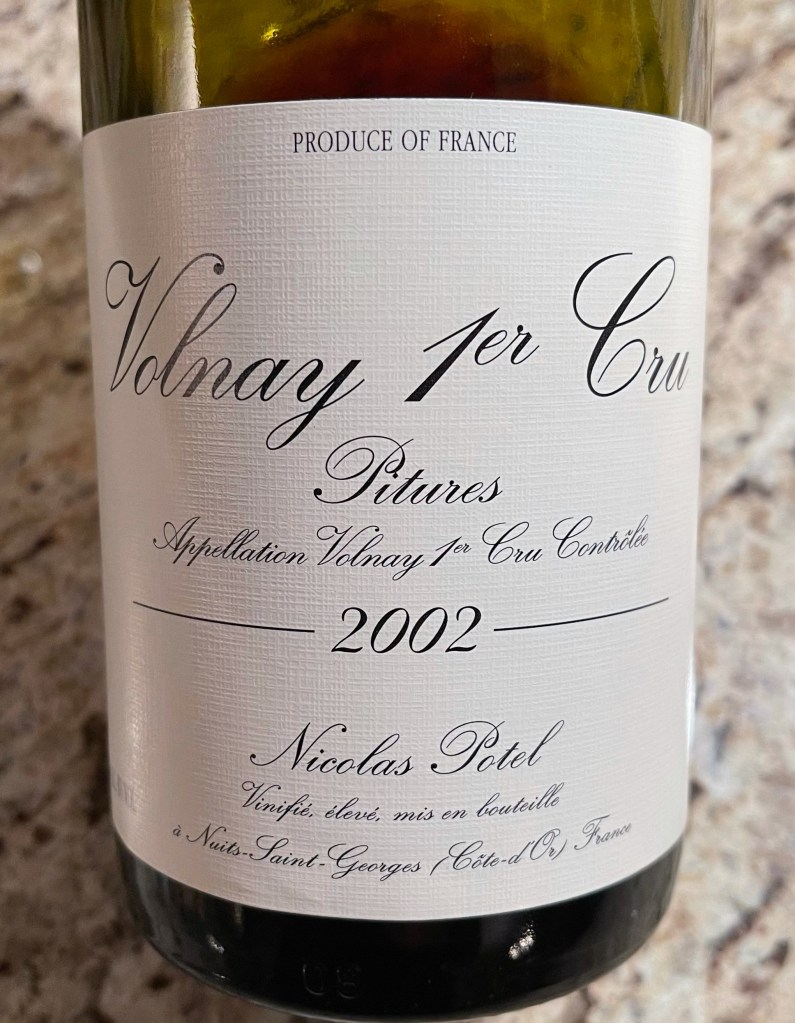
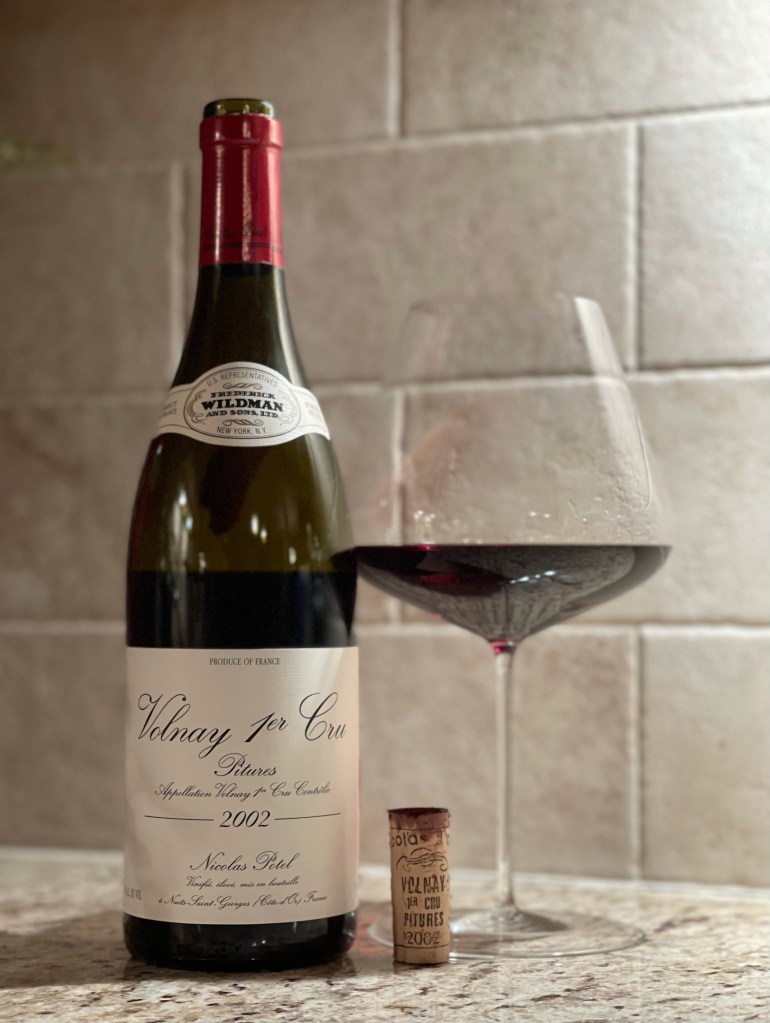
Today’s Wine: 2002 Volnay 1er Cru Pitures

100% Pinot Noir; 13% ABV

The 2002 Volnay 1er Cru Pitures is translucent medium garnet in color with slight bricking (though not too bad). This needed about an hour to blossom in the glass, helping to lift the fading nose to showcase aromas of forest floor, earthy mushroom, leather, grilled green herbs, and gravel followed by red fruits of cherry, raspberry, and strawberry all on their way out the door. The fruit is slightly more alive on the palate but is certainly still fading, displaying notes of tart red cherry, black raspberry, cranberry, truffle, tobacco, leather, loamy earth, garden herbs, and slight smoke. This is light-bodied with medium acidity, medium (-) tannins, and a medium length finish (shorter than I’d like, but that’s the age). There’s still decent structure here, but overall the fruit is fading fast. Drink up if you have any.

Price: $130 (looks like it used to be $70 when last priced on wine-searcher in 2017). I think at its peak drinking window this would’ve been a fantastic bottle for the price. However, given how advanced this is now I would pass on it if you come across it.
Top-Notch Napa Cab With Historical Pedigree

Today’s Story: Stag’s Leap Wine Cellars

Stag’s Leap Wine Cellars was established in 1970 by Warren Winiarski in what became the Stags Leap District of Napa Valley. Warren purchased the 44 acre property, which was primarily a prune orchard, and replanted it to Cabernet Sauvignon and small plots of Merlot next to Nathan Fay’s vineyard which was the first Cabernet Sauvignon planted in the district. Initially called Stag’s Leap Vineyards, the first vintage came in 1972 at rented winemaking facilities with Warren as winemaker assisted by the renowned André Tchelistcheff. In 1973, winemaking moved to new facilities at the S.L.V. estate and this second vintage is the first made in commercial quantities. A few short years later, in 1976, the 1973 S.L.V. shocked the world by winning the now famous Judgment of Paris blind tasting panel where it bested the red wines of Bordeaux (including 1970 vintages of Château Mouton Rothschild and Château Haut-Brion). Following the success, Stag’s Leap continued to grow and acquired the neighboring FAY Vineyard in 1986, producing their first FAY Cabernet Sauvignon in 1990. They expanded again in 1996 with the purchase of the Arcadia Vineyard from Mike Grgich, which is planted to Chardonnay. Though Warren sold Stag’s Leap in 2007, his family retains ownership of the Arcadia Vineyard and sells fruit to Stag’s Leap on a contract basis.

Stag’s Leap owns and farms the two estate vineyards of FAY and S.L.V. The FAY Vineyard consists of about 66 acres mostly planted to Cabernet Sauvignon, but with 1.5 acres planted to Cabernet Franc. Stag’s Leap refers to this as their “water element” vineyard, as the soil is composed of more alluvial soils of Bale gravelly clay loam and volcanic alluvium. Think of the wines of FAY offering more softness, delicate perfume, and rich berries. S.L.V. meanwhile consists of about 35 acres of Cabernet Sauvignon and 1.5 acres of Cabernet Franc and is the more “fire element” vineyard. Planted in more volcanic soils, the S.L.V. Vineyard offers more multilayered structure, complexity, aging potential, and “spicy intensity.” Stag’s Leap practices sustainable viticulture, which includes practices such as maintaining cover crops, utilizing drip irrigation, managing pests with beneficial bugs and nesting homes for owls, and following rigorous canopy management.

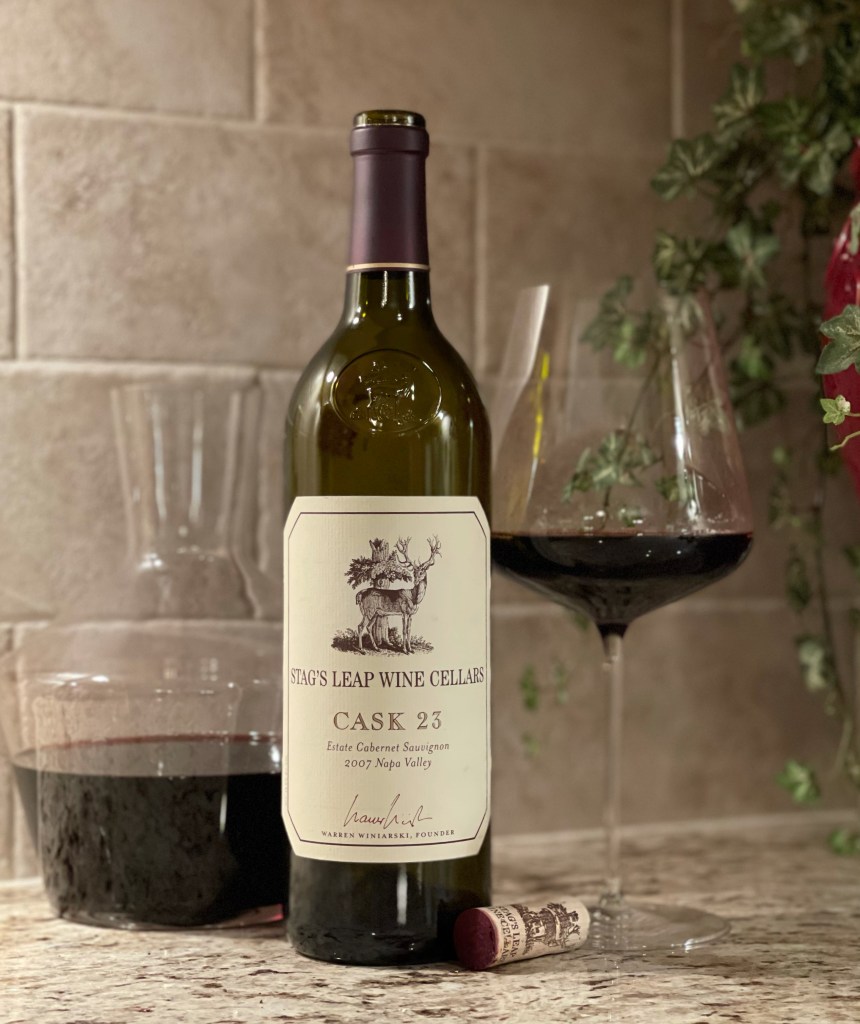
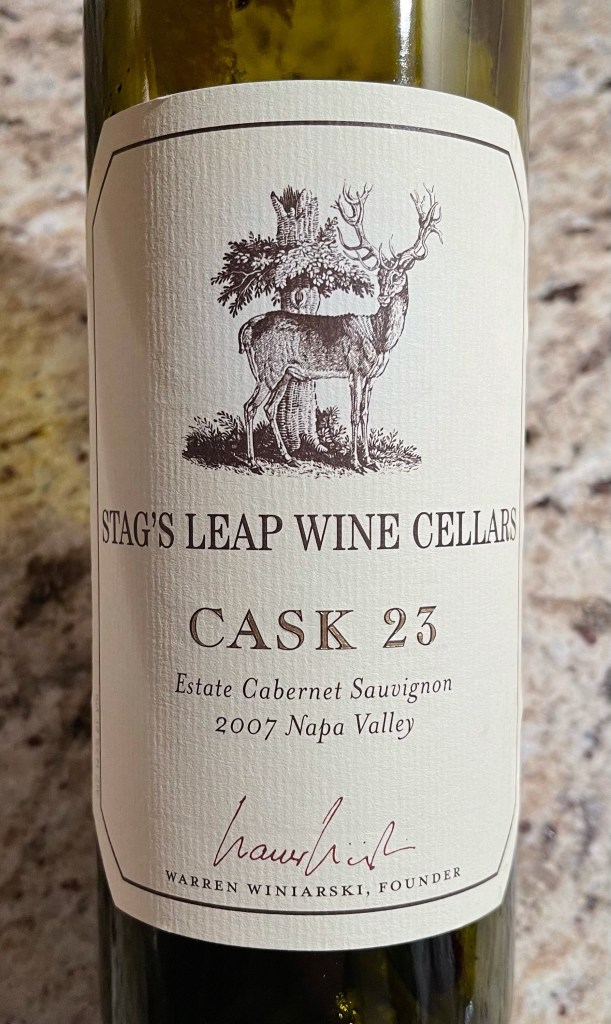
Today’s Wine: 2007 Cask 23 Cabernet Sauvignon

100% Cabernet Sauvignon; 14.5% ABV

The 2007 Cask 23 is opaque deep ruby in color with deep purple and black hues in the bowl, showcasing no signs of its age at this point. After 3.5 hours in the decanter, the nose opens to showcase aromas of black cherry, blackcurrant, black plum, cigar box, loamy earth, black truffle, graphite, cedar spill, cracked pepper, and nutmeg. Meanwhile on the palate, I get notes of crème de cassis, black cherry, blackberry, redcurrant, tobacco, cola, forest floor, black pepper, chocolate, and oaky spice. This is full-bodied with medium (+) acidity, medium (+) but refined tannins, and a very long finish. Gorgeous right now but this has several years left in the tank.

Price: $220. I’m at the price-point where I don’t think I can call this a good value, but I do not think it’s outrageously overpriced either. This is a top-tier Napa Cab that is complex while offering great depth and aging potential, though I’ve had similar wines for $50 to $70 less as well.

A Familiar Producer, but a Special Vineyard

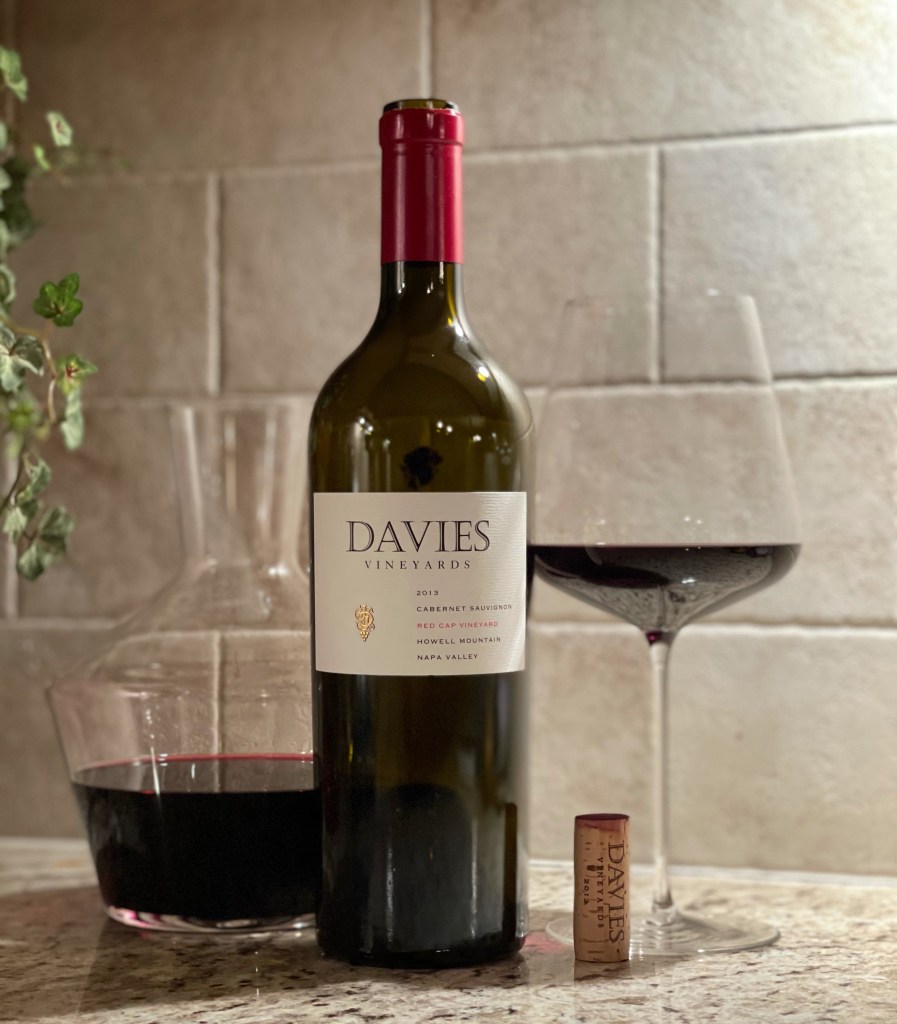
Today’s Story: Davies Vineyards

Davies Vineyards should be familiar to those of you who have been around since the beginning of this blog, namely because I reviewed the 2012 Ferrington Pinot Noir, 2012 JD Cabernet Sauvignon, 2013 Jamie Cabernet Sauvignon, and 2015 Piedra Libre Vineyards Pinot Noir. I’ve even reviewed one of their sparkling wines under the Schramsberg label, the 2005 J. Schram Sparkling Rosé. Now it’s rare I review this many wines from the same producer, and more rare that I’m reviewing another one today. However, the fruit for today’s wine comes from a vineyard (and vintner) I hold in very high regard, and whose 2014 Cabernet I reviewed in the rightfully titled What Wine Is Meant to Be.

Davies Vineyards is one of the most storied wineries in Napa, tracing their roots back to 1862 when Jacob Schram purchased 200 acres and began the development of hillside vineyards in Napa. In 1870, Chinese laborers dug what became the first hillside caves in Napa Valley for aging and storing wine, with the winery quickly ramping up production. By 1880, Schramsberg was producing 8,403 cases of wine annually from 50 acres of vines, which ramped up to about 28,361 cases from 100 acres of vines by the year 1890. Fortunes would change in the early 1900s, however, when Jacob Schram died in 1905 and the winery sold in 1912.

It wasn’t until 1965, however, that Jack and Jamie Davies purchased the 200 acre Schramsberg property and crushed the first grapes under their proprietorship. Jumping forward in time to 1994, the Davies family started replanting their Diamond Mountain vineyard property with Cabernet Sauvignon and other red Bordeaux varietals, paving the way toward their exceptional red wines in circulation today.

Several years later in 1998, Jack Davies unfortunately passed away and his wife Jamie became Chairman of the winery. Then, in 2000, Davies truly became a family affair when their son Hugh became head winemaker. His 2001 J. Davies Diamond Mountain Cabernet Sauvignon, the first vintage from the replanted vines, released in 2004 and is named in honor of Jack. Known for this Diamond Mountain Cabernet Sauvignon, Davies also produces sparkling wine under the Schramsberg label and an assortment of Pinot Noir from the Sonoma Coast to the Anderson Valley and beyond.

Today’s Wine: 2013 Red Cap Vineyard Cabernet Sauvignon

100% Cabernet Sauvignon; 14.6% ABV

The 2013 Red Cap Vineyard Cab is mostly opaque deep ruby in color with deep purple hues in the bowl of the glass. Given a couple of hours to open up, the nose showcases aromas of blackberry, blueberry, redcurrant, violets, volcanic soil, wet slate, green peppercorn, and oak. Meanwhile on the palate I get notes of blueberry, blackcurrant, black cherry, black raspberry, licorice, sweet tobacco, loamy earth, grilled herbs, and a hint of smoke. This is full-bodied with medium acidity, medium (+) tannins, and a medium (+) length finish. Great mountain fruit on this one but the structure is slightly underwhelming. 200 cases produced.

Price: $80. I think this is pretty fairly priced, however there are still markings of a consistent style of winemaking (justifiably so) that makes it very similar to the rest of the Davies bottlings. I’d say go for the namesake Red Cap Vineyards wines for roughly the same price if you’re in the club, or for $15-20 more if you’re not.

Aged Nuits-St-Georges Perhaps Just Past Its Prime

Today’s Story: Domaine Henri Gouges

I wrote about Domaine Henri Gouges around Thanksgiving 2019 when I reviewed the 2012 Nuits-St-Georges 1er Cru Les Saint Georges and am excited to be returning to the domaine again today.

Though the Gouges family has deep-rooted history in grape farming going back 400 years, Henri Gouges didn’t form his domaine until 1920. When he no longer liked the idea of selling his fruit to négociants, Henri started producing, bottling, and selling his own wine in an effort to make higher quality wines. By 1933 this transition was fully complete and the domaine existed in similar fashion to its current status. A family endeavor throughout its history, Domaine Henri Gouges passed from Henri to his sons Marcel and Michel, then to Pierre and Christian, and finally to cousins Gregory and Antoine Gouges who manage the domaine today.

Undivided since its founding as a domaine, Henri Gouges today sits at roughly 36 acres of vineyards. Several of their holdings include Nuits St. Georges 1er Crus, though Henri Gouges does produce village wines as well. Though the winery and vineyards have been updated over time (including the use of organic viticulture and transition to a gravity flow winery), the domaine’s goal is to produce wines that truly represent and express the terroir. The harvest is carefully inspected and all fruit is completely destemmed, while vinification begins in lined cement vats for approximately 15 days depending on wine and vintage. Once fermentation is complete, the wine is transferred to small oak barrels (typically 25% new) and each is fined with egg whites before light filtration and into the bottle.

Today’s Wine: 1996 Nuits-St-Georges 1er Cru Clos des Porrets – St. Georges

100% Pinot Noir; 13% ABV

The 1996 Clos des Porrets – St. Georges is translucent medium ruby in color and actually almost deep garnet. This was great as a pop-and-pour, with the nose filled with aromas of barnyard, mint, menthol, forest floor, truffle, stemmy underbrush, black olive, and mineral followed up by black cherry, black raspberry, and red florals. The palate is nice as well, but starts to fall apart on the mid-palate with notes of stemmy strawberry, black cherry, cola, rose, sous bois, earthy mushroom, granite, and mineral. The nose steals the show with this bottling. This is light- to medium-bodied with medium (+) acidity, medium tannins, and a medium (+) length finish.

Price: $140 (shared by a good friend who paid $180). I think if the palate was firing on all cylinders, this would be a great value Burgundy. The nose is profound and decidedly the star act, though perhaps this could be a slightly off bottle since the last enjoyed by my friend was said to be exquisite.

Champagne Charlie

Today’s Story: Champagne Charles Heidsieck

Charles Heidsieck is a well-known Champagne house established by Charles-Camille Heidsieck in 1851 in Reims when he was 29 years old. The grand-nephew of Florens-Louis Heidsieck who established the Champagne Heidsieck et Cie House, Charles grew up amongst the vines and became well-educated alongside a passion for fine Champagne. Quickly recognizing the untapped potential of the Champagne trade in America, Charles traveled to the country in 1852 and won the adoration of New York, titans of business, and the South for his Champagne. He even picked up the nickname Champagne Charlie (of which there is a song and movie titled) along the way thanks to his charm and astute business acumen.

With the success of his Champagne in America, Belgium, and England (amongst France of course), Charles made the audacious purchase of the breathtaking 3rd century chalk cellars known as the Crayères in 1867. Robbed of any light and noise 30 meters below ground, the Crayères can house millions of bottles of Champagne in perfect storage conditions where they age for the minimum four years but at times surpass 40 years. At minimum I suggest you take a look at pictures of these majestic cellars here, which are classified as an UNESCO World Heritage site.

One of the “smaller” top-tier and well-known Champagne houses, Charles Heidsieck consists of about 60 hectares of vines divided between the Marne and Aube departments. These vineyards are all farmed adhering to sustainable viticulture, and they are certified High Environmental Value. The house also holds long-term contracts with winegrowers and cooperatives from whom they purchase extra fruit. In the cellars, a large number of reserve wines have been set aside to provide blending capability into the non-vintage bottlings where, for example, the Brut Réserve consists of about 40% reserve wines with an average age of 10 years.

Today’s Wine: 2008 Brut Millésimé

60% Pinot Noir, 40% Chardonnay; 12% ABV

The 2008 Brut Millésimé is transparent but very vibrant medium gold in color, showcasing beautifully delicate effervescence as well. While this no doubt needs time in the cellar (maybe revisit in 5 years?), the nose displays enticing aromas of ripe pear, golden apple, lemon zest, honeysuckle, crushed rock, brioche, vanilla cream, and almond. The palate is much more tight at this stage, characterized by notes of green apple skins, lemon, lime zest, pineapple, chalk, hazelnut, and lees. This is medium- to full-bodied with racy high acidity and a very tight, precise, and linear attack into a long, long finish.

Price: $100 (though I’ve seen this priced closer to $85-90). I think this is an exquisite Champagne and certainly one I would buy multiple bottles of to cellar. This is a fantastic showing in a fantastic vintage, and I could easily see this bottling appreciating as it falls on more peoples’ radars.

Incredibly Impressive Willamette Valley Chardonnay

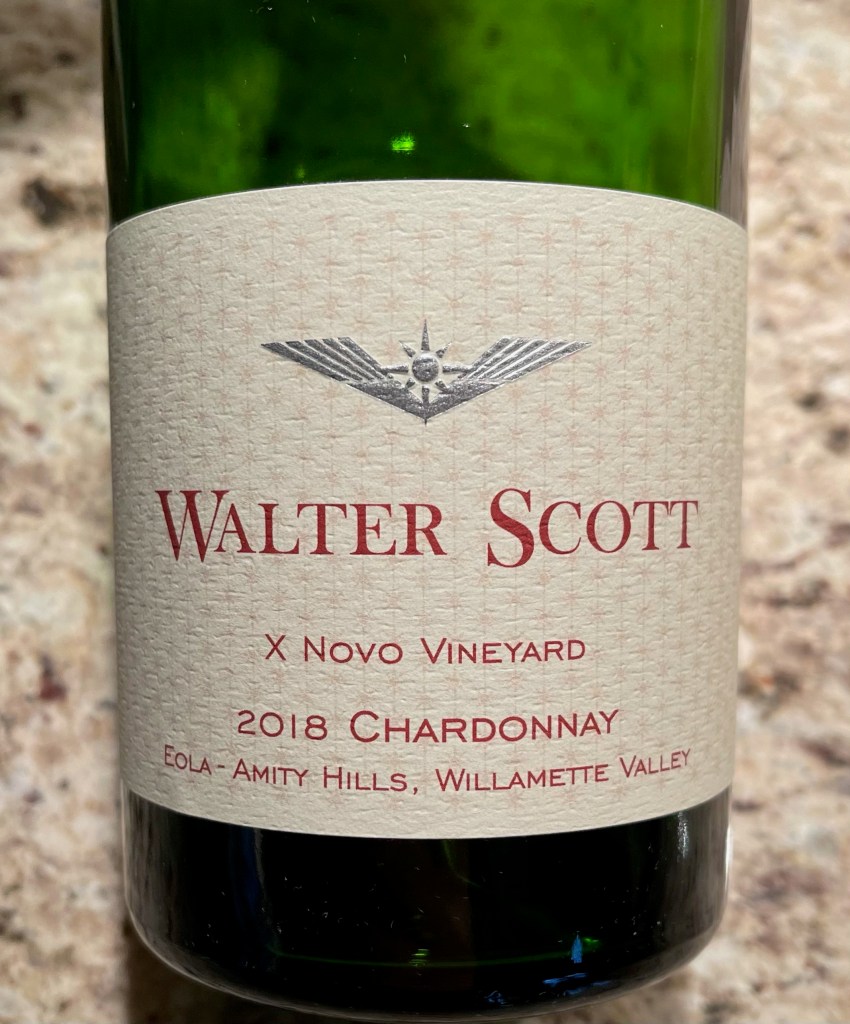
Today’s Story: Walter Scott Wines

Walter Scott Wines was established in 2008 by husband and wife Ken Pahlow and Erica Landon in the Willamette Valley of Oregon. Ken comes from a background in wine, which began in 1994 in production, sales, and harvests at St. Innocent Winery. He later moved to Patricia Green Cellars in 2009, coinciding with the first vintage of Walter Scott La Combe Verte Pinot Noir in exchange for harvest labor. Erica, on the other hand, has a background in the restaurant industry and wine education. Her impressive resume includes sommelier and GM for the Ponzi Family’s Dundee Bistro, wine director at one of Portland’s best restaurants Ten 01, and wine director for Bruce Carey Restaurants. Erica has also taught classes for Wine & Spirits Archive, WSET, and the International Sommelier Guild. Lastly I would be remiss if I forgot to mention the youngest member of the Walter Scott team, Lucille who is the daughter of Ken and Erica. She “joined the team” in 2014, the same year Ken and Erica quit their main jobs to focus 100% on Walter Scott.

Walter Scott sources their fruit from a number of growers in the Willamette Valley AVA, with many in the Eola-Amity Hills area around their “home base.” All of the growers are friends of Ken and Erica, who in their words are people they like to sit around a table with while enjoying a glass of wine. All of these vineyard partners practice dry farming without the use of herbicides, pesticides, or fungicides, while some are also organic or biodynamic. This meshes well with Walter Scott’s goal of producing single vineyard and blended bottlings from old vines that offer clonal diversity from expressive terroir.

In the cellar, Ken practices a more “dynamic” winemaking style in that he never follows a recipe and adapts vintage to vintage. The end goal is to purely let the wines speak for themselves and showcase each unique vineyard site with freshness and purity. Ken only ferments with native or ambient yeasts, minimizes punch-downs or extractive techniques, and remains committed in his attention to detail vintage to vintage in order to seek constant improvement. All of the wines age in French oak barrels, with each barrel a small part of the larger whole.

To learn more about Walter Scott Wines, view pictures of the team and vineyards, or purchase some bottles of your own, check out their website here.

Today’s Wine: 2018 X Novo Vineyard Chardonnay

100% Chardonnay; 13% ABV

The 2018 X Novo Chardonnay is transparent medium gold in color with straw yellow hues. This is an absolutely gorgeous wine from first whiff, offering up a nose of lemon peel, golden apple, quince, dried gravel, reduction (gunpowder and smoke), petrol, limestone, and saline mineral. The palate is equally beautiful, though still pretty tight due to its youth with notes of green apple skins, golden pear, lemon curd, white florals, flint, and crushed rock minerality. This is medium- to full-bodied with gorgeous and mouthwatering high acidity while being very precise and crisp into a long finish. Definitely give this a few more years in the cellar, or drink it over multiple hours now.

Price: $75 (shared by a good friend who paid $65). I think this is a great value Chardonnay, and I know prices are already on the rise as this gets more recognition. Though young, this opened for us and was one of the wines of the night in an incredible lineup, also beating another 2018 Willamette Valley Chardonnay we put it up against.

Ooh La La

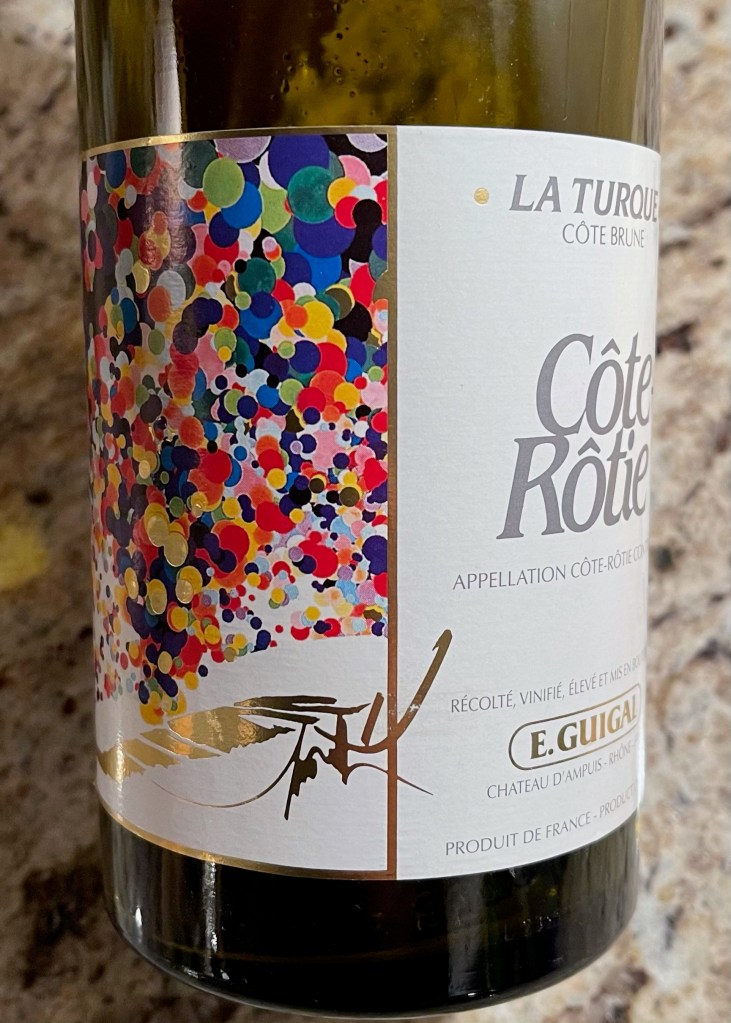
Today’s Story: E. Guigal

I previously wrote about Guigal when I reviewed the 2004 Côte-Rôtie ‘La Turque’ this past February, and I am returning to review the same wine from a younger vintage today.

Guigal was established in 1946 by Etienne Guigal in Ampuis, a small village in the Côte-Rôtie appellation of the northern Rhône region in France. Etienne arrived in Côte-Rôtie at the age of 14 in 1924, and early in his career he helped develop Vidal-Fleury for 15 years before starting his namesake venture. His son, Marcel Guigal, took over management of the Guigal domain in 1961 when Etienne was struck with temporary but total blindness, and Marcel was joined by his wife Bernadette in 1973. As Marcel and Bernadette worked tirelessly to expand the family business (namely by purchasing Vidal-Fleury in the early 1980s and Château d’Ampuis in 1995), their son Philippe (born 1975) grew amongst the vines with expectations of one day joining the domain. Today, Philippe serves as Guigal’s oenologist alongside his wife Eve and the two strive to produce the greatest wines of the Rhône Valley.

Guigal has experienced significant expansion since their first acquisitions in the 1980s and 1990s, particularly in 2001 when they purchased the domains Jean-Louis Grippat and de Vallouit to not only strengthen their stature in Côte-Rôtie but expand into the Hermitage, Saint-Joseph, and Crozes-Hermitage appellations. In 2003, Guigal started producing their own wine barrels to not only learn more about the entire wine production process but control another facet of their business. Guigal expanded yet again in 2006 by purchasing Domaine de Bonserine, and made strides in 2017 by purchasing Château de Nalys in Châteauneuf-du-Pape to establish a foothold in southern Rhône.

Today’s Wine: 2011 Côte-Rôtie ‘La Turque’

93% Syrah, 7% Viognier; 13% ABV

The 2011 La Turque is translucent deep ruby in color. I decanted this for 4-6 hours and it does need more time in the cellar (I’d say 5-7 years or so), but it’s very hard to resist right now. The nose showcases aromas of black cherry, blackberry, plum, bacon fat, maple syrup, smoked game, black olive, cracked black pepper, clove, vanilla, coffee grounds, and oak. Meanwhile the palate displays notes of blueberry, blackberry, plum, black cherry, smoke, barbecue braised beef, bacon fat, toffee, mocha, gravel, and lightly charred oak. This is medium- to full-bodied with high acidity, fine-grained but high tannins, and a very long finish.

Price: $400 average online (I paid $325). At this price point I find it difficult to call any wine a “great value,” however I think this La Turque is absolutely worth its price. I will certainly try to buy more if I come across it again.

Beautifully Aged Morey-Saint-Denis

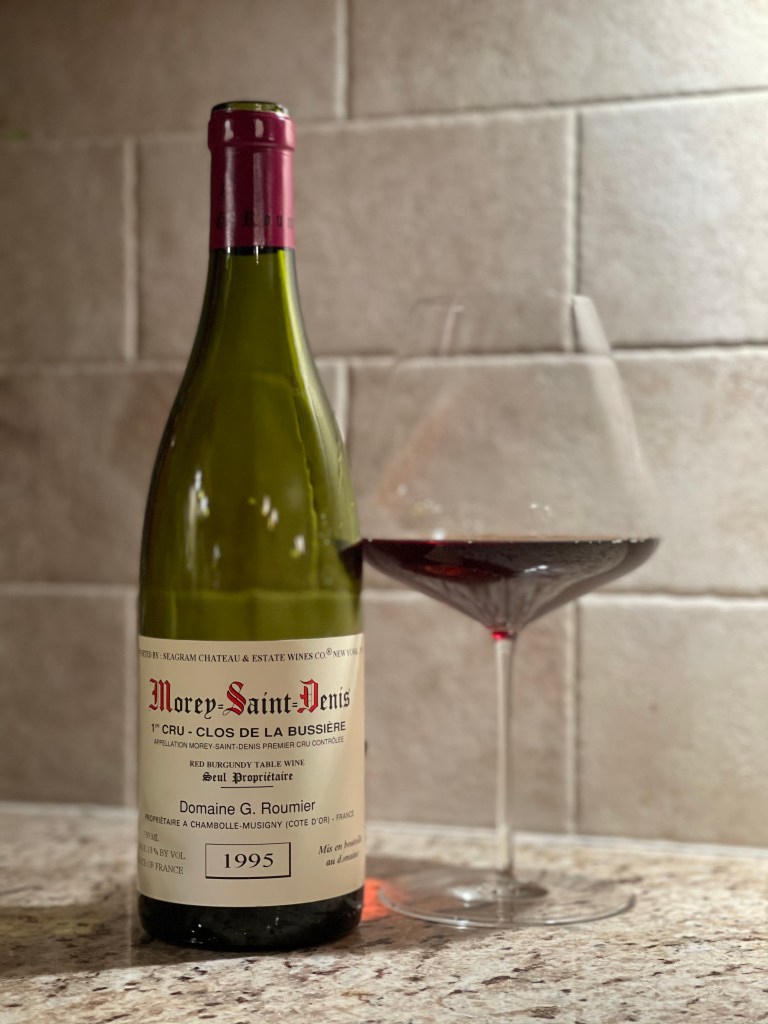
Today’s Story: Domaine G. Roumier

I previously wrote about Domaine G. Roumier when I reviewed a much younger 2014 Morey-Saint-Denis 1er Cru Clos de la Bussière back in November, 2019.

Domaine Georges Roumier originated in 1924, however most of their production at that time sold to wine merchants. This changed though, in 1945, when Georges Roumier started bottling wine at the domaine. I’m thankful Roumier made this change, as I’m sure many throughout the wine world are, because the reputation of this domaine has soared higher and Roumier sits as one of the upper-echelon producers in Chambolle-Musigny, Morey-Saint-Denis, and Corton-Charlemagne.

Christophe Roumier and his father Jean-Marie became partners in 1981 to manage the domaine, which as it currently stands covers 11.52 hectares in some of Burgundy’s premier appellations. Christophe has been instrumental in the continued rise of Roumier’s wines, immeasurably due to his very strict and dedicated care for the vines and winemaking process. Christophe produces 11 different bottlings ranging from the village level to Grand Cru, each wine made with this same rigor to produce high-quality, luxurious, profound, and always delicious wines.

All of Roumier’s fruit is hand-harvested and sorted, the village wines are typically made with destemmed fruit (the rest of the wines vary), punchdowns occur during fermentation, all yeasts are natural, and minimal new oak is used for aging (Christophe says he never goes above 30%). I’d love to dive deeper into the farming and winemaking practices, but I believe this Decanter article does an incredible job and suggest you read it if you’re interested in learning more.

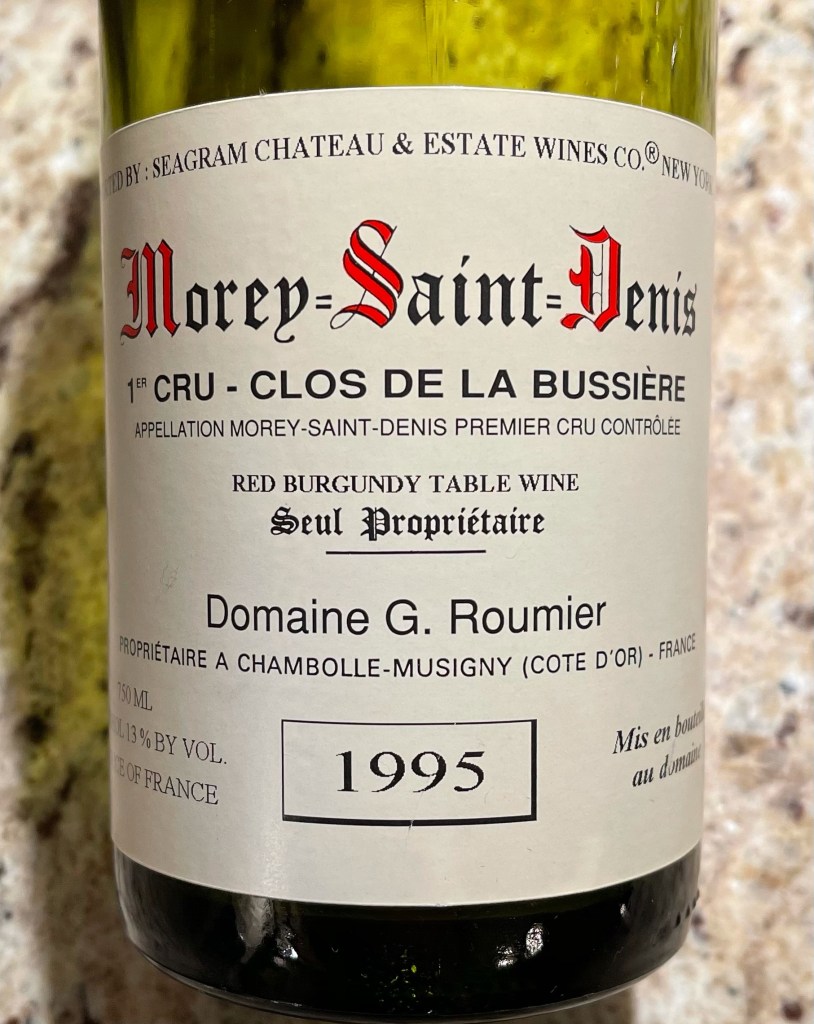
Today’s Wine: 1995 Morey-Saint-Denis 1er Cru Clos de la Bussière

100% Pinot Noir; 13% ABV

The 1995 Clos de la Bussière is transparent pale to medium garnet in color with slight bricking around the edges of the glass. This took about 45 minutes to blossom, and I decanted it to remove some sediment and cork that broke off in the bottle. The beautifully tertiary and well-integrated nose showcases aromas of black raspberry, black cherry, rose petal, dried red licorice, forest floor, mild green herbs, and prominent black truffle. Meanwhile on the palate, I get notes of black cherry, dried cranberry, underbrush, black truffle, sous bois, wet gravel, and pepper. This is light-bodied with still lively medium (+) acidity, medium (-) tannins, and a long finish. Absolutely gorgeous aged Burgundy that is perfectly balanced and perfectly aged, with the structure still a tour de force.

Price: $700 (I paid $315). I never turn down an opportunity to taste Roumier, particularly one with this much age and especially the provenance of having one owner before me. If you don’t like old wines that are dominated by forest floor and truffle, this certainly wouldn’t be for you. But for me, it’s well worth the $315 paid.

Surprising and Fun Ruby “Port” From Calistoga

Today’s Story: Chateau Montelena

I previously wrote about Chateau Montelena with the 2011 Estate Cabernet Sauvignon, my first post on this website, and then with the 2009 Chardonnay early this year. I figured it would be fun to return to Montelena today with a unique and special bottling.

Chateau Montelena traces its roots back to 1882 when Alfred L. Tubbs purchased 254 acres of rugged land with the dream of turning it into vineyards. Tubbs first planted his vineyards before constructing the chateau in 1886 and bringing in a winemaker from France, and by 1896 the A.L. Tubbs Winery was the seventh-largest in the Napa Valley. This prowess was short-lived, however, when winemaking shut down during Prohibition. With its repeal in 1933, Alfred’s grandson Chapin Tubbs continued harvesting the vineyards to make some wine and started selling fruit to others. He rechristened the winery to Chateau Montelena Winery in 1940 with the name derived from a contraction of Mount St. Helena.

In 1947, Chapin unfortunately passed away and winemaking at Chateau Montelena ceased again two years later. The Tubbs family sold this magnificent estate in 1958 to Yort and Jeanie Frank, a couple who emigrated from Hong Kong after WWII and were then seeking a peaceful place to retire. The Franks did not resume winemaking but rather worked to transform some of the overgrown grounds into a lake and landscaping reminiscent of their native gardens back home. Jade Lake on the property still provides evidence of this today and remains a beautiful and peaceful sanctuary.

The renaissance of this great winemaking estate, however, came about in the early 1970s under the leadership of Jim Barrett. Barrett quickly cleared and replanted the vineyards and brought in modern winemaking equipment alongside a team to oversee the vineyards and production. In 1972, winemaking resumed at Chateau Montelena and within years it would become one of the most important wineries in all of California and at that time even throughout the world. Chateau Montelena today thrives under the watchful eyes of Jim’s son, Bo Barrett.

Arguably the most important event in Chateau Montelena’s history occurred in 1976, though halfway around the world in France. Steven Spurrier, a British wine merchant, sought to put the best Californian wines head to head with the best French wines and assembled the Paris Wine Tasting of 1976 (known as the Judgment of Paris). There were an assortment of red wines and an assortment of white wines, with the Chateau Montelena Chardonnay being one of six Californian whites going against four greats from France’s Burgundy region. The 1973 Chateau Montelena Chardonnay beat all of the other white wines in a blind tasting and shocked not only the panel and those in attendance but the entire world, cementing California as a winemaking region demanding respect. Funny enough, Stag’s Leap Wine Cellars also in Napa Valley won for the red wines with their 1973 Cabernet Sauvignon.

If you’d like something a bit more “fun” to learn about Chateau Montelena, watch the movie Bottle Shock starring Alan Rickman, Bill Pullman, and Chris Pine.

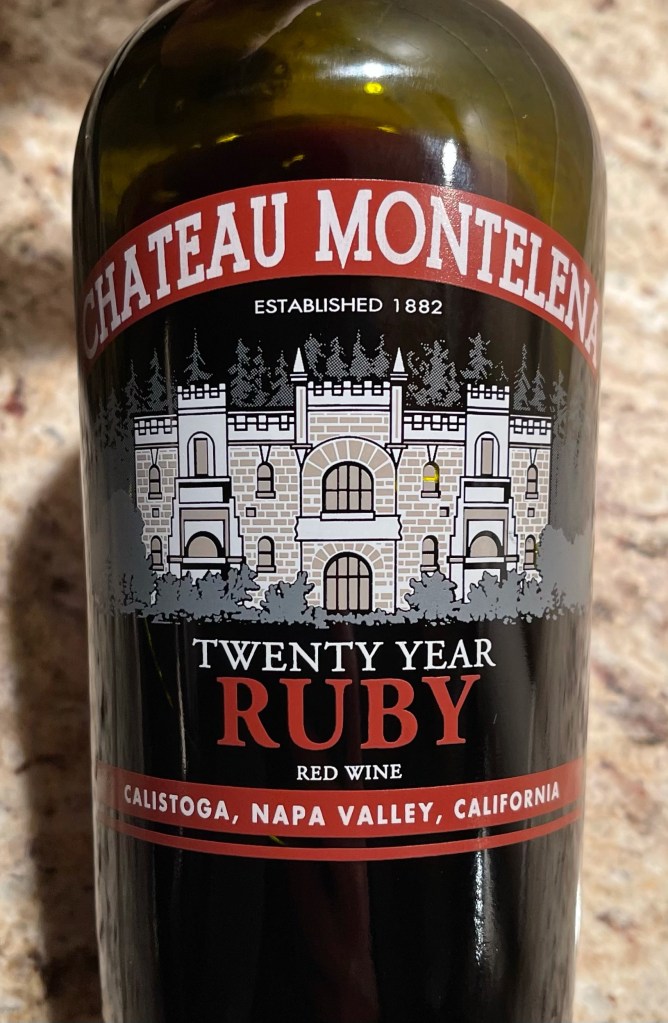
Today’s Wine: Twenty Year Ruby

100% Syrah; 20.3% ABV

The Twenty Year Ruby is translucent medium ruby to deep garnet in color. The nose is rather beautiful and surprisingly complex, showcasing aromas of bing cherry, raspberry liquor, strawberry shortcake, licorice, spice cake, chocolate, hazelnut, almond, baking spice, and vanilla. Meanwhile the palate offers equal depth with notes of orange peel, cranberry, red plum, red licorice, fig, anise, caramel, mint, chocolate, and clove. This is full-bodied with high acidity, light tannins, and a long finish. An outstanding and fun wine, though only available to Chateau Montelena club members in California or with visits to the winery.

Price: $125 (club price). I don’t think I can call this 500ml a great value at $125 each, however it is a delicious wine and surpassed all expectations I had for it. If you’re in the Montelena club, why not give it a try.

Classic Napa Cab With Some Age on It

Today’s Story: Silver Oak

Silver Oak was established in 1972 by friends Ray Twomey Duncan, a Colorado entrepreneur, and Justin Meyer, a winemaker who trained at the famous Christian Brothers Winery. The two shared a vision of focusing solely on Cabernet Sauvignon and aging their wines in strictly American oak to produce a Napa Cabernet Sauvignon built for cellaring. Silver Oak quickly grew out of their dairy barn and inaugural 1,000 case release, climbing over the following decades to become one of the top selling restaurant wines around the country. Though Justin Meyer retired in 1994 and sold his shares to the Duncan family in 2001, winemaker Daniel Baron picked up the reigns having studied Justin’s ways and Silver Oak continued to make consistent wines. Nate Weis has been winemaker since 2014, and to this day Ray’s sons David and Tim Duncan own and operate the winery.

Silver Oak consists of over 400 acres of vineyards between Napa Valley and Alexander Valley, all of which grow under sustainable viticulture practices. The vineyard management and winemaking teams are both delicate in changes that occur in the vineyards, but they also use a great deal of science and historical accounting in deciding when to pick the fruit. Silver Oak practices Berry Sensory Analysis, using tools to discover and analyze the sugar, acid, pH, and flavor of the fruit in addition to its pulp, seeds, skin, and texture. Coupled with catalogued details of each vineyard and block going back several decades, Silver Oak can pick at optimal ripeness for the wine they want each vintage.

In the cellars, the Silver Oak winemaking team led by Nate Weis prides themselves on producing consistent and high-quality Cabernet Sauvignon using both science and art. With only three winemakers in the history of Silver Oak (with overlap between each “changing of the guard”), it’s no surprise that Silver Oak offers a similar profile vintage after vintage. Interestingly, Silver Oak blends their young wines before aging and therefore they get an image of what the wine will be like before going into oak and picking up any characteristics of the wood. After nearly five years of barrel and bottle aging, Silver Oak releases their wines which are both enjoyable in their youth and have the structure to age for several decades in the cellar.

Fun Fact: Silver Oak owns their own barrel cooperage in Higbee, Missouri and I highly suggest taking a scroll through the images and barrel-making process on the website here.

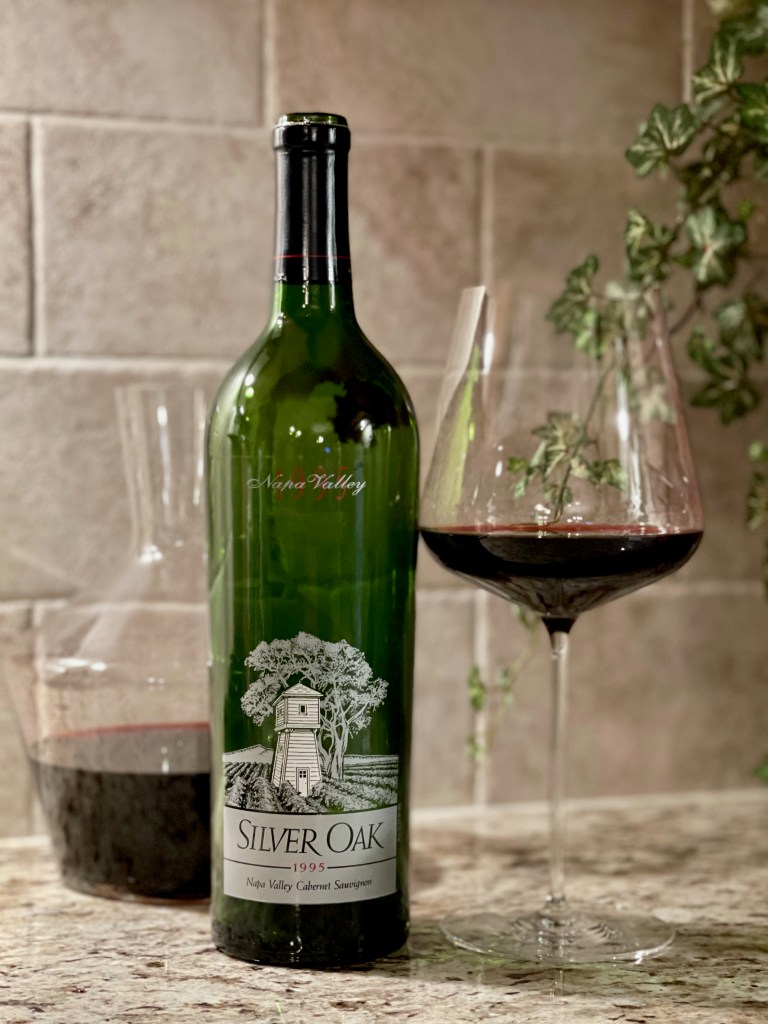
Today’s Wine: 1995 Napa Valley Cabernet Sauvignon

96% Cabernet Sauvignon, 3% Cabernet Franc, 1% Petit Verdot; 13.3% ABV

The 1995 Napa Valley Cabernet Sauvignon is deep garnet in color with ruby hues. There’s absolutely no bricking yet, and the wine is somewhat translucent. I decanted this for an hour or so, but in reality this was singing as a pop-and-pour. The nose showcases aromas of black plum, juicy blackberry, redcurrant, blueberry, licorice, forest floor, and cigar box with that classic Silver Oak clove and vanilla. On the palate, I get notes of black cherry, cassis, plum, tilled earth, green underbrush, cracked black pepper, cedar, and more Silver Oak vanilla and oak. This is medium-bodied with medium acidity, medium (+) but integrated tannins, and a medium (+) finish. Drink up if you have it.

Price: $135 (shared by a friend). I always struggle to call Silver Oak a great value wine, largely because every vintage tastes very similar and these fit more into the “people pleasing” camp of wines. The one thing you can credit Silver Oak with is consistency, but I think there are more exciting wines for the price. All depends what you want out of a Napa Cab.