Expressive and Exciting Sta. Rita Hills Syrah

Today’s Story: Black Sheep Finds

Black Sheep Finds (Holus Bolus and The Joy Fantastic) is a family owned and operated winery established by husband and wife Peter Hunken and Amy Christine in 2003 in Lompoc, California. Peter began his winemaking career in 2001 with Stolpman Vineyards, and also co-founded Piedrasassi where he remained until shifting all his attention to Black Sheep Finds in 2008. Amy has an impressive wine resume as well, earning the Master of Wine designation in 2013 and working with Kermit Lynch in Southern California.

Until 2015, Peter and Amy sourced all fruit for their wines from organically farmed vineyards in Santa Barbara County. In 2016, however, they completed the first harvest in their own estate vineyard named The Joy Fantastic which they began developing in 2014. The Joy Fantastic Vineyard is certified organic (CCOF) and consists of 5 acres planted to Syrah, Pinot Noir, and Chardonnay, though Black Sheep Finds does continue to work with select vineyard partners as well. The partners include Bien Nacido Vineyard (where they source Roussanne), Presqu’ile Vineyard (where they source small amounts of Syrah), and John Sebastiano Vineyard (where they source Syrah for Holus Bolus).

I previously wrote about Black Sheep Finds when I reviewed their 2017 Holus Bolus Franc de Pied Syrah.

Today’s Wine: 2017 The Joy Fantastic Syrah

100% Syrah; 13% ABV

The 2017 Joy Fantastic Syrah is medium purple in color and opaque. I decanted this for 1.5 hours and drank it over the following hour or so. The aromas are of medium (+) intensity, with the nose showcasing aromas of blueberry, blackberry, plum, violet, smoked meat, pine, black peppercorn, and crushed rock. Meanwhile the flavors are of medium intensity, and the palate displays notes of blueberry, red plum, sweet tobacco, charred green herbs, smoke, cracked black pepper, and bitter dark chocolate. This dry red is medium-bodied with medium acidity, medium but tightly-knit tannins, medium alcohol, and a medium (+) length finish.

Price: $45. I think this is pretty fairly priced, though there are better “values” out there in my opinion. What’s really impressive here though is how complex and expressive the wine is, particularly given the very young age of the Joy Fantastic estate vineyard. I’ll certainly be revisiting this wine over the years to come.
Fun and Refreshing Napa Valley White Blend

Today’s Story: Massican Winery

Massican Winery was established in 2009 by winemaker Dan Petroski (also of Larkmead Vineyards) and was born out of his passion for Italy and the country’s lifestyle, culture, and wines. Massican is a very unique endeavor in Napa Valley, focusing exclusively on white grape varieties including Tocai Friulano, Ribolla Gialla, Pinot Bianco, and Greco common in northeastern Italy as well as the more “expected” varieties of Sauvignon Blanc and Chardonnay. True to Dan’s mission, the Massican wines are not only made with uncommon varieties for Napa but they are also not the stereotypical oaky white wines the region is known for. Dan uses varying amounts of new and neutral oak as well as stainless steel, also not allowing his wines to go through malolactic fermentation so they maintain the crisp, fresh, and refreshing characteristics of each grape variety. Another contributing factor is how Dan picks his grapes at lower sugar levels, preserving the vibrant acidity and resulting in often lower-alcohol wines.

I previously reviewed the 2019 Sauvignon Blanc and 2019 Annia from Massican, both pure and fun Napa Valley white wines.

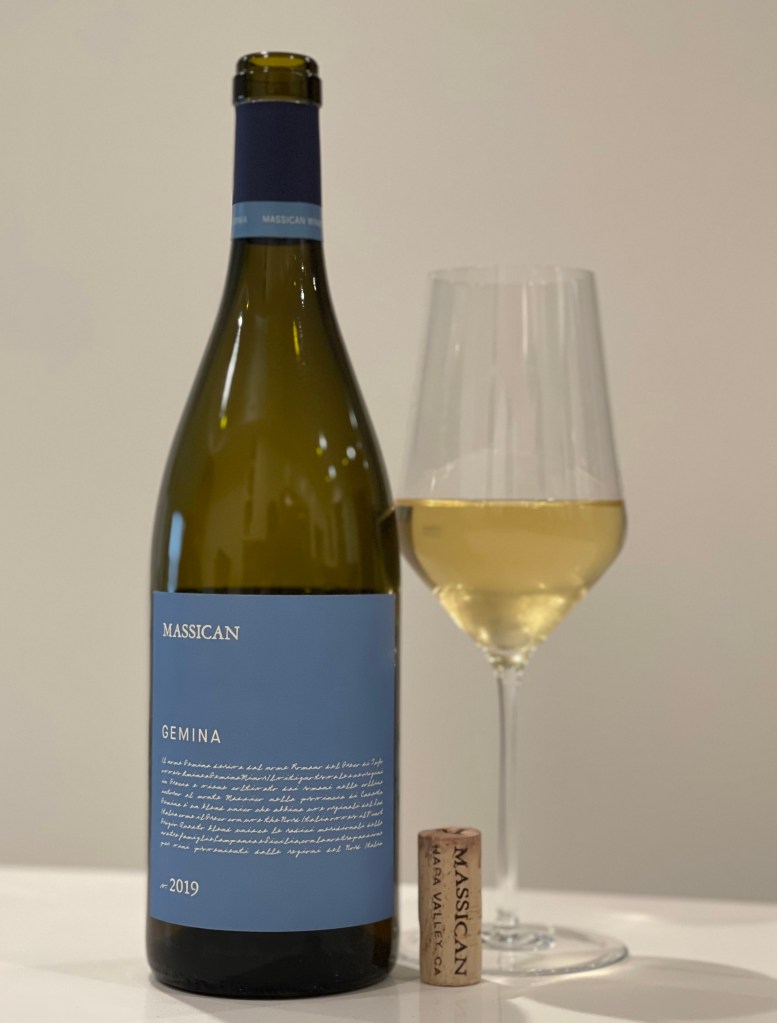
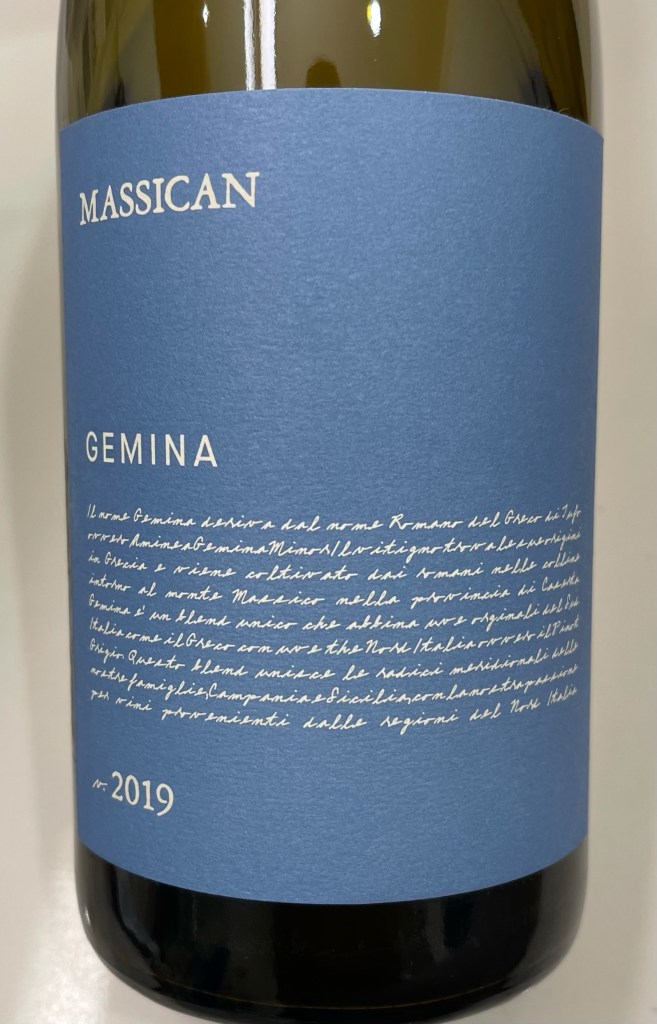
Today’s Wine: 2019 Gemina

74% Pinot Bianco, 26% Greco; 13% ABV

The 2019 Gemina is pale to medium yellow in color. The aromas are of medium intensity, and the nose showcases notes of white peach, pear, yellow apple, lemon zest, honeysuckle, dried almond, and oyster shell. Meanwhile the flavors are also of medium intensity, with the palate displaying notes of lemon zest, ripe pear, yellow apple, peach, crushed rock, and saline mineral. There’s a slight herbal characteristic to the wine as well. This dry white is medium-bodied with high acidity, medium alcohol, and a long finish.

Price: $30. This is pretty good value given the quality, and it’s a fun uncommon blend for Napa and Sonoma. I was a big fan of this wine, and it’s a very refreshing white for a hot day.

Delicate but Beautifully Pure Syrah and Lagrein Blend

Today’s Story: Whitcraft Winery

Whitcraft is a small, family-owned and operated winery in Santa Barbara, CA known for their traditionally made and “unadulterated” Pinot Noir and Chardonnay. Established in 1985 by Chris and Kathleen (Barnato) Whitcraft, the winery started as a passion for both the craft of winemaking and the lifestyle. Chris learned from California greats including Joe Heitz, Dick Graff, and Burt Williams while simultaneously hosting a radio show about wine from 1978 to 1989. Chris and Kathleen’s son Drake joined the family winery and took over in 2007, maintaining the traditional practices of hand-harvesting, foot-pressing, no added enzymes, and native yeast fermentation. Whitcraft’s wines are pure, well-balanced, and honest representations of the fruit and terroir, often remaining low in alcohol and not seeing much added SO2. Drake hand fills and corks his wines, with production incredibly limited and often reserved for mailing list clients or restaurants. Though Chris passed away in 2014, his vision and passion live on through Drake to this day.

Whitcraft is one of my favorite California producers of terroir-driven wines, and I previously wrote about the 2016 Pence Ranch Clone 828 Pinot Noir, 2018 Stolpman Vineyard Grenache, and 2016 Presqu’ile Vineyard Chardonnay.

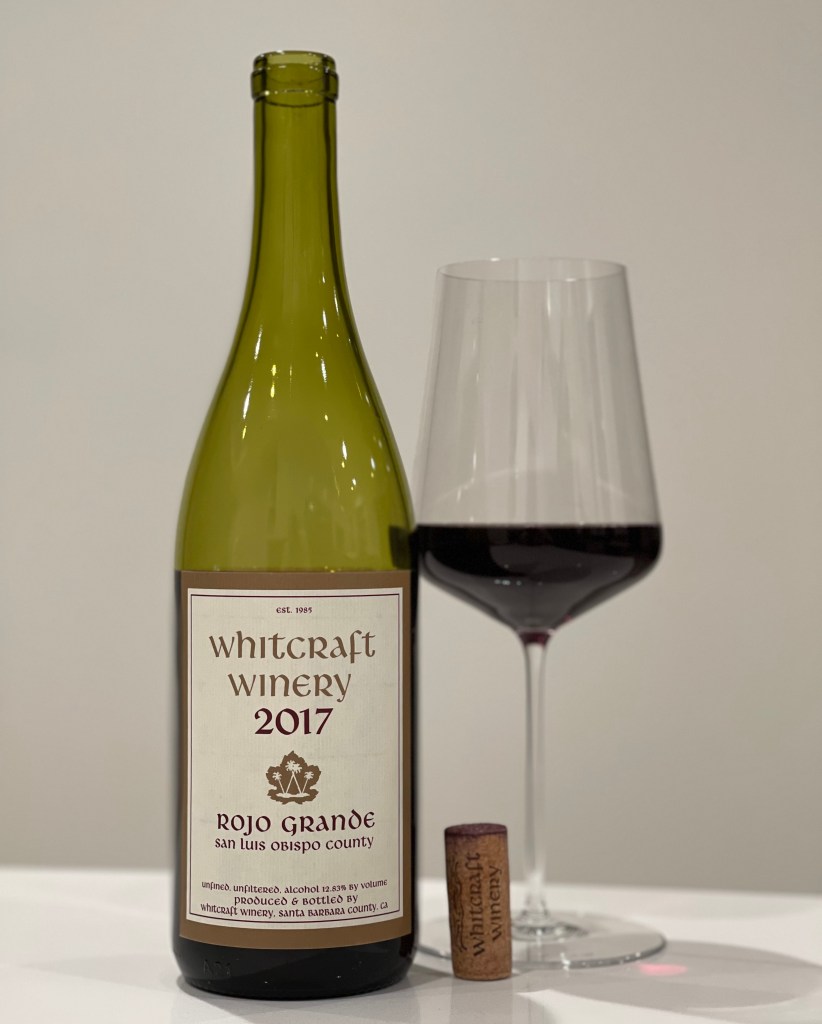
Today’s Wine: 2017 Rojo Grande

Blend of Syrah and Lagrein; 12.83% ABV

The 2017 Rojo Grande is medium purple in color and rather opaque. Given some time to blossom in the glass, the aromas are of medium intensity and the nose showcases notes of cherry, blueberry, plum, violet, forest floor, dried green herbs, coffee grounds, and clay pot. Meanwhile the flavors are also of medium intensity, and the palate displays similar notes of black cherry, red plum, wild blueberry, soft licorice, lavender, sweet tobacco, cola, and clay. This dry red blend is light-bodied with medium (+) acidity, medium (-) tannins, medium alcohol, and a medium (+) length finish. This is an easy-drinking and beautifully-balanced wine.

Price: $30. This is a very solid price-point for this wine and I’d say it offers decent value. While it’s not the most intense in profile, the wine is of impeccable quality and makes for an incredibly enjoyable drinking experience.

Simple but Tasty California Gamay

Today’s Story: Jolie-Laide

Established by Scott Schultz, Jolie-Laide is a small, boutique winery crafting wines in Sebastopol, California. Jolie-Laide is a French term of endearment for something unconventionally beautiful that translates to “pretty-ugly,” and Scott decided to use it in naming his winery following experiences in the restaurant business. When he worked at Bouchon in Yountville, Scott realized that the majority of people didn’t seem to explore the wine list but rather stuck to Chardonnay, Pinot Noir, or Cabernet Sauvignon. He thought this was a travesty of sorts, given the wonderful varieties including Gamay, Valdiguié, Vermentino, or Trousseau Gris. Eventually Scott transitioned out of the restaurant business and found himself working alongside Pax Mahle, a wildly skilled winemaker in his own right. One year, Pax allowed Scott to make a wine of his own using 1-2 tons of fruit and he decided to use none other than Trousseau Gris because of how fascinating of a variety it is to him. Alas, Jolie-Laide was born and continues to produce magnificent and wildly fun wines today.

When it comes to sourcing his fruit, Scott works with farmers he has known for years who largely follow organic practices and work incredibly unique sites. After harvest, all of the Jolie-Laide red fruit is foot crushed and left whole cluster with some of the varieties (like Gamay) seeing carbonic maceration. Thanks to Scott’s selection of incredible sites, he can be pretty hands-off during the rest of the winemaking process and lets the terroir and fruit speak for itself. Scott lets his wines ferment naturally and, instead of using temperature control, says “we stick things in the sun if we need to get them warm” (source). Furthermore, Scott adds little SO2 when necessary in part because his wines tend to be bottled young to both preserve freshness in the fruit and provide barrels for the following year’s harvest.

I reviewed a number of wines from Jolie-Laide last year, but wanted to check back in with the Gamay bottling that I haven’t tried yet. For prior reviews, you can check out the 2016 Provisor Vineyard Grenache, 2019 Trousseau Gris, 2016 Halcon Vineyard Syrah, and 2017 Shake Ridge Vineyard GSM.

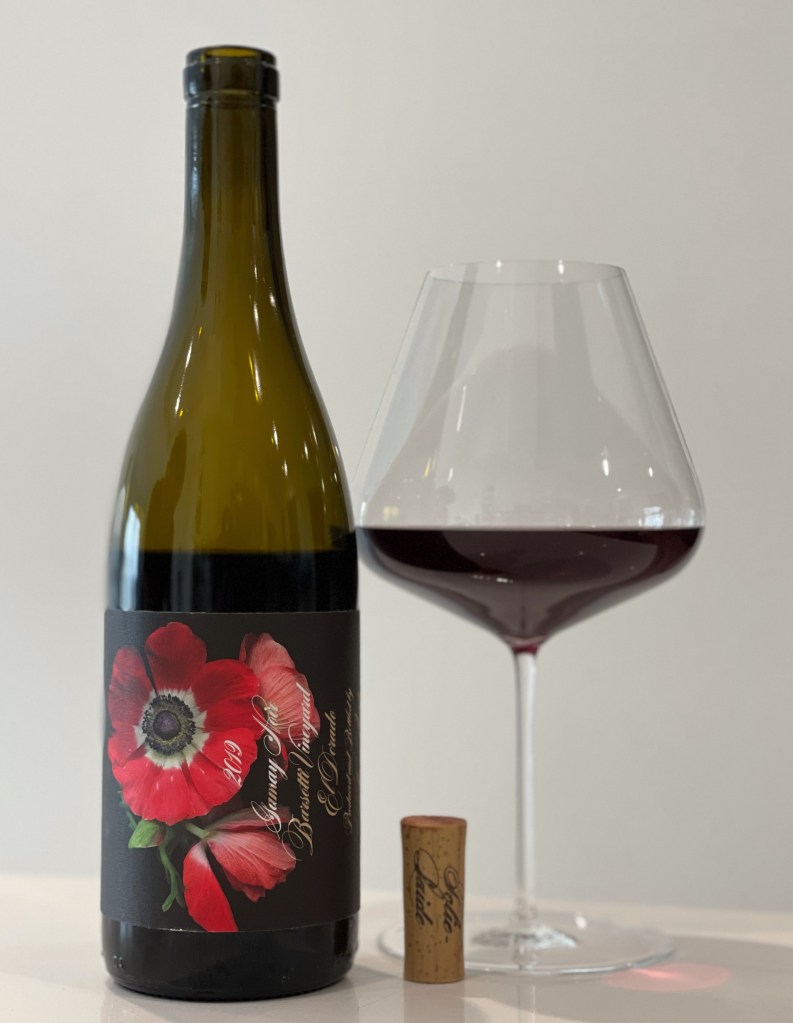
Today’s Wine: 2019 Barsotti Vineyard Gamay Noir

100% Gamay; 12% ABV

The 2019 Barsotti Vineyard Gamay Noir is pale ruby in color. Given some time to blossom in the glass, this opens with aromas of medium intensity and a nose that showcases notes of cherry, strawberry, red plum, cranberry, and dried underbrush. Meanwhile the flavors are also of medium intensity, with the palate displaying notes of ripe red cherry, strawberry, raspberry, licorice, dried green herbs, and cola. This dry red is light-bodied with medium (+) acidity, low tannins, medium alcohol, and a medium length finish. Though this is a very enjoyable and chuggable wine, I would like to see more depth and complexity to it especially on the nose.

Price: $30. I think this is priced fairly well given how high the quality is and how enjoyable it is to drink. While it’s not the most complex or expressive Gamay I’ve had, it’s perfect for warmer days when you want a red over a white.

Beautifully Pure Amador County Chenin Blanc

Today’s Story: Sandlands Vineyards

Sandlands Vineyards is a small family-owned and operated passion project of Tegan and Olivia Passalacqua established in 2010. Tegan, a winemaker with a proven track record of crafting fantastic old vine Zinfandel at Turley Wine Cellars, branched out into this side project with a focus on ancient and “forgotten” varieties. In the far reaches of California winegrowing in Lodi, Contra Costa County, Santa Lucia Highlands, Amador County, and the more familiar Sonoma Coast, Tegan sources Chenin Blanc, Cinsault, Trousseau, Carignane, Mataro, Syrah, Zinfandel, and other varieties from vines that are at times more than 100 years old. Though these varieties and the vineyards he sources from have been farmed for decades and generations, they oftentimes lay outside of the “norm” for California viticulture and are even mostly planted in decomposed granite (i.e. sand). What’s more, the vineyards Tegan works with are typically head-trained, dry-farmed, and own rooted. Tegan crafts these wines in a traditional and minimally invasive manner, allowing the unique terroir and vine to shine through in each bottling which results in lower alcohol, easy drinking, but complex wines. Production is miniscule and quantities are quoted by the barrel, so these can be hard to find and the mailing list is the easiest way.

I’ve been in love with Sandlands’ wines that I’ve tried, and I previously reviewed the 2018 Lodi Zinfandel, 2018 Lodi Red Table Wine, and 2018 Santa Lucia Highlands Syrah.

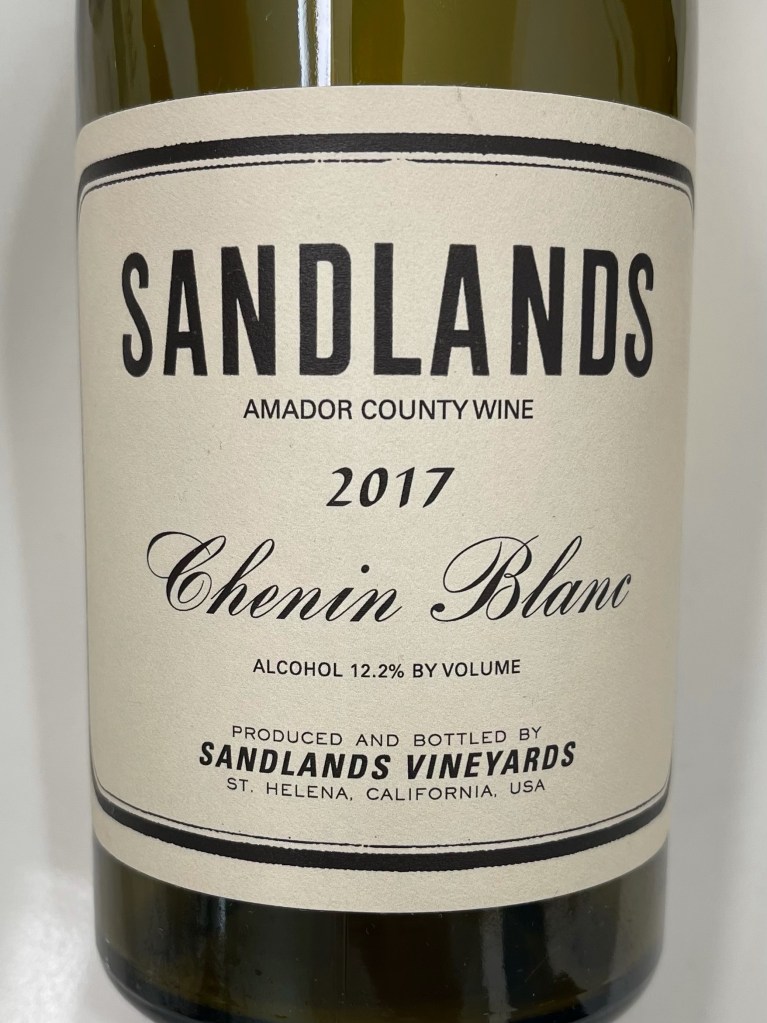
Today’s Wine: 2017 Amador County Chenin Blanc

100% Chenin Blanc; 12.2% ABV

The 2017 Amador County Chenin Blanc is pale gold in color and transparent. The aromas are of medium intensity, with the nose showcasing notes of lemon curd, crisp yellow apple, quince, honeysuckle, honeycomb, wet stone, and saline. The flavors are also of medium intensity, and the palate displays notes of lemon zest, underripe pear, yellow apple, chamomile, honey, crushed rock minerality, and oyster shell. This dry white is light- to medium-bodied with high acidity, medium alcohol, and a long finish. This took some time to come alive in the glass, but once it did the wine did not last long. Very tasty.

Price: $50. I know this is significantly cheaper direct from the winery, though retail pricing in the secondary market seems to be around $50. If you can buy this on the mailing list, don’t hesitate because it is a gorgeous wine that’s both beautifully balanced and fairly complex. As far as price I paid, I have no qualms.

Fruity, Floral, and Refreshing Summer White

Today’s Story: Arnot-Roberts

Arnot-Roberts is a boutique winery established in 2001 by Duncan Arnot Meyers and Nathan Lee Roberts, two childhood friends who grew up together in Napa Valley. After college, Nathan started working with his father as a cooper of oak wine barrels while Duncan pursued winemaking throughout Napa and Sonoma counties. Arnot-Roberts began with a single barrel of wine the duo produced in their basement and over time grew through the purchase of fruit from renowned vineyards in Napa, Sonoma, El Dorado, and Amador counties as well as the Santa Cruz Mountains. When selecting vineyards, Arnot-Roberts makes sure the farmers are both “passionate and conscientious” because their goal is to produce small quantities of honest, terroir-driven single-vineyard wines which truly express their unique place. The winemaking style is a mix of Old World and New World, with use of indigenous fermentation, little or no new oak, and often whole cluster.

Arnot-Roberts is a producer I keep coming back to, as I previously reviewed the 2016 Que Syrah Vineyard, 2018 North Coast Trousseau, and 2018 Watson Ranch Chardonnay.

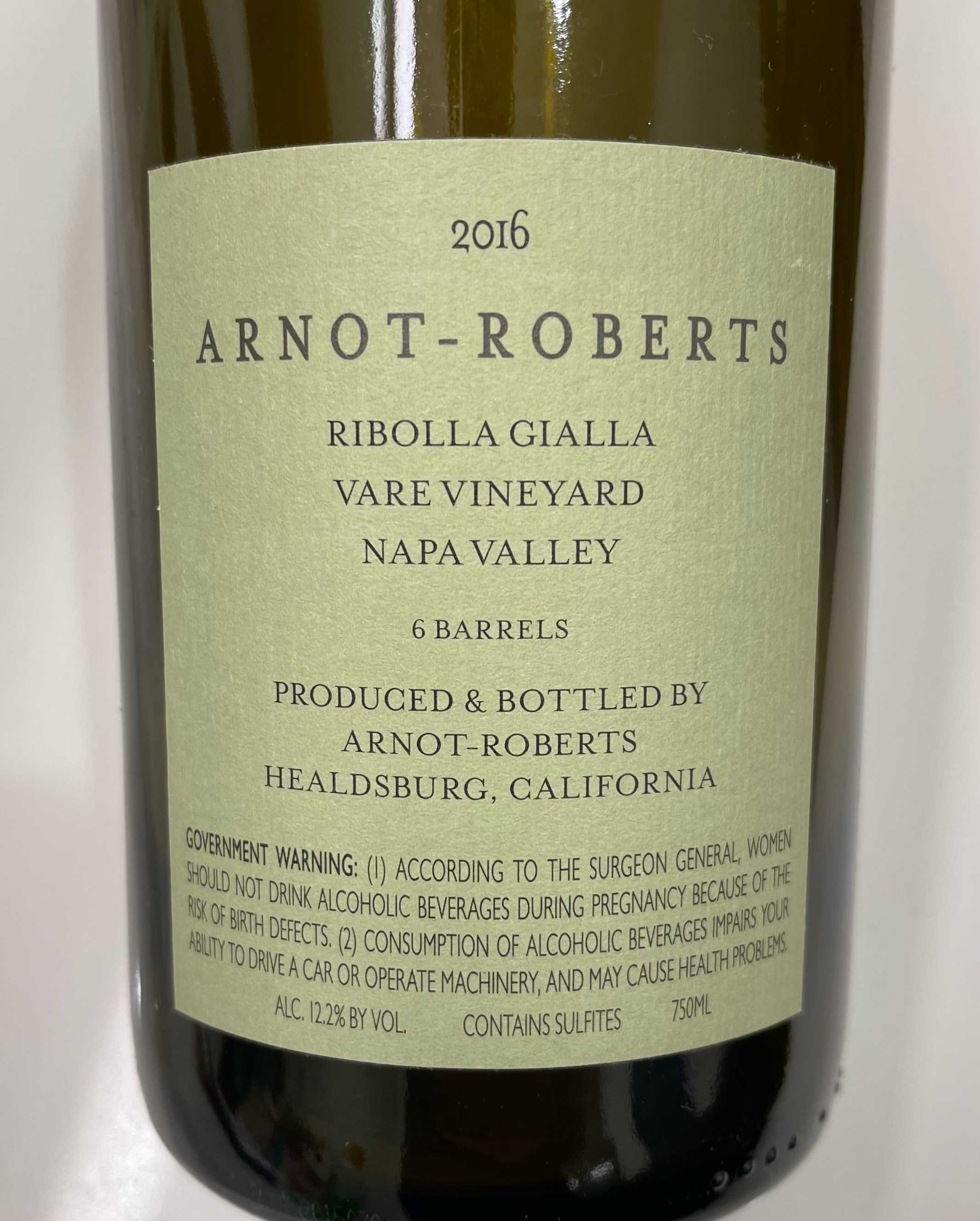
Today’s Wine: 2016 Vare Vineyard Ribolla Gialla

100% Ribolla Gialla; 12.2% ABV

The 2016 Vare Vineyard Ribolla Gialla is pale gold in color and transparent. The delicate and inviting aromas are of medium intensity, and the nose showcases notes of pear, lemon zest, green apple skins, white lily, beeswax, and delicate dried green herbs. Meanwhile the flavors are also of medium intensity and the palate displays notes of fresh pear, green apple, lemon peel, tangerine, white florals, dried thyme, and chalky mineral. This dry white is light- to medium-bodied with medium (+) acidity, medium alcohol, and a long finish. Very refreshing and enjoyable, so I could see this becoming a staple for my summer. 6 barrels produced.

Price: $44. Though this isn’t inexpensive and there are better “values” out there, I believe this is very fairly-priced and I would certainly buy it again over and over. I think this is a very nice representation of the Ribolla Gialla variety, and the beauty and purity in this wine is quite impressive.

Beautifully Pure Lodi Zinfandel

Today’s Story: Sandlands Vineyards

Sandlands Vineyards is a small family-owned and operated passion project of Tegan and Olivia Passalacqua established in 2010. Tegan, a winemaker with a proven track record of crafting fantastic old vine Zinfandel at Turley Wine Cellars, branched out into this side project with a focus on ancient and “forgotten” varieties. In the far reaches of California winegrowing in Lodi, Contra Costa County, Santa Lucia Highlands, Amador County, and the more familiar Sonoma Coast, Tegan sources Chenin Blanc, Cinsault, Trousseau, Carignane, Mataro, Syrah, Zinfandel, and other varieties from vines that are at times more than 100 years old. Though these varieties and the vineyards he sources from have been farmed for decades and generations, they oftentimes lay outside of the “norm” for California viticulture and are even mostly planted in decomposed granite (i.e. sand). What’s more, the vineyards Tegan works with are typically head-trained, dry-farmed, and own rooted. Tegan crafts these wines in a traditional and minimally invasive manner, allowing the unique terroir and vine to shine through in each bottling which results in lower alcohol, easy drinking, but complex wines. Production is miniscule and quantities are quoted by the barrel, so these can be hard to find and the mailing list is the easiest way.

It seems Sandlands is becoming somewhat of a staple for me, as I previously reviewed the 2018 Lodi Red Table Wine and 2018 Santa Lucia Highlands Syrah. I also plan to review the 2017 Chenin Blanc soon.

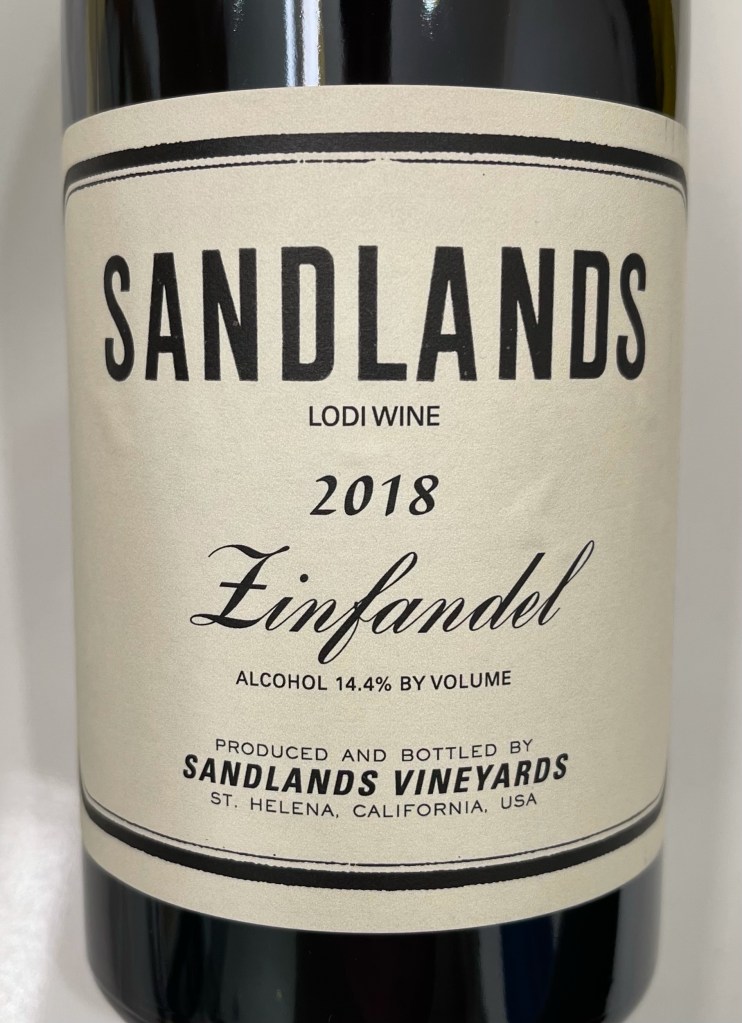
Today’s Wine: 2018 Lodi Zinfandel

100% Zinfandel; 14.4% ABV

The 2018 Lodi Zinfandel is medium ruby in color. This was a late-night Coravin pour, so I simply let it open up in the glass. The aromas are of pronounced intensity, and the nose showcases aromas of blueberry, blackberry compote, plum, muddled strawberry, sweet tobacco, and cinnamon. Meanwhile the flavors are also of pronounced intensity, with the palate displaying notes of blackberry, black cherry, blueberry, black raspberry, sweet tobacco, mild green herbs, and a touch of baking spice. This dry red is medium-bodied with medium acidity, medium tannins, high alcohol, and a medium (+) finish. There is remarkable balance in this wine for how young it is, and in my opinion this is one of the best expressions of Zinfandel that I’ve tasted.

Price: $50 (I paid $40). I think this offers very solid value, particularly for how pure and true to variety and terroir it is. I don’t drink a ton of Zinfandel, but when I do wines like this are exactly what I’m looking for.

High Quality and Low Production Sonoma Cab

Today’s Story: Little Boat

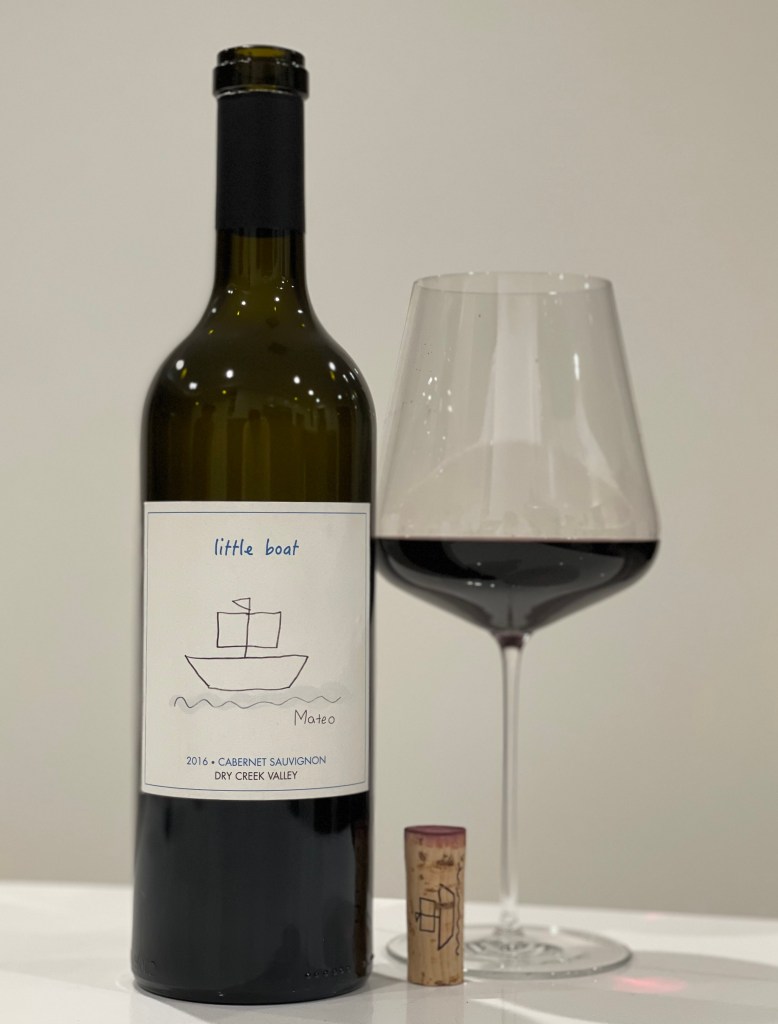
Little Boat is a very small winery in Sonoma, California, however there isn’t much information about them that I could find. They did come onto my radar last year though, when I happened to meet proprietor José Ignacio Cuenca at a Los Angeles restaurant and we struck up a friendly conversation and discussed his wines. I also had the pleasure of meeting his son Mateo, who created the artwork on the Little Boat labels. Little Boat is a group effort, and José works with winegrower Brad Alper, winemaker William Knuttel, Mike Miller, and the Treyzon family. They also receive help from sommeliers Harley Carbery, Phillip Dunn, Lucas Payá, and Robert Smith MS. Little Boat produces a range of wines including most notably a Russian River Valley Chardonnay, a Russian River Valley Pinot Noir, and a Dry Creek Valley Cabernet Sauvignon. There is also a rosé and very limited quantities of a reserve Pinot Noir. Placement of these wines is highly selective, and they are generally found in high-end hotels and restaurants or highly curated and boutique wine stores.

I very recently wrote about the 2018 Little Boat Pinot Noir, so please feel free to check out those tasting notes if you haven’t already!

Today’s Wine: 2016 Cabernet Sauvignon

100% Cabernet Sauvignon; 14.5% ABV

The 2016 Cabernet Sauvignon is deep ruby in color. I let this open up for about an hour, though for being so young it was fairly friendly right out of the gates. The aromas are of pronounced intensity, with the nose showcasing notes of blackberry, redcurrant, red plum, sweet tobacco, dried earth, dried green herbs, chocolate, vanilla, and cedar. There’s some heat there too from the alcohol. Meanwhile the flavors are also of pronounced intensity, and the palate displays notes of redcurrant, black cherry, black raspberry, blueberry, tobacco, coffee grounds, milk chocolate, vanilla, and baking spice. This dry red is full-bodied with medium (+) acidity, high tannins, high alcohol, and a medium (+) finish.

Price: $40. This offers very solid value, though for me it fits into the camp of high-quality people pleaser. The fruit is slightly jammy, though there is some complexity here that’s intriguing. You can certainly notice the oak as well, so while not my preferred style I think many consumers would enjoy this.

Delicate and Floral Rhône Blend From Paso Robles

Today’s Story: Booker Vineyard

Booker Vineyard as it exists today stems from the purchase of 100 acres by Eric and Lisa Jensen in 2001. The history of this land, however, traces back to the late 1920s when Claude and Dick Booker, two orphaned brothers, purchased land on Paso’s Westside that amassed to more than 1,200 acres by the turn of the century. The Bookers were some of Paso’s best-known residents for their farming knowledge and philanthropy, with their largest gift being 100% of their estate left to charity when Dick died in 1990 and Claude died in 2000.

Now back to 2001 with Eric and Lisa, the couple intended to use their new land to grow grapes for some of the best wineries in the Paso Robles area. Though they achieved this goal selling grapes to Saxum for five years and L’Aventure for two years, Eric and Lisa wanted more out of their land and decided to bottle their own wine beginning with the 2005 vintage. A unique and more personalized expression of their land, Booker wines are made by Eric Jensen himself.

Though Booker did not receive organic certification until April 2021 and they are not certified biodynamic, their farming practices have always pulled inspiration from both philosophies. The Jensens have come to realize that biodynamic farming practices help maintain the interconnected lifestyle and cycles of all entities in the vineyards, providing a boost to soil and vine health that becomes apparent in their wines. Furthermore, the vines are planted in rather high density so each plant can focus its energy on few clusters that create concentrated wines rather than an abundance of fruit. This is also important because Booker’s vineyards do not get much water.

Much like the mentality in the vineyards, Booker makes their wines in minimalist fashion. Eric strives to interfere as little as possible, with his red wine fermentations started using pump-overs and moving to punch-downs in most cases once fermentation starts. The wines are not racked until bottling and these wines are typically aged for 18 months. With his white wines, Eric doesn’t stick to a particular formula or practice and tries to make wines that stand out within the region. For more, check out the Booker website here where much of the above information finds its source.

To explore another bottling from Booker after today’s tasting notes, I previously reviewed the 2016 Vertigo GSM Red Blend.

Today’s Wine: 2017 White

49% Roussanne, 30% Viognier, 12% Chardonnay, 4% Clairette Blanc, 3% Grenache Blanc, 2% Marsanne; 14.8% ABV

The 2017 White is pale to medium gold in color. I let this open up in the glass for about 30 minutes or so. The aromas are of medium intensity, and the very delicate and floral nose showcases aromas of dried pineapple, white peach, mango, white lily, chamomile, brioche, and wet river stone. The flavors are also of medium intensity, and on the palate I get notes of pineapple, Meyer lemon, tropical citrus, orange peel, beeswax, chamomile, dried wild herbs, and stony mineral. This dry white blend is medium- to full-bodied with an oily mouthfeel, medium (+) acidity, high alcohol, and a medium (+) length finish.

Price: $50. I think this is a solid price-point for this wine, particularly for how true to variety it is given the blend. The ABV is certainly higher than I prefer in my wines, but it doesn’t stick out at all and the balance here is great. While there may be better “values,” this is a delicious wine from a great producer.

Small Production Pinot Noir in a People-Pleasing Style

Today’s Story: Little Boat

Little Boat is a very small winery in Sonoma, California, however there isn’t much information about them that I could find. They did come onto my radar last year though, when I happened to meet proprietor José Ignacio Cuenca at a Los Angeles restaurant and we struck up a friendly conversation and discussed his wines. I also had the pleasure of meeting his son Mateo, who created the artwork on the Little Boat labels. Little Boat is a group effort, and José works with winegrower Brad Alper, winemaker William Knuttel, Mike Miller, and the Treyzon family. They also receive help from sommeliers Harley Carbery, Phillip Dunn, Lucas Payá, and Robert Smith MS. Little Boat produces a range of wines including most notably a Russian River Valley Chardonnay, a Russian River Valley Pinot Noir, and a Dry Creek Valley Cabernet Sauvignon. There is also a rosé and very limited quantities of a reserve Pinot Noir. Placement of these wines is highly selective, and they are generally found in high-end hotels and restaurants or highly curated and boutique wine stores.

Today’s Wine: 2018 Pinot Noir

100% Pinot Noir; 14.5% ABV

The 2018 Pinot Noir is medium ruby in color. Straight out of the bottle, I wasn’t getting much on this besides some heat from the alcohol so I let this open up in the glass for about 45 minutes to an hour. The aromas are of medium intensity, with the nose showcasing notes of black cherry, plum, licorice, leather, baking spice, vanilla, and toasted oak. The heat never really blows off. Meanwhile the flavors are also of medium intensity, and the palate displays notes of strawberry, black cherry, red plum, leather, green herbs, chocolate, and baking spice. Alcoholic heat carries over to the palate as well. This dry red is medium-bodied with medium (+) acidity, medium (-) tannins, high alcohol, and a medium length finish. While not my preferred style at this stage, hopefully it becomes better integrated and more complex with a few more years in the bottle.

Price: $36. At this price-point I think the wine offers solid value but it still needs some time to come together in the bottle. For me, even though this is young I find it somewhat jammy and it seems heavy-handed in the winemaking process. Personally I prefer very terroir-driven Pinot Noir made in a minimally invasive style, though I think this wine could have broad appeal. The alcohol is a bit too high for me as well, so I’ll be looking for it to integrate.