Ceritas Wines is a small, family-owned winery spearheaded by husband and wife duo John and Phoebe Raytek. John and Phoebe source their fruit from trusted vintners mainly in the West Sonoma Coast and Santa Cruz Mountains, with all sites practicing sustainable or organic viticulture. John is highly involved in the vineyards they source from, and in many cases the vintners only sell fruit to Ceritas and are labeled “Monopoles.” Considering himself a winemaker of the Old World style, John believes that fruit should lead the way throughout the winemaking process and he is merely there to watch over, listen, and learn about each unique site. In the cellar, John practices minimal intervention but “flexible” winemaking, with the wines meant to showcase with honesty and transparency the terroir of each specific vineyard site.
To discover more, such as detailed descriptions of each vineyard site or view the other wines in the Ceritas portfolio, check out their website here.
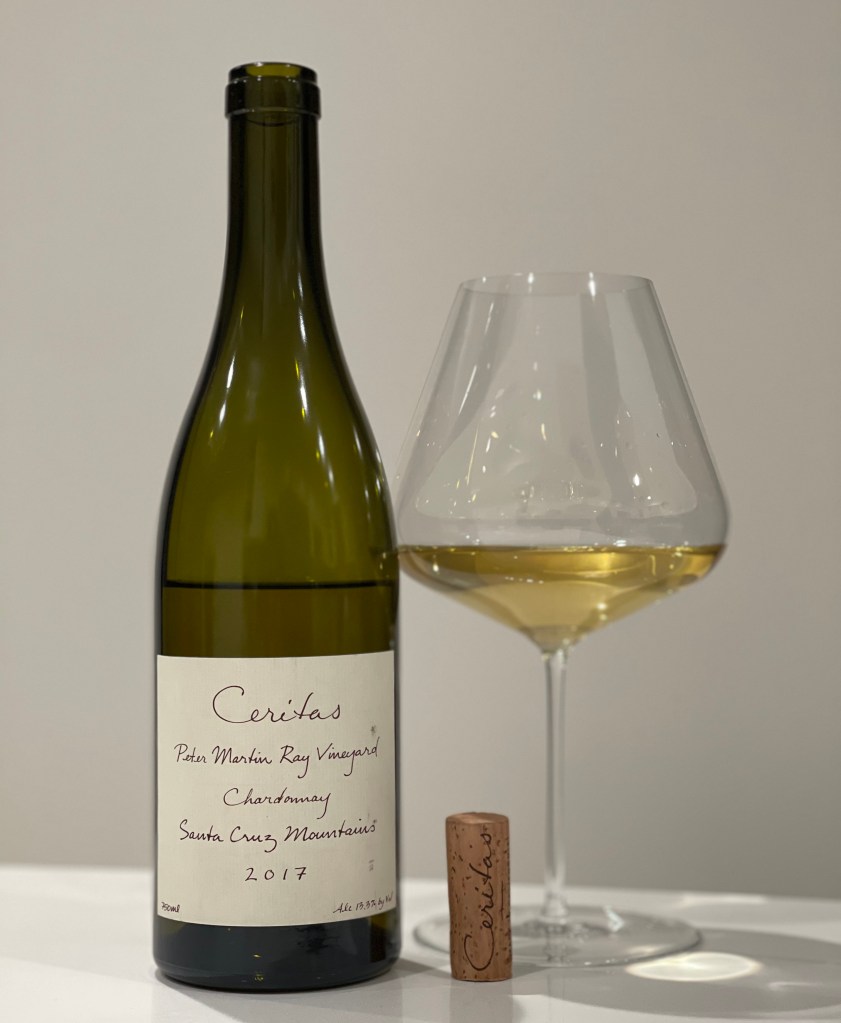
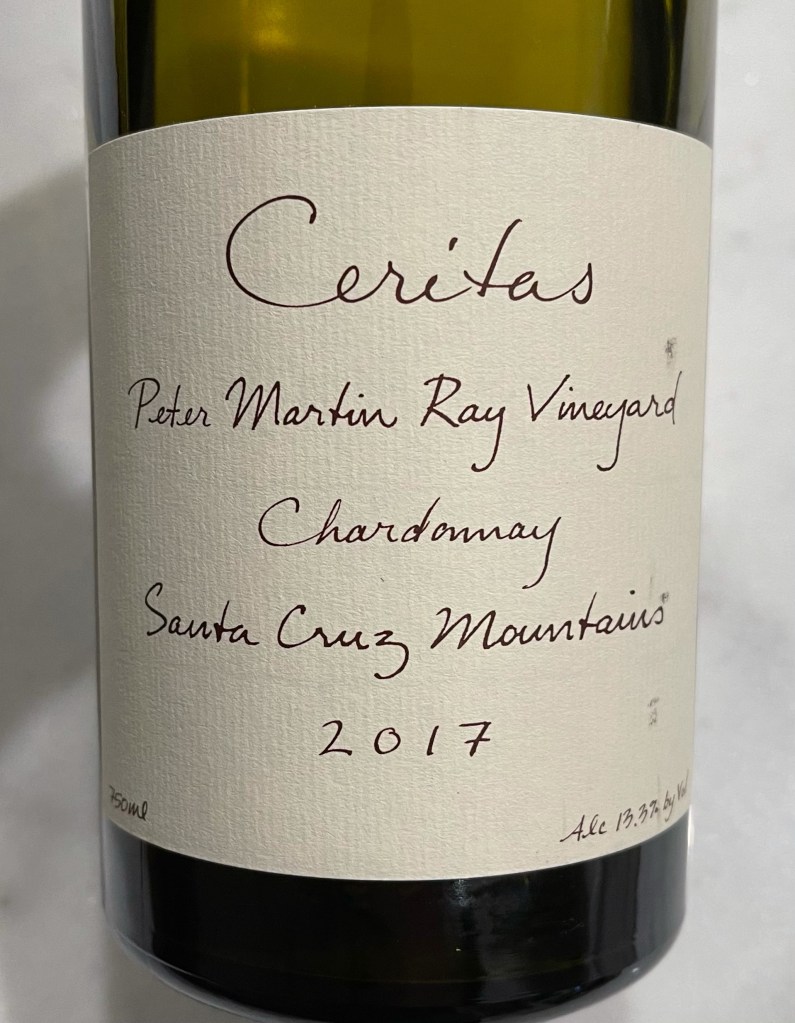
Today’s Wine: 2017 Peter Martin Ray Vineyard Chardonnay
100% Chardonnay; 13.3% ABV
The 2017 Peter Martin Ray Vineyard Chardonnay is transparent pale gold in color. This took about 45 minutes to really blossom in the glass, with the nose eventually opening up to showcase medium intense aromas of yellow apple, lemon, white peach, honeysuckle, flint, wet stone, dried vanilla, and a hint of smoke. Meanwhile the flavors on the palate are quite pronounced, with notes of crisp yellow apple, white peach, lemon, a touch of pineapple, honeysuckle, dill, flint, and a hint of stony mineral. This dry Chardonnay is medium-bodied with high acidity, medium alcohol, and a long finish.
Price: $65. This is a really, really good bottle from Ceritas again. With time in the bottle this should add extra gorgeous complexities and the acidic backbone should help it hold up as the wine develops. This being said though, I think I’d pay the slightly higher secondary market price for the Trout Gulch Chardonnay (though both Chards released the other week at $59 each on the mailing list). Though a year older, the 2016 Trout Gulch I had not too long ago seems to be in a class of its own and that seems to be the general consensus vintage after vintage.
Radio-Coteau is somewhat of a cult winery (though not in the sense many people use the term nowadays) established by winemaker Eric Sussman in 2002. Though the winery is situated in Sebastopol and Eric owns a ridgetop estate vineyard above the town of Occidental, he also sources fruit from vineyards throughout the cooler climates of the northern coast within western Sonoma County and Anderson Valley. Eric brings his impressive history with wine to Radio-Coteau, one that includes stints in Washington’s Yakima Valley, the 1995 vintage in Pauillac on the Left Bank of Bordeaux, and the 1996 vintage in Burgundy at Domaine Comte Armand of Pommard and Domaine Jacques Prieur of Meursault. It was in France when Eric first heard the term “radio-coteau,” which means “word of mouth” or literally “broadcasting from the hillside.” Coupled with his flair for Old World style wines, Eric named his winery after this phrase to signify both a tight-knit community mindset as well as his wines being a true representation of the terroir. Working extensively with organic and biodynamic viticulture in well-drained and marine soils, Eric produces refined examples of Chardonnay, Riesling, Pinot Noir, Syrah, and Zinfandel.
For more on Radio-Coteau, I suggest visiting the extensive website here. There are some very interactive maps of the vineyards, and fantastic photos that also show the livestock and gardens living on the estate site.
Today’s Wine: 2011 Las Colinas Syrah
100% Syrah; 13.3% ABV
The 2011 Las Colinas Syrah is opaque medium purple in color. This was firing on all cylinders as a pop-and-pour, so I simply let it evolve in the glass in lieu of decanting. The aromas leap out of the glass with pronounced intensity, offering up red plum, cherry, blackberry, dried violet, cigar box, licorice, gamey meat, dried underbrush, smoke, scorched earth, and clove. Meanwhile the palate is equally intense with notes of black plum, black cherry, blueberry, violet, tobacco, dried herbs, slate, black pepper, chalky mineral, mild chocolate, and baking spice. This dry Sonoma Coast Syrah is medium- to full-bodied with medium acidity, medium but refined tannins, medium alcohol, and a long finish. This is as Old World as it gets for California, and is certainly one of the most elegant Cali Syrah’s I’ve had to date. 330 cases produced.
Price: $50. I think I’m on a value streak lately because this Syrah is absolutely worth its price and can even strike up there with high-quality Northern Rhône bottlings. This is perhaps the most elegant and finessed California Syrah I’ve tasted for the price-point and is deliciously chuggable. Well done.
Massican Winery was established in 2009 by winemaker Dan Petroski (also of Larkmead Vineyards) and was born out of his passion for Italy and the country’s lifestyle, culture, and wines. Massican is a very unique endeavor in Napa Valley, focusing exclusively on white grape varieties including Tocai Friulano, Ribolla Gialla, Pinot Bianco, and Greco common in northeastern Italy as well as the more “expected” varieties of Sauvignon Blanc and Chardonnay. True to Dan’s mission, the Massican wines are not only made with uncommon varieties for Napa but they are also not the stereotypical oaky white wines the region is known for. Dan uses varying amounts of new and neutral oak as well as stainless steel, also not allowing his wines to go through malolactic fermentation so they maintain the crisp, fresh, and refreshing characteristics of each grape variety. Another contributing factor is how Dan picks his grapes at lower sugar levels, preserving the vibrant acidity and resulting in often lower-alcohol wines.
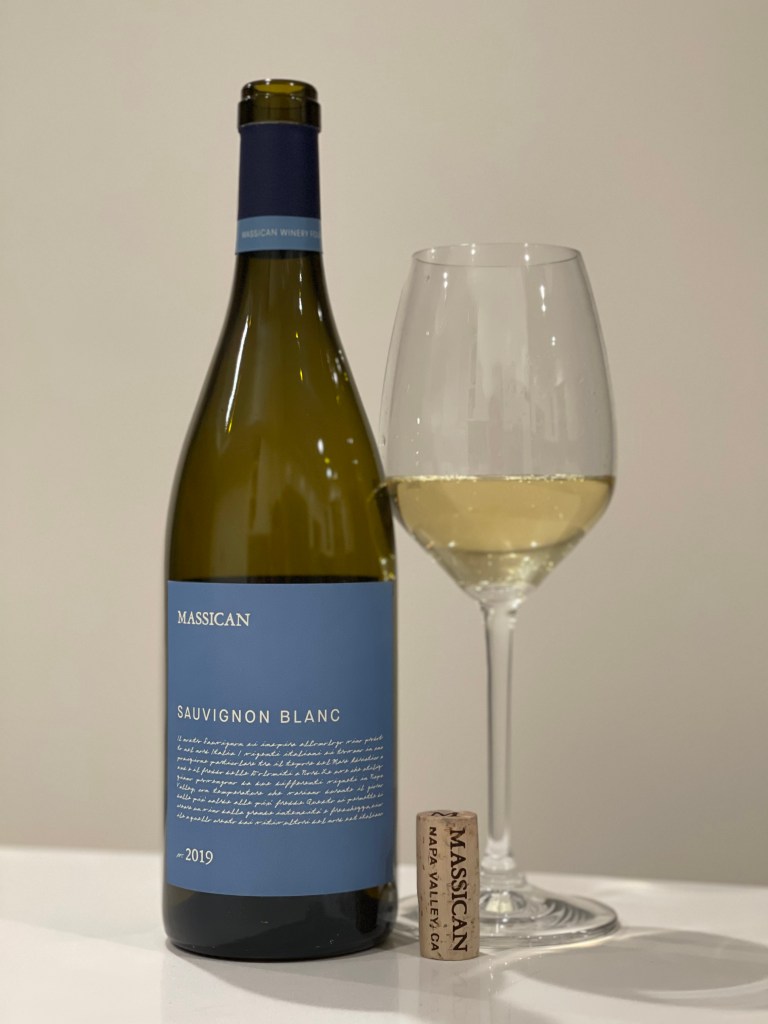
Today’s Wine: 2019 Sauvignon Blanc
100% Sauvignon Blanc; 13.3% ABV
The 2019 Sauvignon Blanc is pale yellow in color and transparent. The nose on this is absolutely gorgeous with pronounced intensity, showcasing aromas of green apple, tropical citrus, tangerine, white peach, lemon peel, white blossom, freshly cut grass, tennis ball canister, wet stone, and saline mineral. Meanwhile the flavors on the palate are also of pronounced intensity, with notes of lemon and lime zest, crisp green apple, sweet pineapple, apricot, lemongrass, mild green herbs, wet slate, white pepper, and brine. This dry white is medium-bodied with medium (+) acidity, medium alcohol, and a long finish. Blown away by the complexity here.
Price: $27. I know this is more expensive direct from the winery (though they’re sold out anyway), though finding this retail at $27 is a screaming value. The complexity and pronounced characteristics in this wine are truly impressive, and I will certainly be buying more.
Immortal Estate is a very new winery in name, though the estate traces back to 1990 and Hidden Ridge Vineyard which lies in Sonoma County. Originally developed by Lynn Hofacket and Timothy Milos, Hidden Ridge Vineyard is situated on 150 acres in the mountainous terrain between Napa and Sonoma Valleys and, in its early years, developed somewhat of a cult following for the exceptional quality of the wines produced. In 2016, partners Tim Martin and Randy Nichols purchased the estate and, in an effort to increase exposure, rebranded it to Immortal Estate named after the “immortal jellyfish” to signify the wine’s lauded aging potential. Thanks to an exceptional terroir (and a unique slope of 55-degrees versus the now 15-degree maximum per county rules), the wines of Immortal Estate are often described as rich, complex, and long-lived.
Of Immortal Estate’s 150 acres, nearly 50 acres are planted to vine with 46 acres of Cabernet Sauvignon, 1 acre of Petit Verdot, and 1 acre of Chardonnay. The estate produces two wines, the Impassable Mountain Cabernet Sauvignon ($303) and the Slope Cabernet Sauvignon ($75). Fruit for both wines is hand-harvested over multiple pass-throughs, then hand-sorted at the winery before heading into native fermentation. Both wines see 50 days of maceration, then transfer to French oak barrels to age for 28 months. Come bottling, both are bottled unfined and unfiltered.
To learn more or view impressive images of the Immortal Estate vineyards, check out their website here.
Today’s Wine: 2014 Slope Cabernet Sauvignon
97% Cabernet Sauvignon, 3% Petit Verdot; 14.9% ABV
The 2014 Slope Cabernet Sauvignon is opaque deep ruby in color. After 2 hours in the decanter, the wine really opens up and showcases a complexity I was not expecting. The nose is filled with rather pronounced aromas of crème de cassis, jammy blackberry, black plum, violet, licorice, sweet tobacco, graphite, loamy earth, cedar, and clove. The alcohol heat does show, but not as much as I expected. Meanwhile the palate is also of pronounced intensity with notes of blackberry jam, blackcurrant, blueberry, black cherry, licorice, violet, tobacco, dried herbs, charred oak, vanilla, clove, and chocolate. Again the heat from the high ABV does show. This dry Cab is full-bodied with medium (+) acidity, medium (+) but velvety tannins, high alcohol, and a long finish. Overall this fits into the people-pleaser camp for me and the alcohol needs time to integrate, but this is still much more nuanced than I expected.
Price: $75 from the winery (I paid $65 retail). Though not particularly my style of Cab, this is in my opinion pretty fairly priced (particularly relative to some of the other Cabs of its style on the market). I am pleasantly surprised by the complexity, and given some time for the alcohol to integrate I think this could be a very solid wine in 5-7 more years. While I probably wouldn’t seek this out for myself again, it’s a great option for those who love the bigger style or for those who want to put a Sonoma County Cab up against the Napa Cabs they may be used to.
Archium Cellars is a relatively young passion project of Ian Sergy and Zach Jarosz, established in 2011 with a focus on Rhône varieties in the Central Coast of California. Though both Ian and Zach have backgrounds in the entertainment industry, travels throughout California wine country and Europe opened their eyes to the world of wines and the complexities that Rhône varieties can provide. When they realized they didn’t need to own their own vines to craft quality wines, they ventured into the Central Coast to create Archium. Though nowadays Archium has a small estate vineyard in Ventura County, they source most of their fruit from the Santa Ynez Valley and produce their wines at facilities in Buellton. The Thompson Vineyard provides Grenache and Mourvèdre while the Shokrian Vineyard provides Syrah, with both vineyards organically and dry-farmed with low-yielding vines.
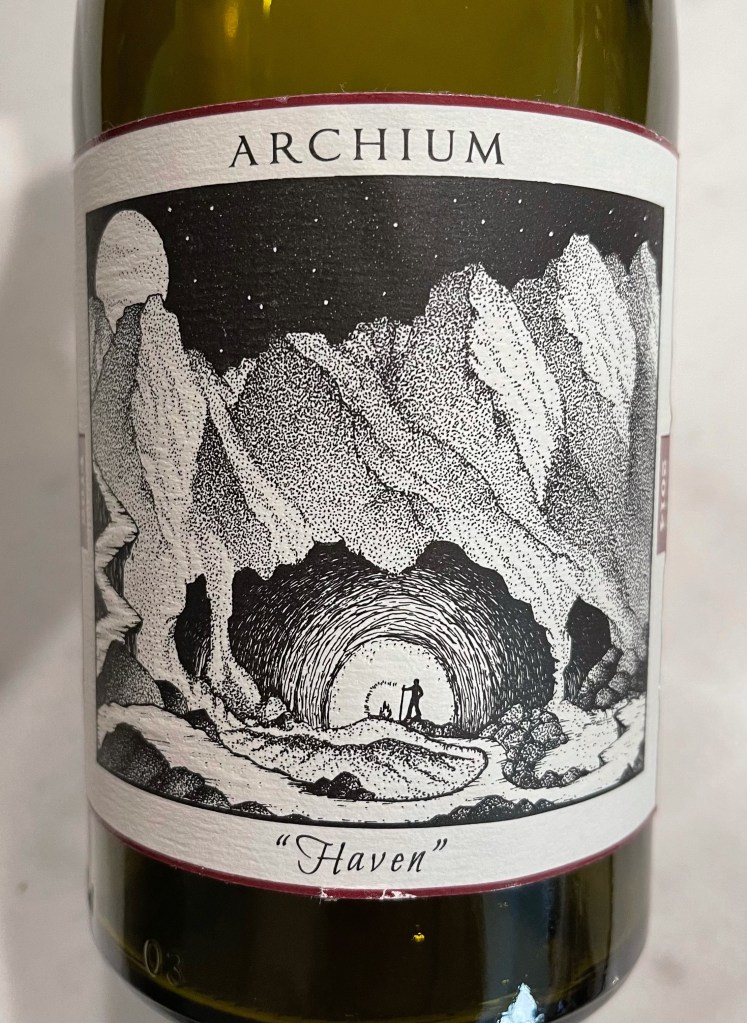
Today’s Wine: 2014 Haven Grenache
100% Grenache; 14.5% ABV
The 2014 Haven Grenache is translucent medium garnet in color. I decanted this for about 45 minutes to an hour, helping the wine blossom as it is still fairly youthful. The nose is of medium (+) intensity, showcasing aromas of strawberry jam, raspberry, red plum, licorice, rose, leather, dried herbs, rocky earth, clove, coffee grounds, and a hint of oak that eventually blows off. Meanwhile on the palate, which is of medium intensity, I get notes of red cherry, stemmy strawberry, red plum, blood orange, sweet tobacco, charred green herbs, clove, cola, and white pepper. This dry red is medium- to full-bodied with medium (+) acidity, medium tannins, high alcohol, and a medium length finish. Typically 30 or fewer cases produced.
Price: $40 (2016 vintage on sale on winery website for $19). I think this is steep at the $40 level on a value perspective, perhaps why you can find the current vintage for about $19 on the winery website. It fits into the more people-pleasing camp for me in the ripeness of fruit, though it is surprisingly complex based on my expectations.
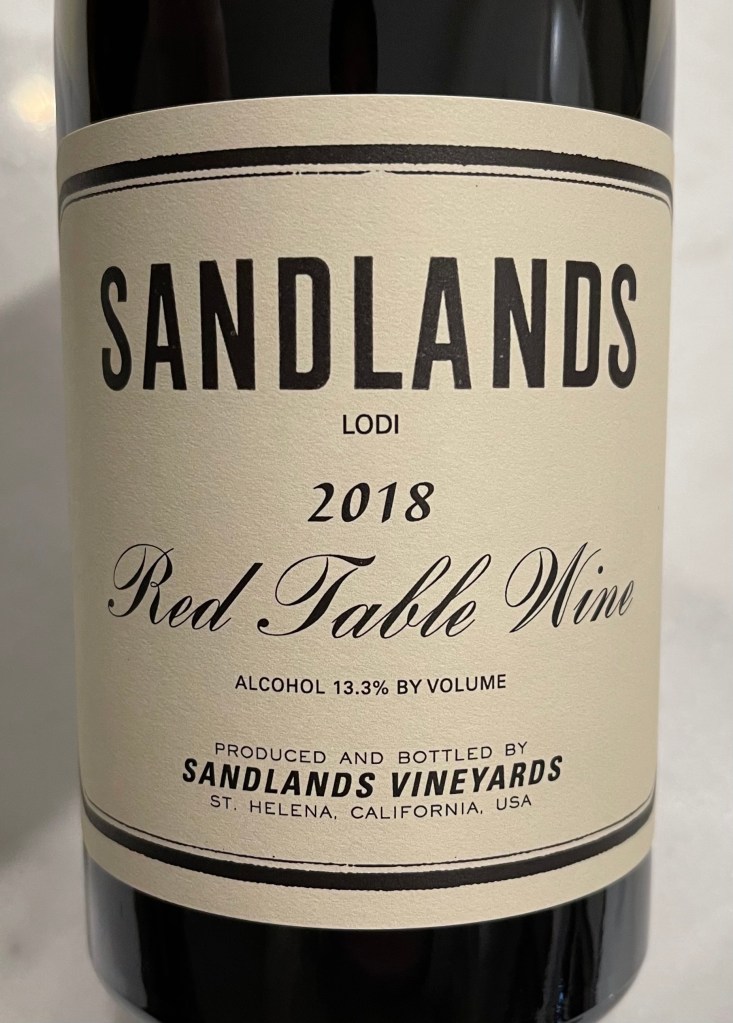
Sandlands Vineyards is a small family-owned and operated passion project of Tegan and Olivia Passalacqua established in 2010. Tegan, a winemaker with a proven track record of crafting fantastic old vine Zinfandel at Turley Wine Cellars, branched out into this side project with a focus on ancient and “forgotten” varieties. In the far reaches of California winegrowing in Lodi, Contra Costa County, Santa Lucia Highlands, Amador County, and the more familiar Sonoma Coast, Tegan sources Chenin Blanc, Cinsault, Trousseau, Carignane, Mataro, Syrah, Zinfandel, and other varieties from vines that are at times more than 100 years old. Though these varieties and the vineyards he sources from have been farmed for decades and generations, they oftentimes lay outside of the “norm” for California viticulture and are even mostly planted in decomposed granite (i.e. sand). What’s more, the vineyards Tegan works with are typically head-trained, dry-farmed, and own rooted. Tegan crafts these wines in a traditional and minimally invasive manner, allowing the unique terroir and vine to shine through in each bottling which results in lower alcohol, easy drinking, but complex wines. Production is miniscule and quantities are quoted by the barrel, so these can be hard to find and the mailing list is the easiest way. At the very least, I suggest checking out the Sandlands website here for incredible pictures of their source vineyards.
The 2018 Lodi Red Table Wine is pale to medium purple in color. I know this is young but I couldn’t resist trying my first bottle, so I let this open up for a couple hours and sampled it along the way to see it evolve. The nose is somewhat delicate with medium intensity and aromas of tart red cherry, red plum, cranberry, black raspberry, blackberry, violets, licorice, smoke, wet gravel, and stony mineral. Meanwhile the palate is also of medium intensity while showcasing notes of redcurrant, red cherry, ripe strawberry, wild raspberry, blueberry, black tea, sweet tobacco, smoked game, a hint of coffee grounds, and baking spice. This dry red blend is light- to medium-bodied with medium acidity, medium tannins, medium alcohol, and a long, captivating finish. This is very, very good already showcasing great balance and I am excited to see it evolve further in the bottle.
The Cinsault comes from the Bechthold Vineyard planted in 1886, the Carignane from the Spenker Ranch planted in 1900, and the Zinfandel from the estate-owned Kirschenmann Vineyard planted in 1915.
Price: $40. This is right in the absolutely worth its price to very solid value camp. I imagine these are slightly less expensive on the mailing list, but I will hands-down buy this again retail in the time being. The balance, complexity, and quality at such a young age are truly impressive and this is well worth a try.
Continuum Estate was established in 2005 by Robert Mondavi and his children Tim and Marcia following their sale of Robert Mondavi Winery in 2004 to Constellation Brands. In 2008, they purchased the estate vineyard high up on Pritchard Hill in the Vaca Mountains on the eastern boundary of the Napa Valley, and the winery was finished in time for the 2013 harvest. While most of the fruit they used starting 2008 was from the Continuum estate vineyard, they did not use 100% estate fruit until 2012. Though Robert passed away in 2008, Continuum is still run today by siblings Tim and Marcia Mondavi with the help of their children.
Continuum consists of about 172 acres, of which roughly 62 acres are planted to the Bordeaux varieties of Cabernet Sauvignon, Merlot, Cabernet Franc, and Petit Verdot. The property sits at elevations between 1,325 and 1,600 feet, offering both optimal winegrowing conditions and impressive views of the valley below. Continuum focuses on one premium Bordeaux blend each vintage, though they do produce a second wine called Novicium from the younger vines and it is typically Merlot-dominant or closer to an equal blending of the four varieties.
In making their wines, Continuum practices organic viticulture though they are not certified. All fruit is hand-harvested into small baskets, then hand-sorted, destemmed, and hand-sorted again. The resulting fruit is gravity-fed into small French oak and cement tanks for fermentation to begin. Following primary fermentation, the wines are drained into 85% new French oak barrels for malolactic fermentation and aging. Each vintage roughly 25-30% of the lots will be declassified because they do not meet the strict quality standards of the team, and each vintage spends 19-20 months aging in barrel. The wines are bottled unfined and unfiltered.
The 2014 Continuum is opaque deep ruby in color with deep purple hues. Given about 2 hours in the decanter, this blossoms into aromas of blueberry, plum, blackberry compote, black cherry, licorice, pipe tobacco, tilled rocky soil, sage, pine, and cedar. Meanwhile on the palate I get notes of cassis, sweet blueberry, spiced plum, redcurrant, blue and purple florals, pine, crushed rock, baking spice, iron, dried vanilla, light smoke, and green herbs. This is full-bodied with medium (+) acidity, fine-grained medium (+) tannins, and a long finish. A very opulent and silky wine that probably needs another 3-5 years of cellaring.
Price: $220. Like many of the wines produced on Pritchard Hill, this is not an inexpensive bottle. In value terms, I think this is a bit of a stretch and there are wines which drink just as well if not slightly better around the $150 mark. Nonetheless, this is a delicious wine and I think it is a solid renaissance for the Mondavi family.
Though I’ve written about Chateau Montelena a few times previously, I feel obligated to revisit them again today after tasting this magnificent 1995 Chardonnay. You may have read my posts for the 2011 Estate Cabernet Sauvignon, 2009 Chardonnay, and/or Twenty Year Ruby, though I will paste the history of this great estate again for convenience.
Chateau Montelena traces its roots back to 1882 when Alfred L. Tubbs purchased 254 acres of rugged land with the dream of turning it into vineyards. Tubbs first planted his vineyards before constructing the chateau in 1886 and bringing in a winemaker from France, and by 1896 the A.L. Tubbs Winery was the seventh-largest in the Napa Valley. This prowess was short-lived, however, when winemaking shut down during Prohibition. With its repeal in 1933, Alfred’s grandson Chapin Tubbs continued harvesting the vineyards to make some wine and started selling fruit to others. He rechristened the winery to Chateau Montelena Winery in 1940 with the name derived from a contraction of Mount St. Helena.
In 1947, Chapin unfortunately passed away and winemaking at Chateau Montelena ceased again two years later. The Tubbs family sold this magnificent estate in 1958 to Yort and Jeanie Frank, a couple who emigrated from Hong Kong after WWII and were then seeking a peaceful place to retire. The Franks did not resume winemaking but rather worked to transform some of the overgrown grounds into a lake and landscaping reminiscent of their native gardens back home. Jade Lake on the property still provides evidence of this today and remains a beautiful and peaceful sanctuary.
The renaissance of this great winemaking estate, however, came about in the early 1970s under the leadership of Jim Barrett. Barrett quickly cleared and replanted the vineyards and brought in modern winemaking equipment alongside a team to oversee the vineyards and production. In 1972, winemaking resumed at Chateau Montelena and within years it would become one of the most important wineries in all of California and at that time even throughout the world. Chateau Montelena today thrives under the watchful eyes of Jim’s son, Bo Barrett.
Arguably the most important event in Chateau Montelena’s history occurred in 1976, though halfway around the world in France. Steven Spurrier, a British wine merchant, sought to put the best Californian wines head to head with the best French wines and assembled the Paris Wine Tasting of 1976 (known as the Judgment of Paris). There were an assortment of red wines and an assortment of white wines, with the Chateau Montelena Chardonnay being one of six Californian whites going against four greats from France’s Burgundy region. The 1973 Chateau Montelena Chardonnay beat all of the other white wines in a blind tasting and shocked not only the panel and those in attendance but the entire world, cementing California as a winemaking region demanding respect. Funny enough, Stag’s Leap Wine Cellars also in Napa Valley won for the red wines with their 1973 Cabernet Sauvignon.
If you’d like something a bit more “fun” to learn about Chateau Montelena, watch the movie Bottle Shock starring Alan Rickman, Bill Pullman, and Chris Pine.
Today’s Wine: 1995 Chardonnay
100% Chardonnay; 13.5% ABV
The 1995 Chardonnay (from magnum) is absolutely beautiful deep gold and transparent. The nose showcases gorgeous and well-aged aromas of apricot, golden pear, tangerine, honeysuckle, white truffle, dried herbs, and wet river stone. Meanwhile the palate displays notes of charred pineapple, apricot, golden delicious apple, white florals, honey, exotic white peppery spice, clove, and crushed rock minerality. Though not the most complex or deepest wine, this is absolutely perfect in terms of balance and I can’t find a single fault with it. The wine offers a fully round, plush, and opulent mouthfeel and is medium-bodied with still-vibrant medium (+) acidity into a long finish.
Price: $90 for 750ml or $180 for this magnum direct from the winery. For a magnum stored in the Montelena cellars until we took delivery late 2019, this is absolutely worth the price. This wine is a breathtaking example of aged Napa Valley Chardonnay and I look forward to drinking it again in another year or two.
Blankiet’s roots start with Claude and Katherine Blankiet, a couple who spent years searching for land conducive to grape growing on the western foothills of the Mayacamas Mountains. Finally, in early 1996, an agent working with the Blankiet family showed them an undeveloped property above the famous Napanook vineyard (and Dominus Estate) and they purchased the land on sight. From the onset of their search, Claude and Katherine desired to create world-class, high-quality, and small production Bordeaux style wines and then, with ownership of the land, set right to work. During development of the vineyards, the Blankiet family brought in famed viticulturist David Abreu and winemaker Helen Turley for their expertise. The terroir of Blankiet consists of three volcanic knolls with alluvial deposits between them, thanks to water flowing down from the mountains. The vineyards are broken into four sections, each with a unique subsoil and microclimate, and they planted root stocks from First Growth Bordeaux estates to get the ball rolling. Today, they produce 5 wines from the Bordeaux varieties of Cabernet Sauvignon, Merlot, Cabernet Franc, and Petit Verdot.
Blankiet farms their vineyards utilizing organic methods (they are Napa Green Certified) and their position on the hillsides in depleted soils requires a great deal of manual work but results in intensely flavored fruit. During the winter, Blankiet Spur prunes their vines and later thin out buds, flowers, leaves, and grape clusters throughout the spring and summer to reduce yields and enhance the wines’ concentration. During harvest, Blankiet completes up to 32 “mini-harvests” thanks to their array of soils and microclimates between and amongst the four varieties they grow. Though the estate examines sugar levels, acidity, and pH to help in their picking assessments, most of the fruit is harvested by taste tests of the berries and any deemed ready are de-leafed and trimmed of damaged clusters that afternoon. Harvest begins at 4am the following morning so workers can pick fruit in cooler temperatures and avoid the 50+ degree temperature swings common in Blankiet’s vineyards from day to night, as well as fruit flies that are inactive at night. All fruit is carried to the winery in small baskets before being destemmed by a gentle machine and sorted by two state-of-the-art optical sorters. A few employees manually check and sort the fruit at the end of the process. After sorting, Blankiet adds carbon dioxide ice which maintains the fruit at a cold temperature while displacing oxygen and this is then gravity loaded into small fermentation tanks to begin cold maceration.
During the actual winemaking process, each pick is fermented separately and cold maceration lasts generally a week which allows enzymes to soften the fruit’s cellular structure but inhibit alcoholic fermentation due to the temperature. Once cold maceration is complete, Blankiet slowly warms the temperature of the fruit mass so alcoholic fermentation can begin and they closely monitor temperatures to help the yeasts thrive. The winemaking team checks each tank two times each day, with pump-overs a result according to taste. When the wines are ready for malolactic fermentation, they are moved to new French oak barrels in a warm cave for several months until they are ultimately moved into the cold aging caves where they call home for the next couple of years. Unlike many wineries today, Blankiet steers clear of adding sulphur dioxide (SO2) to their wine barrels when natural evaporation eventually takes place, instead refilling this open space with more wine. When the wine is ready to be bottled, it is done so on-site without fining or filtration.
The 2014 Rive Droite is translucent medium to deep ruby in color. I decanted this for about 90 minutes, allowing the wine to blossom with aromas of blackberry, blueberry, red plum, black raspberry, graphite, hint of smoke, mocha, vanilla, and toasted oak. Meanwhile on the palate I get notes of black cherry, plum, redcurrant, sweet tobacco, chocolate, clove, hint of cracked pepper, espresso, and cedar. This is full-bodied with medium acidity, velvety medium (+) tannins, and a long finish. I think this needs another 5 years to drop the baby fat and develop some tertiary notes, though it’s already drinking like liquid silk.
Price: $195 at the winery ($250 average online). This is a phenomenal wine and doesn’t drink like Napa Merlot we are used to, however it is certainly a value stretch particularly if you are paying secondary market prices. The quality, finesse, and aging ability are all there which makes this a fantastic bottle for a special occasion, but you can find better values in Napa or on the Right Bank of Bordeaux itself.
Beaulieu Vineyard is one of the most historic wineries in Napa Valley, founded in 1900 by Georges de Latour and his wife Fernande. Located in the Rutherford AVA, BV got its name from Fernande when she first saw the property and said it was a “beautiful place,” or “beau lieu.” Georges de Latour sold his successful cream of tartar business shortly thereafter and the couple purchased 4 acres with the intent of producing wines that could stand up to their native France. When they began planting, de Latour brought in Phylloxera-resistant rootstock from Europe in order to buck the trend of a California wine industry in trouble.
Though I have written about several wineries with origins in the late 1800s or early 1900s, BV is different in that unlike many of their neighbors they not only survived Prohibition but thrived during Prohibition. How? BV started selling sacramental wine to the Catholic Church and saw their business increase by four times while those around them shuttered their wineries. Once Prohibition ended, however, the story becomes more “traditional” Napa with de Latour focusing on how to create the best wines from his land by instituting updated farming and winemaking techniques. In an effort to raise his status higher, de Latour traveled to his native France to meet André Tchelistcheff, a world-renowned viticulturist and enologist, who championed continuous innovation. It was André who, upon tasting the 1936 vintage of BV’s Private Reserve wine, encouraged de Latour to bottle their flagship wine. André would become BV’s winemaker, a role he would maintain for over 30 years. In 1940 BV released their first Georges de Latour Private Reserve Cabernet Sauvignon, a wine still in production today.
BV has come a very long way from the initial 4 acre plot in 1900. BV currently operates on roughly 1,100 acres of estate vineyards, broken down into different “Ranch” designations. Ranch 1 (79 planted acres) came along in 1903, Ranch 2 (85 planted acres) in 1910, Ranch 3 in 1933 after the repeal of Prohibition, and so on. One of the cool features of BV’s winemaking technique is that each small vineyard lot stays separated throughout the entire process (not an easy feat with their vast holdings). During winemaking, each wine ferments such that the best expression of the fruit results. For instance, the white wines are cold-fermented to display a bright, vibrant character while the red wines are cold-soaked to showcase optimal color, flavor, and tannin. The reds are then fermented in small barrels and aged in oak varying in age, level of toast, and type.
For more on Beaulieu Vineyard’s history, portfolio of wines, or winemaking processes check out the website here, a source of much of the information above.
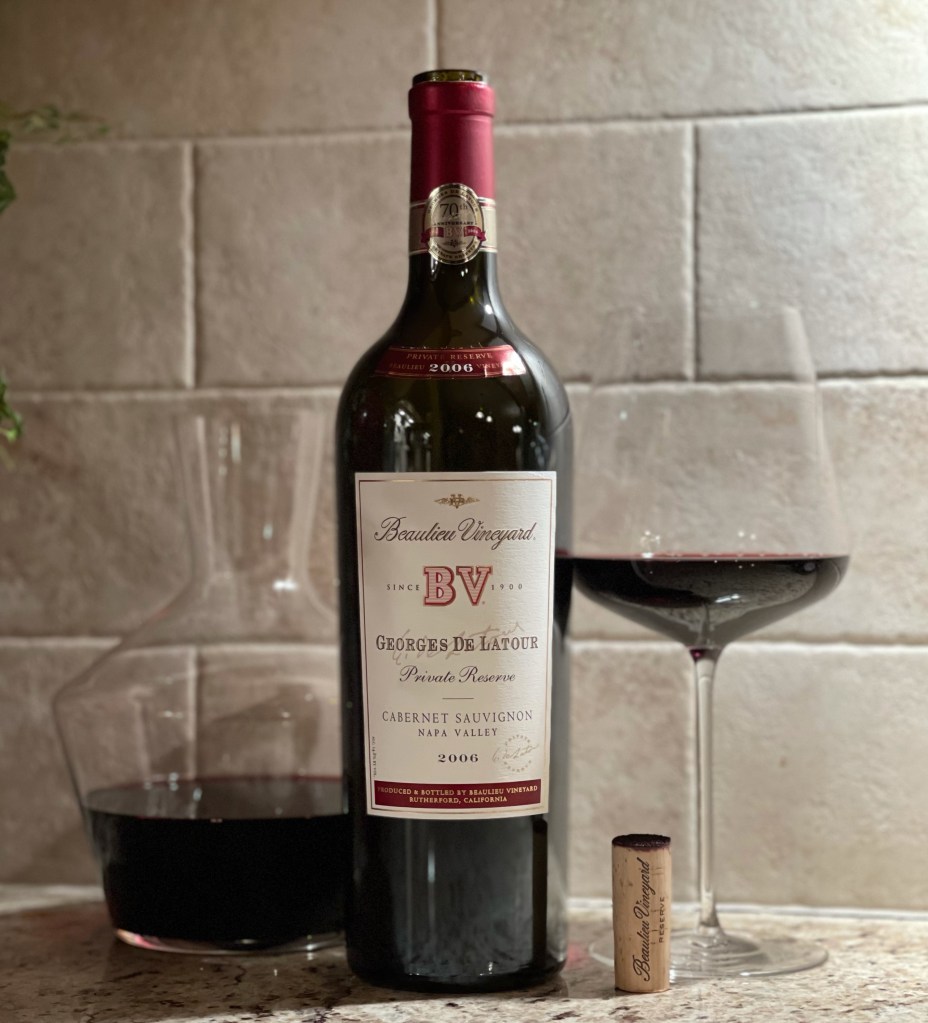
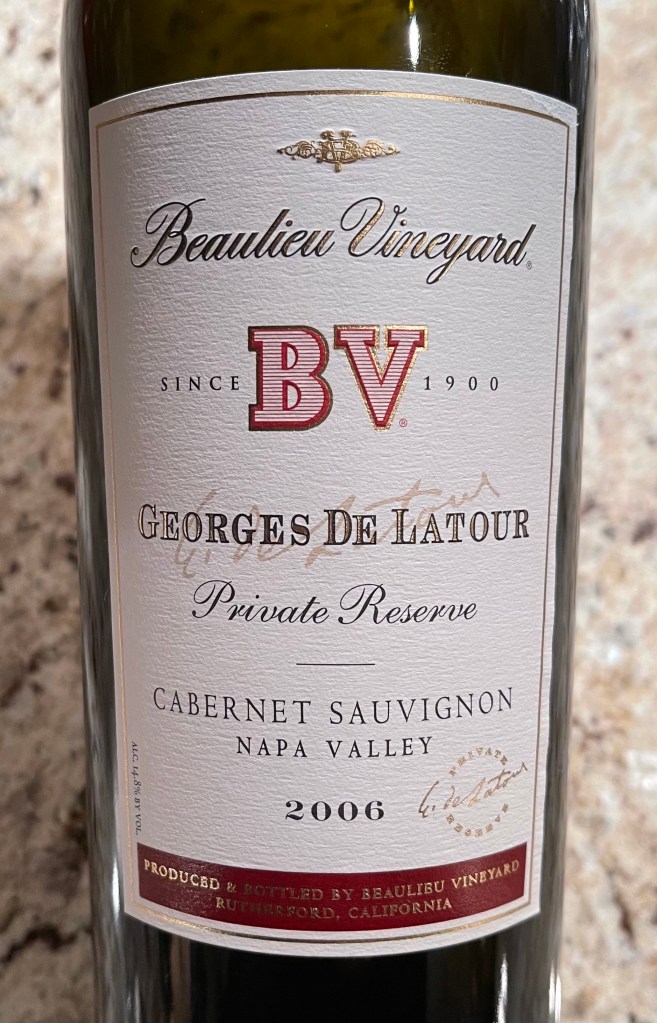
Today’s Wine: 2006 Georges de Latour Private Reserve Cabernet Sauvignon
No tech sheet (blend likely 100% Cabernet Sauvignon, or ~90% Cabernet Sauvignon and ~10% between Merlot, Petit Verdot, and Malbec); 14.8% ABV
The 2006 Georges de Latour is opaque deep ruby in color, quite youthful for the age. This was surprisingly fairly closed upon opening, so I decided to decant and it took about 2 hours to fully blossom. The nose showcases aromas of blackcurrant, blueberry, redcurrant, violet, cigar box, charred earth, graphite, green underbrush, espresso, and cedar. Meanwhile on the palate I get notes of blackberry, cassis, black raspberry, licorice, lavender, tobacco, graphite, charred green herbs, mocha, and cracked pepper. This is full-bodied with medium (+) acidity, fine-grained medium (+) tannins, and a long finish.
Price: $120. This is a great effort for the 2006 vintage, and I would consider it decent value if it weren’t for the 2007 and 2008 Georges de Latour I’ve had in the past couple weeks (not reviewed). Both the 2007 and 2008 vintages proved impeccable and drank like fine Left Bank Bordeaux. They also showed a gorgeous black truffle character I was hoping for but missed in the 2006. Nonetheless, the 2006 is an enjoyable and fairly complex wine if you happen to have a bottle.







 JB's Wine Talk