Premium Cabernet From Perhaps the World’s Greatest Wine Consultant

Today’s Story: Michel Rolland Napa Valley

Michel Rolland Napa Valley is the individual wine project of world-renowned wine consultant Michel Rolland, with its first vintage being 2010. Rolland grew up in Pomerol, France on his family’s estate Château Le Bon Pasteur, so one can say the path of winemaking started the day he was born. He excelled in his studies of viticulture and enology, ultimately purchasing an enology lab on the Right Bank of Bordeaux to begin his consulting career. Over time Rolland has consulted for hundreds of clients the world over, namely centered in his native Bordeaux in addition to Argentina, the United States, and other countries. With names on his resume like Château Ausone, Château L’Évangile, and Château Pontet-Canet it is also no surprise he consults for some of the greatest estates in the Napa Valley: Harlan Estate and Bryant Family to name a couple. As the Napa Valley became almost like a second home, Rolland decided to start his own venture sourcing from some of the greatest vineyards (many of them Beckstoffer) and MR Cabernet Sauvignon was born.

Today’s Wine: 2013 MR Cabernet Sauvignon

100% Cabernet Sauvignon; 14.7% ABV

The 2013 MR Cabernet Sauvignon is deep ruby in color and completely opaque. I decanted this for about 2 hours and drank it over the following hour or so. The aromas are of pronounced intensity, with the nose offering up notes of blackberry, blueberry, plum, orange rind, violet, cigar box, graphite, slate, mint, savory green herbs, a touch of smoke, and cedar. The flavors are also of pronounced intensity, with the concentrated palate showcasing notes of blackcurrant, blackberry, plum, black cherry, licorice, sweet tobacco, graphite, charred herbs, coffee grounds, clove, and cinnamon. This dry red is full-bodied with medium (+) acidity, medium (+) but silky and refined tannin, high alcohol, and a long finish. Very good and still quite youthful.

Price: $150. This is another high-quality Napa Cab in the ever-competitive price-point, and while for this saturated zone I cannot call this great “value” it certainly drinks at its price-point. Fruit sources here include the incredible sites of To Kalon, Missouri Hopper, Dr. Crane, and Stagecoach which, coupled with a limited production of 300 cases, contributes to the pricing. Nonetheless this is an incredibly concentrated, intense, and complex Napa Cab that was very enjoyable.

Bold and Powerful Stags Leap District Cabernet

Today’s Story: Odette Estate

Odette Estate is the newest property in the PlumpJack Group of wineries, established in 2012 by partners Gordon Getty, Gavin Newson, and John Conover. The trio found success with their earlier properties of PlumpJack in Oakville and CADE up on Howell Mountain, so they set their eyes on this third property in the historic Stags Leap District. The 45 acre property was owned by the Steltzner family who purchased it in 1964, and they first converted the land to vineyards in 1970. Though the family originally sold all of their fruit in those early years, they started making their own wine and released the first of it in the year 1980. This working winery was in full swing by the time the PlumpJack Group purchased the property in 2012, though the team immediately undertook a massive renovation project of both the facilities and caves. They also transitioned the entire property to organic farming like the other two properties.

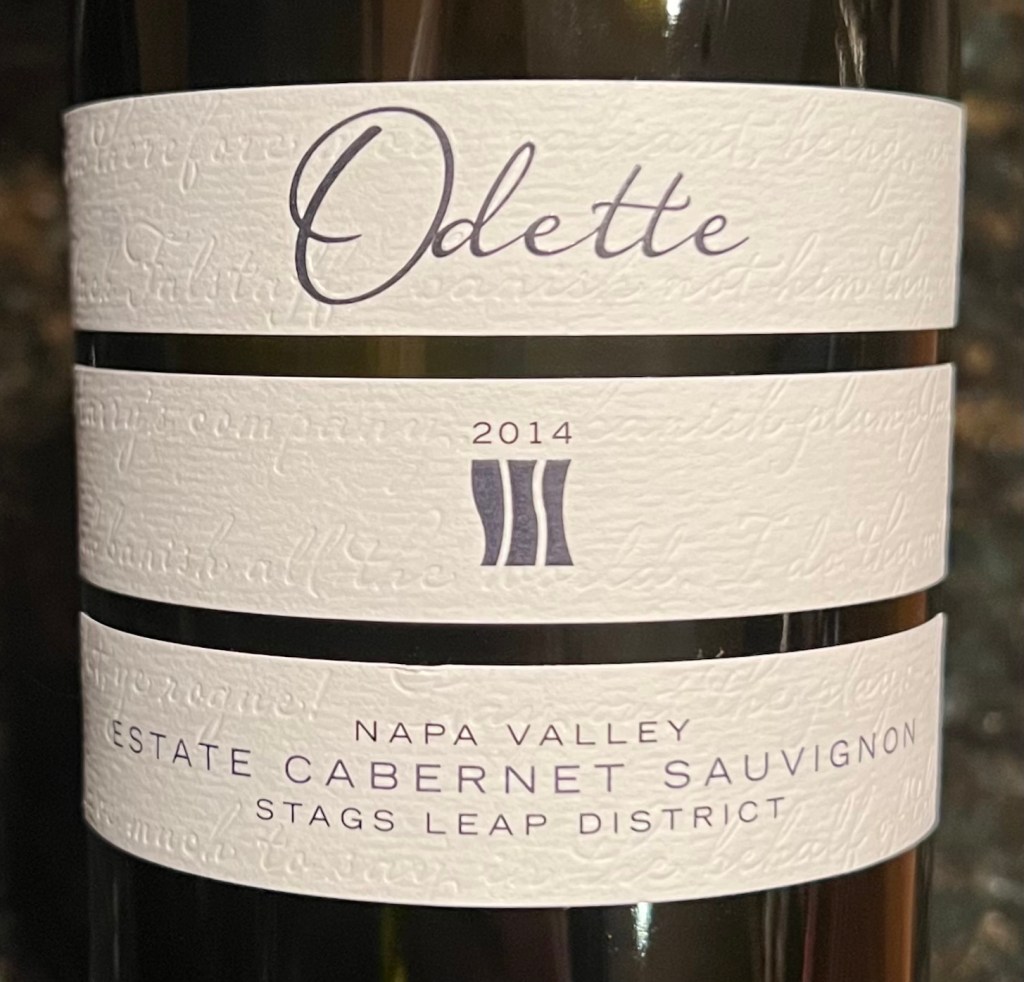
Today’s Wine: 2014 Estate Cabernet Sauvignon

75% Cabernet Sauvignon, 15% Merlot, and remaining 10% between Cabernet Franc, Malbec, and Petit Verdot; 15.2% ABV

The 2014 Estate Cabernet Sauvignon is deep ruby in color and completely opaque. I decanted this for two hours to allow it to open up. The aromas are of pronounced intensity, with the nose showcasing notes of blackberry compote, plum, crème de cassis, blueberry, black licorice, violet, sweet tobacco, a hint of truffle, graphite, vanilla, and clove. Flavors are also pronounced, and the palate offers up notes of blackberry, blackcurrant, black cherry, blueberry, black plum, anise, charred green herbs, mushroom, gravel, coffee grounds, and baking spice. This dry red is full-bodied with medium (+) acidity, high tannin, high alcohol, and a long finish. Very good for the style, as these are meant to be big, bold, concentrated, and intense.

Price: $150. Though this is in an incredibly competitive price range, I do think it drinks at the level. While this isn’t my particular style of Cabernet (I prefer more restrained and terroir-driven bottlings made in a more traditional style), there is no denying it is of great quality. The complexity and balance here are quite good, and this wine would certainly appeal to a broad range of consumers.

Complex and Fun Experimental White Blend

Today’s Story: Ovid Napa Valley

Ovid Napa Valley is a “cult” winery established in 2000 by husband and wife Mark Nelson and Dana Johnson, and 2005 was their inaugural vintage. Situated at 1,400 feet elevation on secluded Pritchard Hill, Ovid consists of a 15 acre vineyard planted largely to Cabernet Sauvignon and Cabernet Franc, though it includes plots of Merlot, Petit Verdot, and Syrah as well. Ovid practices organic viticulture and the vineyard is broken into one-acre blocks with various rootstocks and clones to allow for an experimental philosophy of winemaking. They recently cleared more acreage to expand their vineyard holdings as well. Winemaker Austin Peterson has been with Ovid since 2006, and he enjoys utilizing both traditional and cutting edge winemaking techniques to produce wines with a sense of place. The Ovid winery utilizes gravity flow to minimize handling of the wines, and fermentation is accomplished using native and non-native yeasts before the wines age and transfer to bottle unfined and unfiltered.

Ovid remains steadfast in their support of sustainable practices in the vineyards and the winery, keeping bees, using cover crops, and utilizing their own compost to avoid inhibiting natural biodiversity. They also placed owl boxes, bluebird boxes, and an insectary garden on the property to facilitate a more natural form of pest control. Ovid even maintains a fruit and nut orchard where they grow cherries, plums, pluots, peaches, pomegranates, and persimmons which are then allocated to Napa restaurants including The French Laundry and The Restaurant at Meadowood (which unfortunately burned down in 2020). The winery itself is powered by solar energy and built of wood, stone, and concrete which blends effortlessly into the mountainous surroundings.

In terms of production, Ovid crafts four main wines which include their signature Ovid Napa Valley (Cabernet Sauvignon dominant), Hexameter (Cabernet Franc dominant), Loc. Cit. (100% Cabernet Sauvignon from the best plots only in the best vintages), and Syrah. As special as the main Ovid wines are, they also release highly limited quantities of Experiment bottlings which change vintage to vintage to showcase the unique blends, varieties, winemaking styles, and terroir Peterson has to play with. Total production is said to be between 1,000 and 1,200 cases per vintage, with roughly 85% of that going direct to customers on the membership list.

To learn more about Ovid and their wines, view pictures of the beautiful winery, or find the source for much of today’s information above, visit the Ovid website here. I also previously wrote about Ovid when I reviewed the 2015 Hexameter.

Today’s Wine: 2016 Experiment No. W3.6

36.27% Sauvignon Blanc, 20.82% Grenache Blanc, 19.28% Albariño, 9.26% Viognier, 7.86% Roussanne, 6.51% Vermentino; 14.3% ABV

The 2016 Experiment No. W3.6 is pale yellow in color. Its aromas are of medium (+) intensity, with the nose showcasing notes of lemon zest, honeydew melon, Asian pear, mango, lemongrass, white lily, wet stone, and a touch of wax. The flavors are also of medium (+) intensity, and the palate offers up notes of yellow apple, pear, lemon and lime zest, mango, grapefruit, honeysuckle, grass, beeswax, and stony mineral. This dry white blend is medium-bodied with medium (+) acidity, high alcohol, and a medium (+) length finish. This is a very good and fun wine.

Price: $110. Pricing here is a bit high in terms of value perspective, as this is very expensive for a Napa Valley white wine. Nonetheless, I love these Ovid Experiment bottlings as they show a fun side of winemaking while this one is complex, well-balanced, and downright quaffable. I think rarity of these wines plays an effect on the price but if you have the chance to try one I wouldn’t turn it down.

A Fix of Realm for the 2020 Vintage

Today’s Story: Realm Cellars

Realm Cellars was founded in 2002 with a focus on producing high-quality, limited production Bordeaux blend and single vineyard Cabernet Sauvignon wines. Co-Founder Juan Mercado left his role as a hospital administrator in San Francisco to pursue working in the wine industry and, until recently, Realm sourced their fruit from historical, high-quality vineyards (like Dr. Crane, To Kalon, and Farella) rather than growing their own. Though Juan is no longer with Realm, the winery is spearheaded by Managing Partner Scott Becker and their excellent winemaker Benoit Touquette. Michel Rolland consults for the project as well.

One of my favorite aspects of Realm (more a “that’s really cool” kind of thing) is their inspiration from Shakespeare. For example, the title of my blog post on the 2016 The Bard starts the line “This blessed plot, this earth, this realm” from Shakespeare’s Richard II, a line noted on every bottle of Realm wine, on their corks, and highlighted on the label of The Bard. Realm’s Bordeaux blends include The Tempest, named for the violent storm and play thought to be one of Shakespeare’s last; Falstaff, named for the fat, vain, boastful, and cowardly knight present in four of Shakespeare’s plays for comic relief; and of course The Bard, named for Shakespeare himself. Each wine highlights a particular variety, ranging from Merlot to Cabernet Franc to Cabernet Sauvignon, respectively.

As far as their single vineyard wines go, Realm produces Farella (100% Cab), Houyi (100% Cab), Beckstoffer Dr. Crane (95% Cab, 5% Petit Verdot), Beckstoffer To Kalon (100% Cab), Moonracer (Cab dominant blend), and a white wine called Fidelio (Sauvignon Blanc). As I mentioned in the beginning of this post, recently Realm started producing wine from their own fruit which is where Moonracer comes in. This wine comes from their vineyard on Wappo Hill in the Stags Leap District and is named for the Wappo Native Americans who were known for bravery, strength, and athleticism. The Wappos often took part in (and are said to have won most) inter-tribal races during a full moon, hence the name Moonracer.

I previously reviewed the 2016 The Bard, 2013 The Tempest, and 2019 Fidelio Sauvignon Blanc from Realm.

Today’s Wine: 2020 La Fe Rosé

90% Merlot, 10% Cabernet Sauvignon; 13.9% ABV

The 2020 La Fe Rosé is pale copper in color. The aromas are of medium (+) intensity, with the nose showcasing notes of watermelon, white raspberry, white cherry, cantaloupe, rose petal, finely crushed stone, and a hint of underbrush. Meanwhile the flavors are also of medium (+) intensity and the palate offers up notes of white peach, strawberry, bing cherry, watermelon, rose water, white pepper, stony mineral, and green herbs on the finish. This dry rosé is medium- to full-bodied with medium acidity, high alcohol, and a medium (+) length finish.

Price: $75. This is quite pricey for a rosé, so there are certainly better “values” out there on a dollar-per-dollar basis. Nonetheless this is a delightful bottle of wine and one of few Merlot/Cabernet blended rosés that I truly enjoyed. This maintains a brightness while offering up nice mineral tones in a fairly deep presentation. Perfect to keep up my Realm fix for a very tough vintage.

Note: This is the only wine Realm made in the 2020 vintage, and it’s also their first rosé. Following the 2020 fires in the Napa Valley, Realm’s winemaking team made the decision to not risk producing their Cabernet Sauvignon wines due to risk of smoke taint and loss of fruit. This rosé was carefully made and monitored using very delicate winemaking practices from Farella and Moonracer fruit.

The Newest Project From the Harlan Family

Today’s Story: Promontory

Promontory is a boutique, ultra-premium winery established in the Napa Valley in 2009 by H. William “Bill” Harlan. During the early 1980s, Bill was hiking along the mountainous southwestern ridge of Oakville when he discovered a vast “territory” scooped out of rugged landscape. Bill immediately fell captivated by the untamed property and set his eyes upon it for what might become another family winemaking venture, however the Harlan family was unable to acquire the land until 2008. Today the property consists of about 900 acres, though only about 50 acres are planted to vine with a plan to grow to no more than 70 acres. The site is incredibly unique in that it contains two fault lines, creating drastic topographical and soil variation amongst volcanic, sedimentary, and metamorphic soils. Each vintage, winemaker David Cilli and his team harvest the fruit across roughly 70 different lots which is a painstaking and mind-boggling feat to ultimately blend and showcase the terroir at its best.

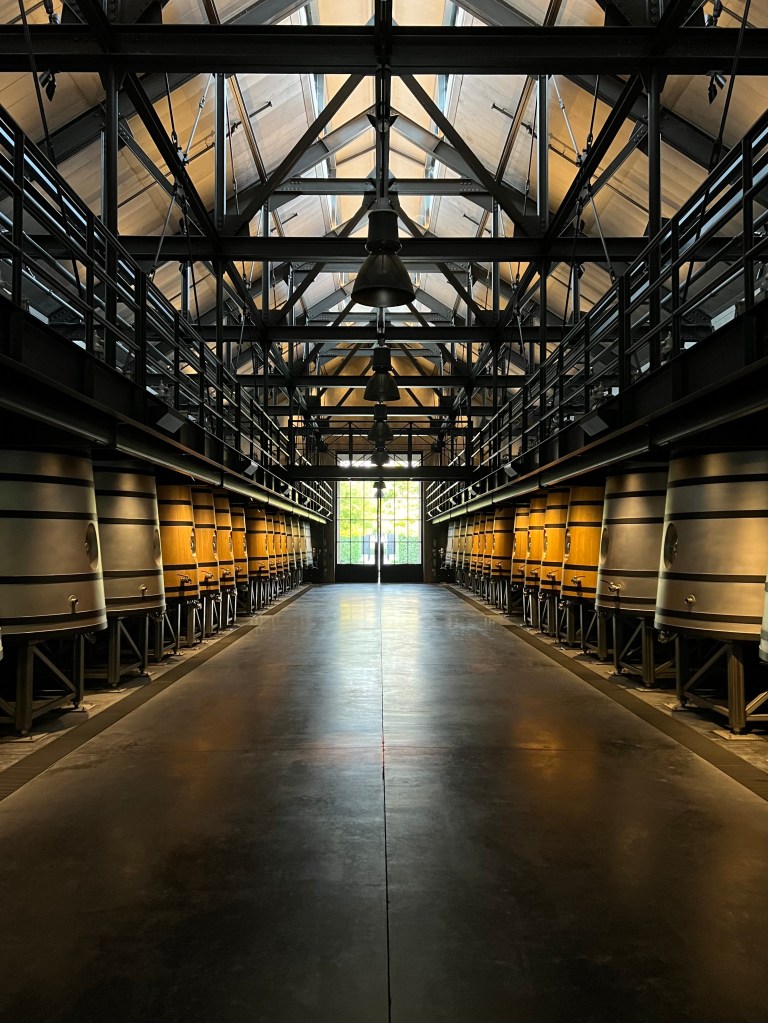
When it comes to the winemaking itself, David and team have the best equipment and fermentation vessels to play with. Upon receipt of their fruit and each micro-lot, fermentation vessels range in size and include oak tank, concrete tank, stainless steel tank, and individual barrels. The fermentation room (pictured below) is set up such that a hopper can descend to be filled with fruit, then raised and moved above the tanks to fill each individually via gravity. Once fermentation is complete, the wine is moved to Stockinger casks for an extended aging period. This is rather unusual for a Napa winery, as Stockinger vessels (made in Austria) are large and offer arguably as little oak influence as possible due to the size and toasting program selected. This use, coupled with a five-year aging program, allows the wine to integrate the minimal oak seamlessly while showcasing the fruit and territory in the best way possible.

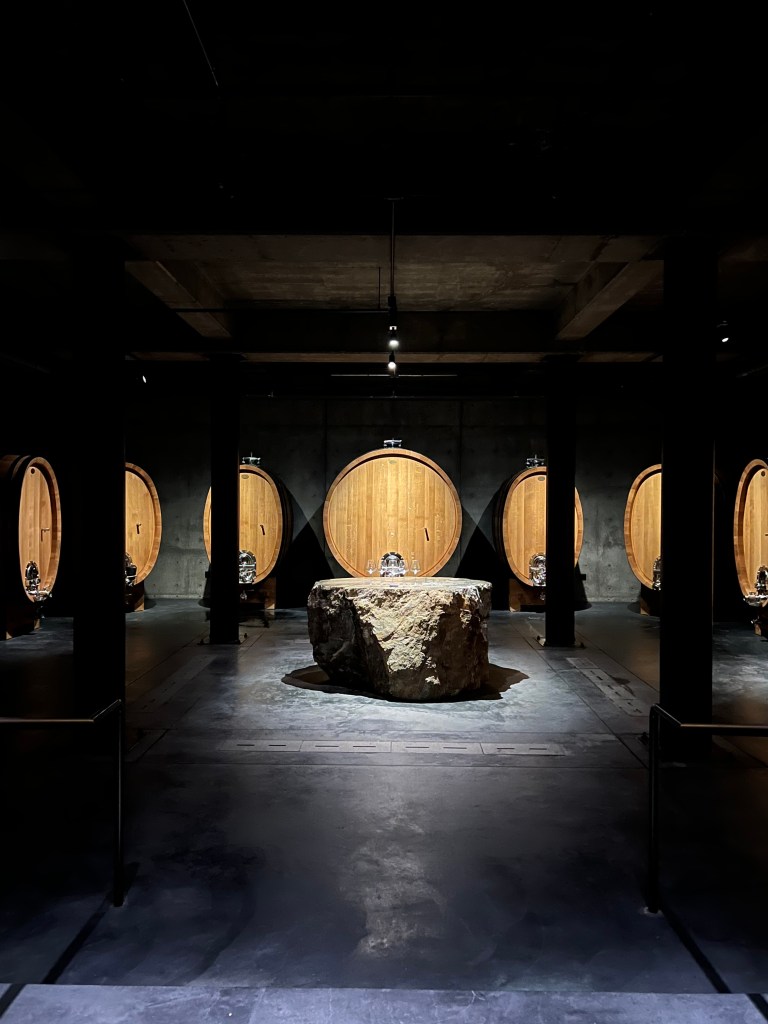
Unlike the other Harlan family properties that can be difficult or downright impossible to visit, Promontory is open to the public with reservations and tasting experiences are incredibly intimate. I’ve had the privilege of visiting Promontory three times so far, and each time one is met with Champagne while taking in the sites and discussing the Promontory philosophy. Next comes a tour of the production facilities and the cellar which includes a sample from cask, leading up to a sit-down tasting of two library bottlings of Promontory. As a bonus, I included some photos from my visits below today’s tasting notes.

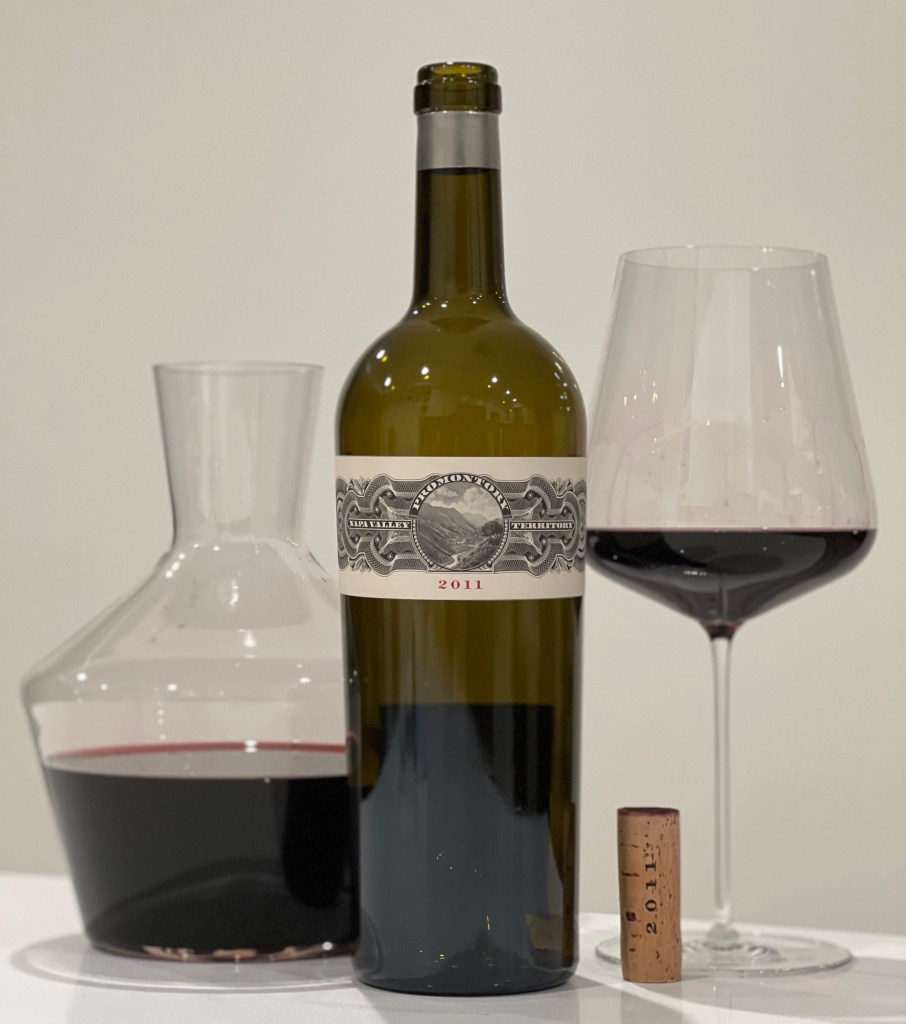
Today’s Wine: 2011 Promontory

100% Cabernet Sauvignon; 14.5% ABV

The 2011 Promontory is deep ruby in color and rather youthful in appearance. I decanted this for about an hour and drank it over the following one to two hours. The aromas are of pronounced intensity, with the rather complex nose showcasing notes of blackcurrant, blackberry, dried blueberry, licorice, violets, tobacco, crushed volcanic rock, graphite, savory green herbs, menthol, a hint of pyrazine, and mocha. There’s a touch of very well-integrated fine oak there as well. Meanwhile the flavors are also of pronounced intensity, with the palate displaying notes of blackberry, blueberry, plum, sweet tobacco, anise, violets, graphite, scorched earth, black truffle, charred green herbs, black pepper, espresso, and mild vanilla. This dry red is full-bodied with medium (+) acidity, medium (+) but refined tannins, high alcohol, and a long finish. This is an outstanding wine and is perfectly balanced.

Price: $850. This is a price-point where it’s somewhat impossible to discuss value, however this is an exceptional wine. I’ve been in love with the 2011 Napa Cabernet vintage as they come into their own over the past year or two and this is perhaps my favorite of the vintage. Though 2011 needs careful vetting at times, the 2011 Promontory is intense, complex, and beautifully balanced with gas left in the tank for cellaring.

Photos From My Visits

View from the reception hall, facing Harlan Estate.
Fermentation room, with varying vessel size and material visible.
Our glasses set up in the cellar for our cask sample of the 2019 vintage.

Could This Be California’s Best Syrah?

Today’s Story: Colgin Cellars

Colgin Cellars is a relatively small “cult” winery established by Ann Colgin in the Napa Valley in 1992. After falling in love with the valley by attending the Napa Valley Wine Auction in 1988, Ann purchased fruit from the highly-regarded Herb Lamb Vineyard in 1992 and released her first vintage in 1995. Shortly thereafter, Ann purchased what became her Tychson Hill Vineyard which was originally planted to vine in 1861 before it was torn up during Prohibition. Ann replanted 3.5 acres of Tychson Hill in 1997 with the help of David Abreu, and the site gets its name from Josephine Tychson who farmed the property in its early days and was the first female vintner in the Napa Valley. Ann expanded in 1998 when she and her future husband, Joe Wender, purchased a 125 acre property that would ultimately become the site of the winery and Colgin’s IX Estate Vineyard.

Colgin produces four main wines and recently began bottling a “second label” meant to be more approachable in its youth. Though Colgin ceased production of the Herb Lamb bottlings in the late 1990s, the first of the main three current Cabernet wines came about in 1999 and is named Cariad. Cariad is a blend of Cabernet Sauvignon, Cabernet Franc, Merlot, and Petit Verdot with the fruit coming from vineyards owned by David Abreu. Next came the first vintage of Tychson Hill in 2000, which is a pure Cabernet Sauvignon bottling and often the most elegant of the Colgin portfolio. The IX Estate had its first vintage in 2002, and it is a blend of Cabernet Sauvignon, Merlot, Cabernet Franc, and Petit Verdot. Colgin’s IX Estate Syrah also had its first vintage in 2002, wrapping up the four “Crus” of Colgin Cellars and meant to showcase Ann and Joe’s love of Northern Rhône wines. Completing the Colgin portfolio is Jubilation, a “second wine” that really isn’t a second wine in the eyes of Colgin’s production team. With its first vintage in 2016, Jubilation is created with barrels that demonstrate earlier drinking characteristics and the bottling provides a nice viewpoint into the Crus at a lower price-point.

I’ve had the incredible pleasure of enjoying each of the Colgin wines through several vintages, and visited the property earlier this year. While I can say the wines are truly a class of their own, the incredible tannin quality of each bottling sticks in my memory the most vivid. To learn more about Colgin, I encourage you to visit their website here.

Today’s Wine: 2015 IX Estate Syrah

100% Syrah; 15.4% ABV

The 2015 IX Estate Syrah is deep purple in color, but opaque and nearly black. Given some time to open up, the aromas are of medium (+) intensity and the nose showcases notes of blackberry, blueberry, black cherry, plum, violet, clay, mild baking spice, cracked pepper, and a hint of smoke. The flavors are also of medium (+) intensity, while the palate displays gorgeous notes of blueberry, blackberry compote, spiced plum, black raspberry, violet, smoked meat, a touch of chocolate, and black pepper. This dry red is full-bodied with medium (+) acidity, medium (+) but ultra fine-grained and silky tannins, high alcohol, and a long finish. This is an outstanding wine.

Price: $350. At this price-point value is difficult to discuss, as there are endless options out there for less money and of nearly this high quality. This being said though, this is perhaps the greatest Syrah I’ve had to date from California and the balance is truly incredible given the alcohol level and youth. I hope I get to taste this again years down the road.

A Taste of Friuli in the Napa Valley

Today’s Story: Ryme Cellars

Ryme Cellars was established in 2007 by husband and wife team Ryan and Megan Glaab. Ryan and Megan met while both working harvest at Torbreck Winery in Australia, and since then between the two of them they’ve held positions at Pax Wine Cellars, Peay Vineyards, Sine Qua Non, and Marcassin. Ryan and Megan started Ryme with one ton of Aglianico, later expanding into Vermentino, Ribolla Gialla, Cabernet Sauvignon, and Cabernet Franc. Most recently they even added Chardonnay and Pinot Noir to the portfolio. The Ryme wines are those that Ryan and Megan like drinking, both by variety and style standards. Their fruit comes from sustainably- or organically-farmed vineyards, and winemaking is rather simple without cultured yeasts, temperature control, or added enzymes. Most of the reds ferment whole cluster while most of the whites ferment on the skins, and aging occurs in used French oak barriques before bottling unfined and unfiltered.

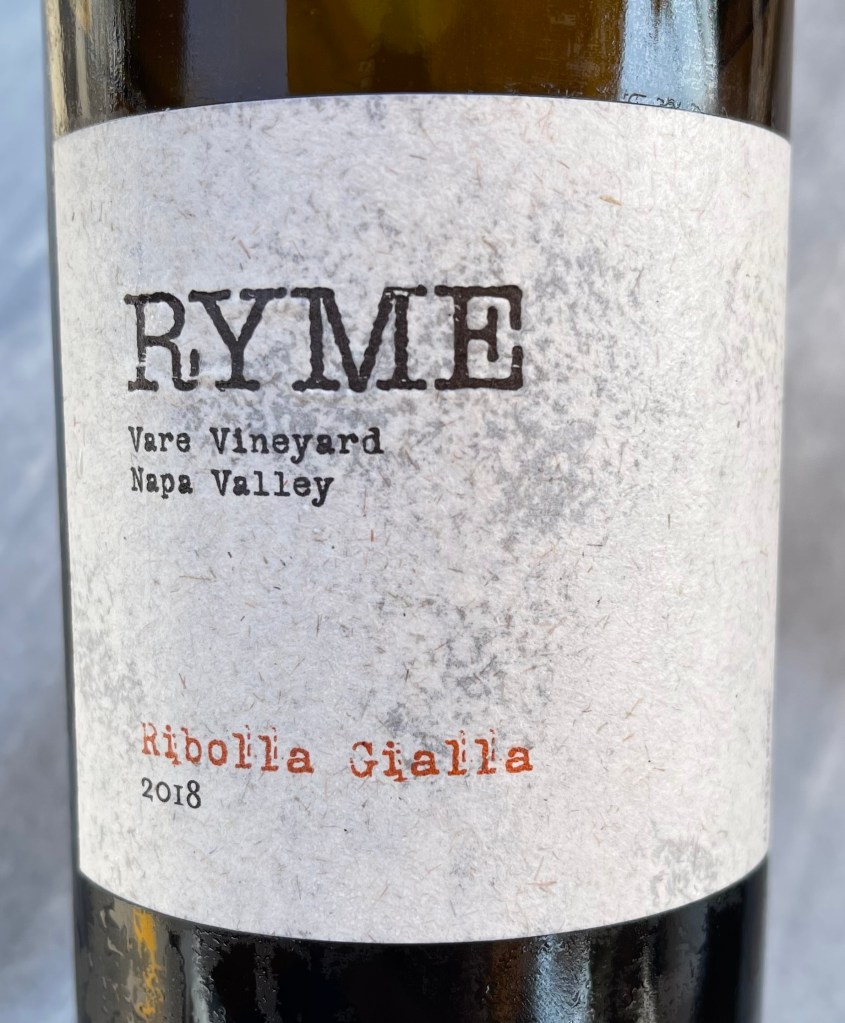
Today’s Wine: 2018 Ribolla Gialla

100% Ribolla Gialla; 13.6% ABV

The 2018 Ribolla Gialla is pale amber in color. The aromas are of medium intensity, though I don’t find the nose to be incredibly complex as it offers up notes of peach skins, mandarin orange, honeysuckle, thyme, and some stony minerality. Meanwhile the flavors are also of medium intensity, with the palate displaying notes of bruised golden apple, peach, apricot, tangerine, white pepper, and thyme. This dry amber wine is medium-bodied with medium acidity, low tannins, medium alcohol, and a medium length finish.

Price: $35. This is a very fun wine to try, though for the price tag there are better values out there. While it’s not incredibly complex and the finish is cut shorter than I would like, this was an enjoyable bottling and I would buy it again if at the very least to spice up my California wine selections.

Merlot as It Should Be

Today’s Story: Enfield Wine Co.

Enfield Wine Co. is a relatively small family-owned and operated winery established by John Lockwood and Amy Seese in 2010. John started working in the wine industry in 2004 at Heron Lake Vineyard, followed by harvests at Littorai, Bodega Melipal in Argentina, and Failla Wines. John remained with Failla for five years managing and farming their Sonoma Coast and Russian River estate vineyards, ultimately starting Enfield as a small passion project. In 2013, John left Failla and devoted his time entirely to Enfield.

Enfield focuses primarily on terroir as a starting point, working with small independent growers across a range of regions to source their fruit. John and Amy purchase fruit from Antle Vineyard and Brosseau Vineyard in the Chalone AVA, Haynes Vineyard in Coombsville, Heron Lake Vineyard in Wild Horse Valley, Jesus & Patricia’s Vineyard in Fort Ross-Seaview, and Shake Ridge Vineyard in Amador County. From these sites they acquire a range of varieties including Pinot Noir, Chardonnay, Syrah, Chenin Blanc, Cabernet Sauvignon, and Tempranillo amongst others, all with varying vine age as well. John’s philosophy is to harvest his fruit for balance and ferment the wines naturally in order to showcase each unique terroir, eschewing a heavy-handed winemaking style. The wines are often fresh, lively, and mineral-driven, though John does enjoy exploring esoteric bottlings as well.

I previously wrote about the 2019 Jurassic Park Vineyard Chenin Blanc from Enfield.

Today’s Wine: 2018 Michael Black Vineyard Merlot

100% Merlot; 13.9% ABV

The 2018 Michael Black Vineyard Merlot is deep ruby in color with deep purple hues in the bowl of the glass. I decanted this for 2.5 hours due to its youth, which seemed perfect. The aromas are of medium (+) intensity, with a rather complex nose showcasing notes of black plum, blackberry, blueberry, violet, licorice, cigar box, clay, dried green herbs, baking spice, and cocoa. Meanwhile the flavors are also of medium (+) intensity and the palate displays notes of blackberry, blueberry, black raspberry, black cherry, sweet tobacco, cedar spill, crushed rock, and eucalyptus. This dry red is medium- to full-bodied with medium acidity, medium (+) but fine-grained tannins, medium (+) alcohol, and a long finish.

Price: $45. I think this offers rather strong value, and it’s a fantastic representation of the Merlot variety. This is very well-balanced, offering great depth and length as well all while being rather young. For those wine drinkers who don’t like Merlot, I’d suggest giving it another shot with this bottling.

Strong Value Grenache From a Relatively New Californian Producer

Today’s Story: Newfound Wines

Newfound Wines is a family-owned and operated wine estate established by Matt and Audra Naumann in 2016. With backgrounds in the wine industry and a shared passion for agriculture, they established Newfound Wines as a 40 acre ranch, vineyard, and winery in the Sierra Foothills of California. In addition to their estate High View Vineyard which needed replanting in 2016, Newfound sources fruit from several other sites including Cemetery Vineyard and Colombini Vineyard in Mendocino County, Enz Vineyard in the Lime Kiln Valley, Scaggs Vineyard and Yount Mill Vineyard in the Napa Valley, and Shake Ridge Vineyard in the Sierra Foothills. They focus on the varieties of Grenache, Carignane, Mourvèdre, Pinot Noir, Chardonnay, and Semillon with an emphasis on organic viticulture as well as minimal intervention winemaking in an effort to showcase each variety and terroir as purely as possible.

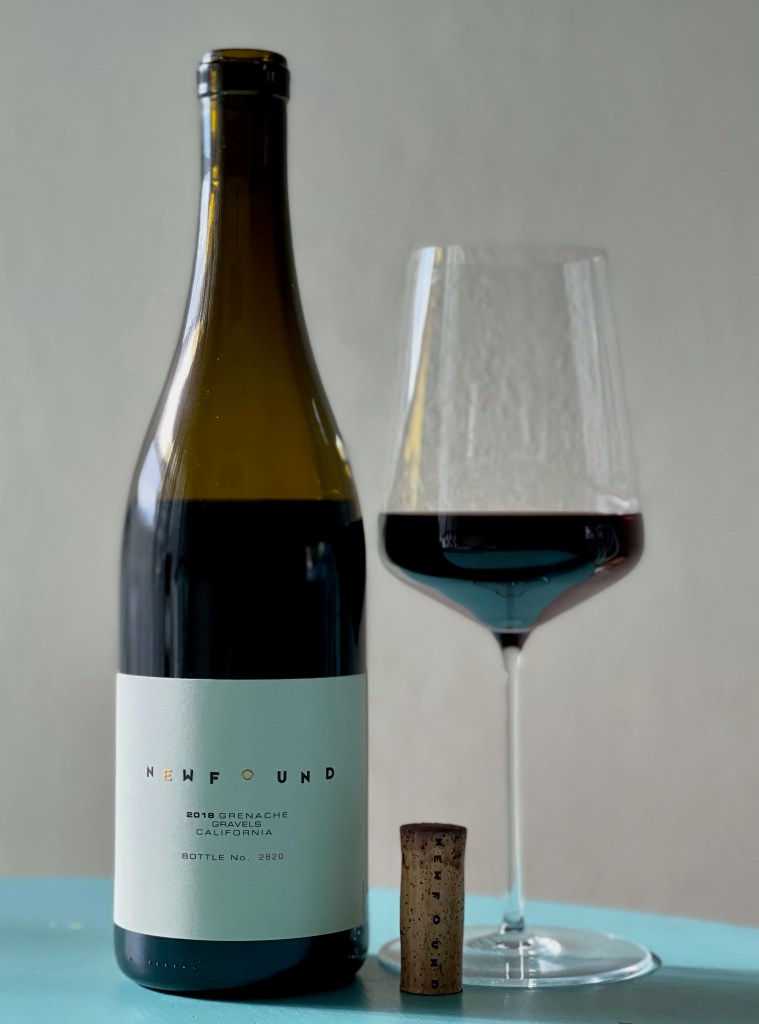
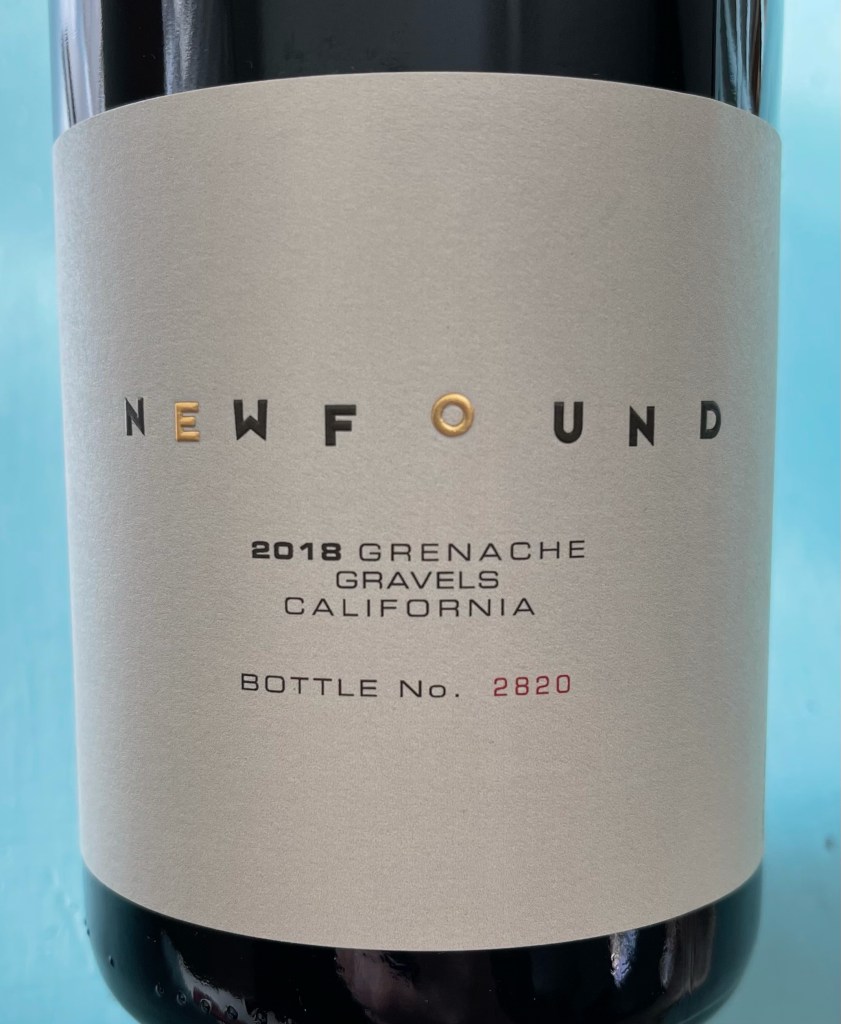
Today’s Wine: 2018 Grenache Gravels

100% Grenache; 13.9% ABV

The 2018 Grenache Gravels is medium ruby in color and I let this open up for about 30-45 minutes in the glass before I started drinking it. The aromas are of medium (+) intensity, with the nose showcasing notes of muddled strawberry, black raspberry, cherry, red plum, leather, dried green herbs, mint, and crushed rock. Meanwhile the palate displays notes of raspberry, tart cherry, blackberry, licorice, red rose, chalk, and cracked pepper with prominent mineral undertones. This dry red is medium-bodied with medium acidity, medium (+) and grippy tannins, medium alcohol, and a medium (+) length finish.

Fruit is sourced from 85% Cemetery Vineyard in Mendocino County, 10% Scaggs Vineyard in Napa Valley, and 5% Yount Mill Vineyard in Napa Valley.

Price: $30. I think this offers very solid value for the price, as the depth is rather impressive at this stage and quality is certainly very high for an “entry” bottling. Though the tannins are slightly out of balance at this stage, I think they will resolve with another year or two and you’ll be left with a wine striking well above its price-point.

Light and Easy-Going Summer Sipper

Today’s Story: Kapcsándy Family Winery

Kapcsándy Family Winery was established by Lou Kapcsándy and is a small, family owned and operated estate in Yountville of the Napa Valley. An immigrant from Hungary, Lou arrived in the United States in 1956 and worked as a chemical engineer and manufacturer in the Bay Area of California and Seattle. Wine became a focal point for Lou during his successful career thanks to colleagues in the wine business, however his desire to establish his own winery one day came after a visit to Château Leoville Las Cases with his wife Bobbie in 1998. With their son Louis Jr., Lou and Bobbie started searching for property in the Napa Valley when they stumbled upon the 20 acre State Lane Vineyard in Yountville which had been destroyed the previous year by phylloxera. In May 2000, the Kapcsándy family closed on this historic property (it was the source of fruit for Beringer’s Private Reserve Cabernet Sauvignon) and embarked on massive replanting of the vineyards. They planted the main Bordeaux varieties of Cabernet Sauvignon, Merlot, Cabernet Franc, and Petit Verdot, though also planted several acres to Hungarian Furmint. When the winery was completed in 2005, Lou’s vision was finally realized and both he and Louis Jr. remain highly involved today.

Kapcsándy wines are inspired by Bordeaux both in terms of vineyard management and winemaking style, resulting in lower-alcohol wines made from 100% estate-grown fruit. With both Lou and Louis Jr. active in the vineyards and estate management everyday, Kapcsándy practices sustainable farming with great appreciation for their soil and the environment. The family constructed nesting boxes, perch poles, and songbird houses to avoid the use of chemicals for pest control, and they also add compost to the vineyards and natural fertilizers to supply bacteria, photo nutrients, and trace elements which prove beneficial for vine growth. Further, Kapcsándy plants cover crops between the vines to prevent erosion and encourage beneficial insects to inhabit the vineyards and enhance this natural ecosystem. For more, check out the Kapcsándy website here.

I previously reviewed the 2014 Estate Cuvée and 2005 Estate Cuvée from Kapcsándy.

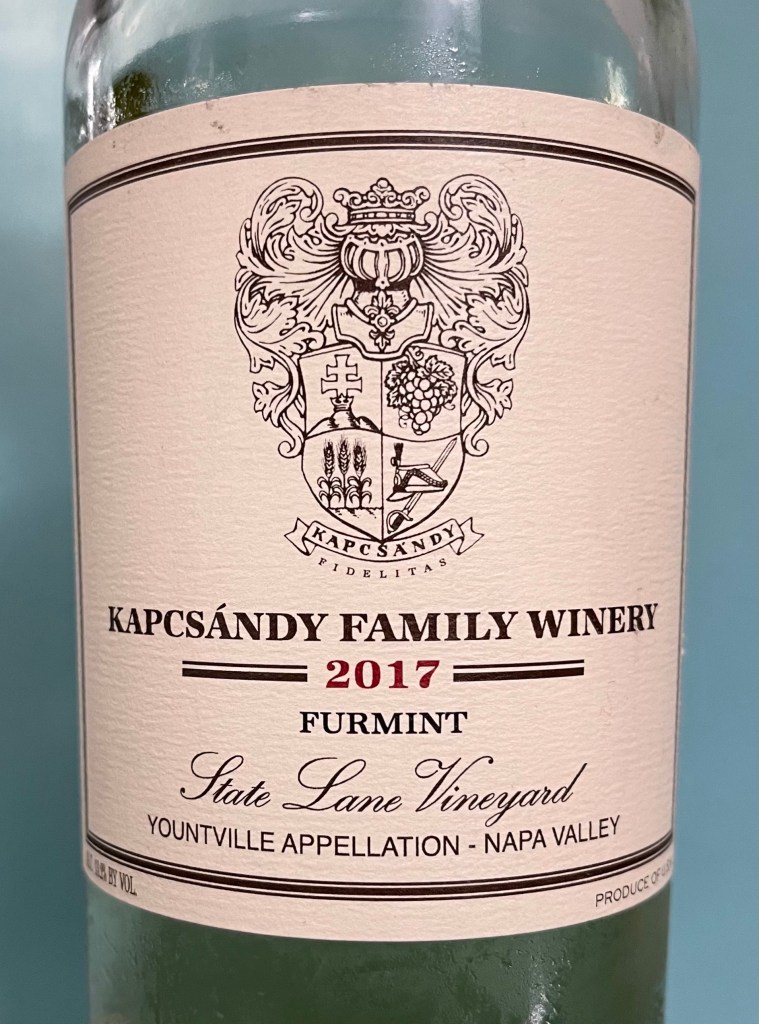
Today’s Wine: 2017 Furmint

100% Furmint; 13.2% ABV

The 2017 Furmint is pale yellow in color with greenish hues around the rim of the glass. This is an easy-going wine with aromas of medium intensity and a nose that showcases notes of lemon zest, ripe pear, green apple, lychee, honeysuckle, and wet stone. Meanwhile the flavors are also of medium intensity and the palate displays notes of green apple, grapefruit, guava, lemon, white florals, and ginger. This dry white is light- to medium-bodied with high acidity, medium alcohol, and a medium (+) length finish. Typically 100 or so cases produced.

Price: $30. While this may not necessarily be the most exciting white wine, it’s very high quality and well-made. It’s an easy-going summer sipper that’s fun to try, and is a highly unusual variety to find in the Napa Valley. If you like the Kapcsándy wines, this is worth trying at least once.