Big and Bold Napa Cab From Calistoga

Today’s Story: Heritage School Vineyards

Heritage School Vineyards (initially named Harris Estate Vineyards) was established in 1997 by Mike and Treva Harris on an extension of Diamond Mountain in Calistoga of the Napa Valley. The property consists of 48 acres, however only 6 acres are planted to vineyards and 100% Cabernet Sauvignon. In 2014, David and Linda Jenkins purchased the property and renamed it to pay homage to the Heritage School which was a private school for boys on site. Heritage School consists of three estate vineyards named Missiaen’s Hillside, Casey’s Lakeview, and Julie’s Creekside, as well as a non-estate vineyard source for Hannah’s Indulgence with all four wines names after the Jenkins’ daughters. Thomas Brown has been winemaker since 2006, and the wines age in a 100% new French oak barrel program. Production is rather limited, with total volumes typically around 1,200 cases per vintage.
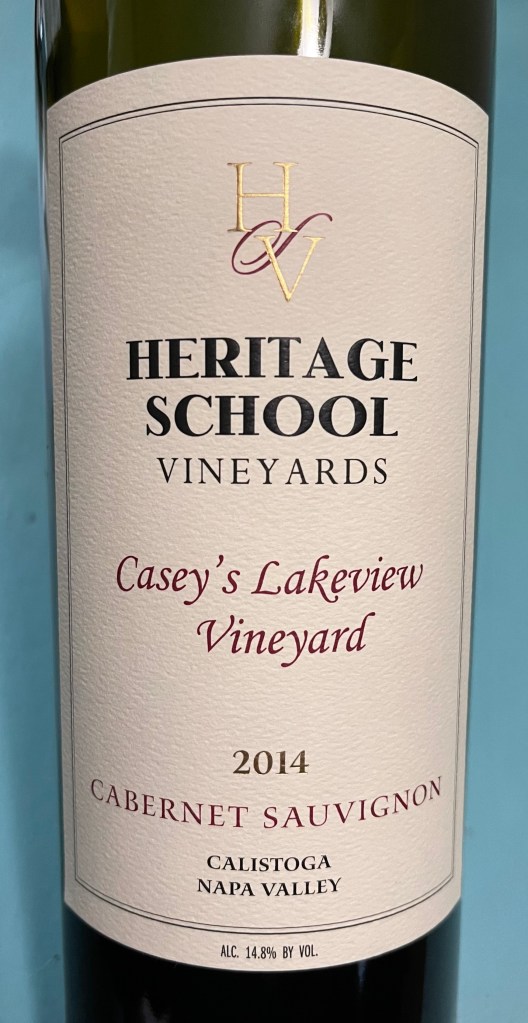
Today’s Wine: 2014 Casey’s Lakeview Vineyard Cabernet Sauvignon

100% Cabernet Sauvignon; 14.8% ABV

The 2014 Casey’s Lakeview Vineyard Cabernet Sauvignon is deep purple/ruby in color with heavy staining on the glass. I double decanted this bottle, as it’s still rather youthful. Aromas are of pronounced intensity, with the nose showcasing notes of blackberry, blueberry, crème de cassis, anise, clay, cinnamon, chocolate, vanilla, and toasted oak. There’s some heat from the alcohol as well that needs time to integrate. Meanwhile the flavors are also of pronounced intensity, and the palate displays notes of blackcurrant, black plum, blueberry, licorice, coffee grounds, iron, and rich dark chocolate. This dry red is full-bodied with medium (+) acidity, high tannins, high alcohol, and a long finish. 250 cases produced.

Price: $140. Though this is certainly a high quality wine and offers good intensity and complexity, it’s not my preferred style. The oak influence definitely sticks out to me and this is a rather big and bold Cab. I think there are better values out there too given this price-point which sees a lot of competition.
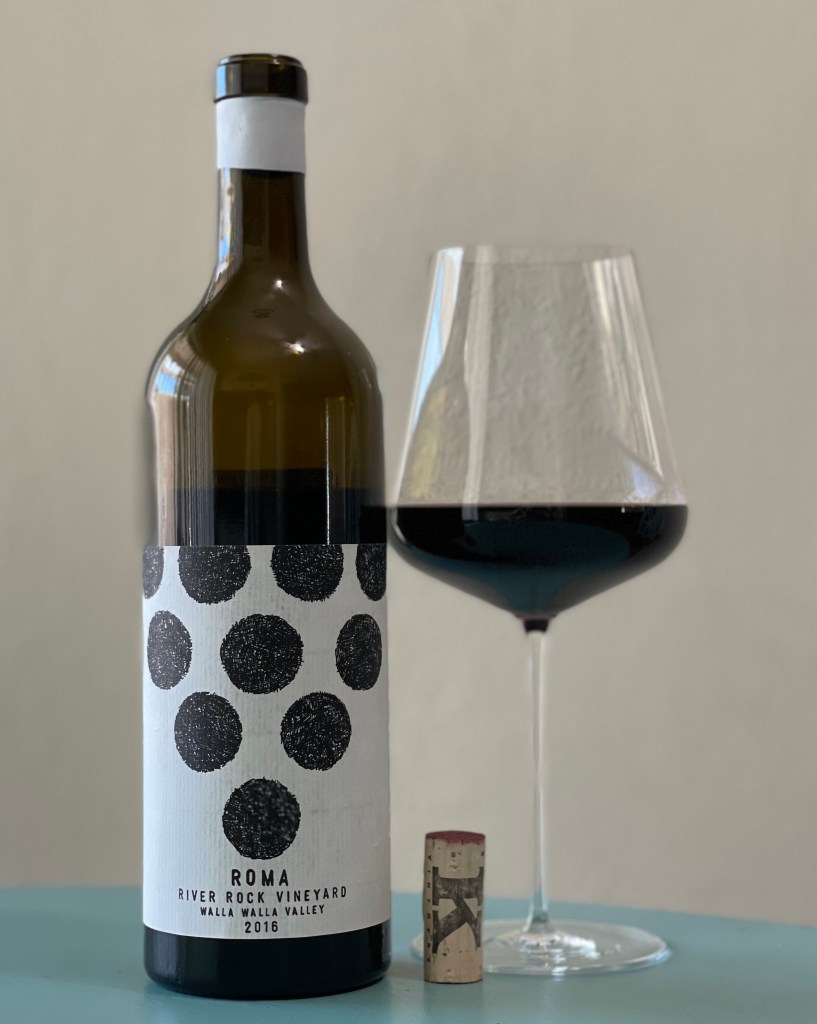
Fun Cabernet/Syrah Blend From the Walla Walla Valley

Today’s Story: K Vintners

K Vintners was established by Charles Smith as his first winery in December 2001. Located at the base of the Blue Mountains in Walla Walla, Washington, K Vintners produces small lot single vineyard Syrah and field blends of Syrah, Cabernet Sauvignon, Grenache, Tempranillo, and Viognier which are all picked by hand, fermented using only natural yeasts, and basket pressed. Though Charles spent a lot of time during his developmental years traveling throughout the state of California and grew an appreciation for wine, his real passion for the beverage spawned during his time living in Scandinavia for roughly a decade. As a manager for rock bands and concert tours, Charles spent a great deal of time wining and dining before moving back to the United States in 1999. On a journey through Walla Walla in late 1999, Charles met a young winemaker who shared his passion for Syrah and Charles was convinced to move to the small city to make his own wine. In December 2001, Charles released 330 cases of his first wine, the 1999 K Syrah.

I previously wrote about K Vintners when I reviewed the 2016 The Creator back in February 2020.

Today’s Wine: 2016 Roma

80% Cabernet Sauvignon, 20% Syrah; 14.5% ABV

The 2016 Roma is deep ruby in color. I didn’t have a decanter at the moment, so I instead let this open up in the glass for an hour then drank it over several hours. The aromas are of pronounced intensity, with the nose showcasing notes of blackberry, blueberry, plum, tobacco, pencil shavings, black licorice, charred green herbs, crushed rock, chocolate, and mild baking spice. Meanwhile the flavors are of medium (+) intensity and the palate displays notes of black cherry, plum, black raspberry, sweet tobacco, black olive, slate, mocha, and a hint of mint. This dry red is full-bodied with medium (+) acidity, medium (+) but fine-grained tannins, high alcohol, and a long finish. 752 cases produced.

Price: $50 (I paid $43). I think this offers very solid value and is also fun to try given the blend. The balance, complexity, intensity, and length are all very solid and this wine continues to evolve with each passing moment in the glass. I’d certainly buy this again.

Old School Napa Chardonnay for the Cellar

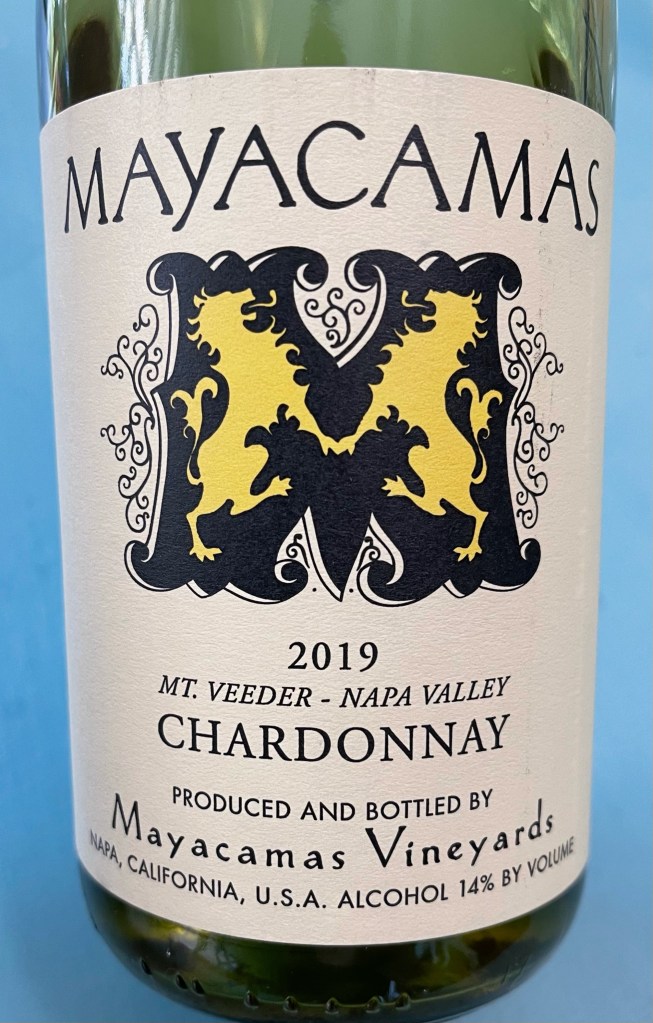
Today’s Story: Mayacamas Vineyards

Mayacamas was established in 1889 by German immigrant John Henry Fisher and is located in the Mt. Veeder AVA of the Napa Valley. Fisher went bankrupt in the early 1900s, however, and the winery ceased production with the onset of Prohibition (although bootleggers are said to have made wine in the cellars during the early years). Mayacamas was owned by the Brandlin family during the 1920s and 1930s, before being purchased by Jack and Mary Taylor in 1941 when the estate received its current name. Mayacamas changed hands yet again in 1968 when Robert and Elinor Travers purchased it, with the couple quickly setting about expanding the aging facilities and vineyard holdings while planting and replanting vines. Charles and Ali Banks purchased Mayacamas in 2007, though the winery has since changed hands again to the Schottenstein family.

Though the history of Mayacamas is long and inclusive of many ownership changes, the one constant is the traditional style of winemaking they practice. Mayacamas was one of the wines in the 1976 Judgment of Paris (they poured their 1971 Cabernet Sauvignon) which showed the estate can stand up with the greatest Californian and French wines of the world. Mayacamas dry farms their vineyards and transitioned a large portion to organic viticulture in 2013, further enhancing the quality of fruit. Very traditional in style, they age the wines in neutral oak to not mask any of the true expressions of the Cabernet Sauvignon variety or the terroir.

I previously wrote about Mayacamas when I reviewed the 1989 Cabernet Sauvignon last June.

Today’s Wine: 2019 Chardonnay

100% Chardonnay; 14% ABV

The 2019 Chardonnay is pale gold in color and transparent. 30 to 40 minutes in the glass does the wine wonders at this youthful stage. The aromas are of pronounced intensity, with the nose showcasing aromas of green apple, ripe pear, lemon zest, melon rind, honeysuckle, flint, and minerality reminiscent of finely crushed rock. Meanwhile the flavors are also pronounced, with the palate displaying notes of Granny Smith apple skins, lime pith, poached pear, chamomile, wet stone, mild white pepper, and almond. This dry white is medium-bodied with medium (+) acidity, high alcohol, and a long finish.

Price: $50. I think this is very well-priced and offers solid value. The intensity, complexity, and structure bode well for the longer term and this is made in a very old school style which I love.

Fun and Refreshing Napa White Blend That Begs for an Oyster Pairing

Today’s Story: Matthiasson Family Vineyards

Matthiasson Family Vineyards is a relatively small winery established in 2003 by Steve and Jill Klein Matthiasson. Steve grew up passionate about farming, passing time as a gardener and cook while in college before co-writing the California manual on sustainable vineyard practices in 1999 after graduate school for horticulture. Jill is also passionate for farming, particularly the sustainability side of it, and she studied botany at Penn before ultimately attending UC Davis for grad school studying traditional methods for soil health.

Matthiasson is probably most well-known for their Napa Valley White Wine that I’m reviewing today (an interesting blend of Sauvignon Blanc, Semillon, Ribolla Gialla, and Tocai Friulano), but they also either grow or source (often by lease) Chardonnay, Cabernet Sauvignon, Merlot, and Cabernet Franc amongst other varieties. Steve and Jill maintain their own vineyard in the West Oak Knoll area, while sourcing from others throughout the Napa Valley and Sonoma County including Red Hen, Bengier, and Linda Vista amongst others. All of the vineyards are either organically farmed or transitioning to organic viticulture, and as you might guess Steve and Jill believe great wine starts in the vineyards. Steve is pretty involved in each vineyard they source fruit from, catering farming practices to each specific one so that no matter the source their fruit is healthy and fully ripe. Coupled with his traditional winemaking methods, the Matthiasson wines come out beautifully balanced with lower levels of alcohol and gorgeous acidity.

I previously wrote about Matthiasson when I reviewed the 2018 Linda Vista Vineyard Chardonnay back in May, 2020.

Today’s Wine: 2019 White Wine

50% Sauvignon Blanc, 25% Ribolla Gialla, 23% Semillon, 2% Tocai Friulano; 12.5% ABV

The 2019 White Wine is pale yellow in color. The aromas are of pronounced intensity and the nose is absolutely gorgeous, showcasing notes of white peach, lemon pith, seashell, flint, raw almond, slight reduction (almost like petrol), wet river stone, and dried straw/hay. Flavors are also of pronounced intensity, with the palate displaying notes of green apple, pineapple, white peach, lime zest, beeswax, wet rock, saline minerality, and mild oaky spice. This dry white blend is medium-bodied with vibrant, high acidity, medium alcohol, and a medium (+) length finish. The wine begs for an oyster pairing and the finish leaves one craving the next sip. 893 cases produced.

Price: $40. Though not inexpensive, I believe this wine offers great value solely based on its complexity, balance, and intensity. Then factor in that it’s fun, refreshing, and can age for quite a few years and you’ve got a showstopper.

Chardonnay off the Beaten Path

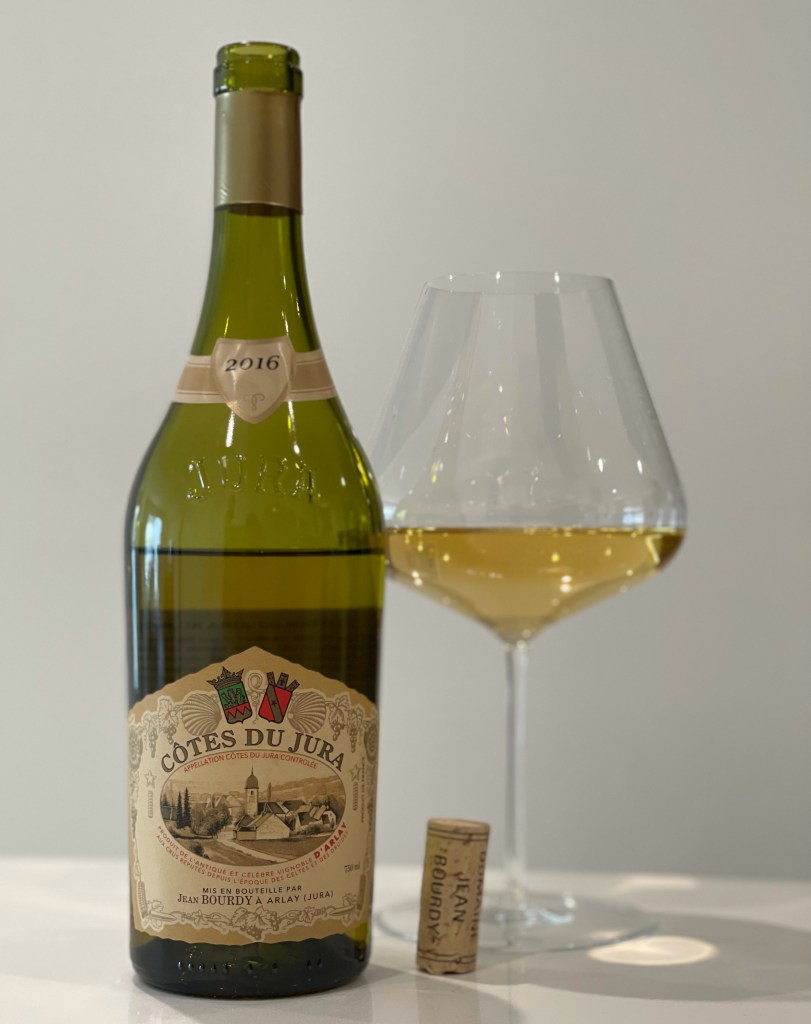
Today’s Story: Jean Bourdy

Jean Bourdy is a historic family-owned estate dating to 1475 in the Jura region of France. Today under guidance of the family’s 15th generation and brothers Jean-Phillipe and Jean-François Bourdy, the family domaine consists of ten hectares (25 acres) planted to Pinot Noir, Trousseau, Poulsard, Chardonnay, and Savagnin. Winemaking here is incredibly traditional, beginning in the vineyards where the Bourdy brothers practice biodynamic viticulture using only cow manure as fertilizer and whey or flower teas for disease control. All wines ferment naturally with indigenous yeasts in old oak vats, then they age in old oak barrels and foudres that are at times 80 years old themselves. Wines are only topped up once and sulfur additions either never occur or only in very, very small doses, so the wines oxidize slowly in the very cold and damp cellars while adding complexity. The wines age out for several years before release, however the Bourdy brothers hold back some wine each vintage and today command an incredible library with wines going back to the 19th century.

Today’s Wine: 2016 Côtes du Jura Blanc

100% Chardonnay; 12.5% ABV

The 2016 Côtes du Jura Blanc is medium to deep gold in color and transparent. Per the suggestion on the back label, I opened this four hours before serving but did not decant it. The aromas are of pronounced intensity, with the nose showcasing notes of yellow apple, golden pear, grilled pineapple, honey, sweet tart dust, chalk, freshly baked bread, almond, and charred oak. Meanwhile the flavors are of medium (+) intensity and the palate displays notes of baked yellow apple, peach, dried apricot, dried green herbs, white mushroom, wet stone, almond, toast, and sea salt. This dry white is medium-bodied with high acidity, medium alcohol, and a medium (+) length finish.

Price: $30. For me, I think this is a great value though it will be a very different and “interesting” Chardonnay for what many will likely expect or be used to. The intensity, complexity, and balance are already great and this has the structure to go the distance. If you are unfamiliar with the wines of Jura and want to try something new, give this one a try.

Fun Oregon Rosé That Differs From the Crisp Porch Pounders

Today’s Story: Big Table Farm

Big Table Farm is a relatively small winery and farm established in the Willamette Valley of Oregon in 2006 by winemaker Brian Marcy and artist/farmer Clare Carver. Brian worked with wine in Napa Valley prior to starting Big Table Farm, spending a decade with stints at heavyweights like Turley Wine Cellars, Neyers Vineyards, Blankiet Estate, and Marcassin to hone his craft. Meanwhile Clare is a gifted artist and designs wine labels, many of which have been awarded.

Dedicated to Pinot Noir, Chardonnay, and small amounts of Pinot Gris and Syrah, Big Table Farm commenced with only 150 cases of wine and has grown to a few thousand cases today. The wines are made in a minimal style, designed to showcase each unique source’s terroir and all wines are bottled unfined and unfiltered. With a major emphasis on sustainability and Clare’s passion for farming, the duo’s 70 acre property also acts as a working farm where they produce seasonal vegetables and raise animals. A visit to the property will not only showcase the wines, but you will see hens, pigs, goats, draft horses, and cows wandering about with an area dedicated to bee hives as well.

I previously wrote about the 2014 Willamette Valley Chardonnay and 2019 The Wild Bee Chardonnay from Big Table Farm.

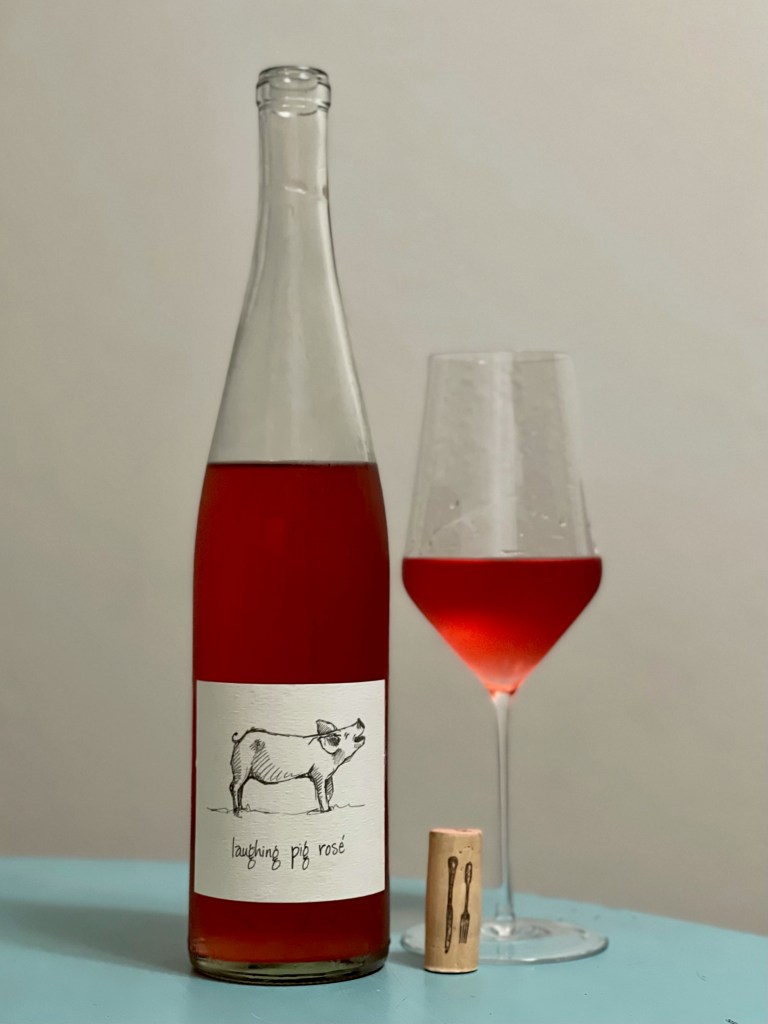
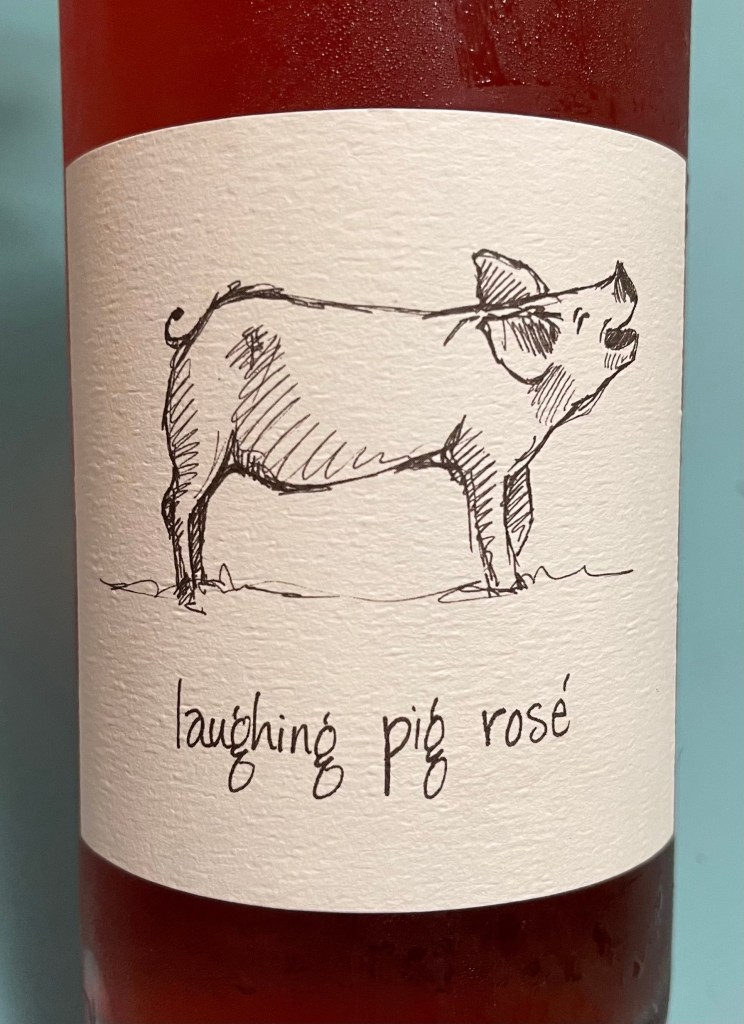
Today’s Wine: 2020 Laughing Pig Rosé

100% Pinot Noir; 13.8% ABV

The 2020 Laughing Pig Rosé is deep salmon/pink in color. The aromas are of medium intensity, with the nose showcasing notes of strawberry, raspberry, blood orange rind, rose petal, and dried green herbs. There’s some characteristic of meatiness there as well. Meanwhile the flavors are also of medium intensity and the palate displays notes of tart red cherry, wild strawberry, pomegranate, raspberry, red rose, stony mineral, and mild white peppery spice. This dry rosé is medium-bodied with medium (+) acidity, very low tannins, medium (+) alcohol, and a medium (+) length finish. 680 cases produced.

Price: $32. This is a fun and “different” rosé in that there’s more body here and it differs significantly from the crisp and light porch pounders we are typically used to. The wine is very well balanced, offers nice complexity, and is versatile which culminate into my opinion that this is certainly worth trying for the price. 

Refreshing Pinot Grigio for the Summer Months

Today’s Story: Gargiulo Vineyards

Gargiulo is a relatively small, family-owned winery in Oakville, Napa Valley that produces about 3,400 to 4,000 cases of wine each year from two vineyards. Owners Jeff and Valerie Gargiulo bought their first vineyard, Money Road Ranch, in 1992 to fulfill their winemaking dream, adding to the property seven years later by purchasing the 575 OVX property. Founded as a Cabernet Sauvignon estate, Gargiulo produces three different Cabs and a Sangiovese, though they also have Cabernet Franc, Petite Verdot, and Merlot planted for blending in their G Major 7 Cab. Gargiulo produces small amounts of Chardonnay from Frank Wood Ranch, a rosé of Sangiovese, and a Pinot Grigio as well.

The Gargiulo family and their winemaker, Kristof Anderson, follow a more hands-off approach to winemaking, who in their words say is “gentle and patient.” When it comes time to harvest the grapes, they do so by hand at dawn, hand sort the grapes three times, and use gravity flow methods for winemaking. This arguably preserves the natural fragrances and flavors of the wines by removing pumps and machinery, and is a reason I believe Gargiulo wines are consistently elegant yet structured to go the distance.

I previously wrote about Gargiulo when I reviewed the 2015 Aprile, 2017 Frank Wood Ranch Chardonnay, 2009 Money Road Ranch Cabernet Sauvignon, and 2012 Money Road Ranch Cabernet Sauvignon.

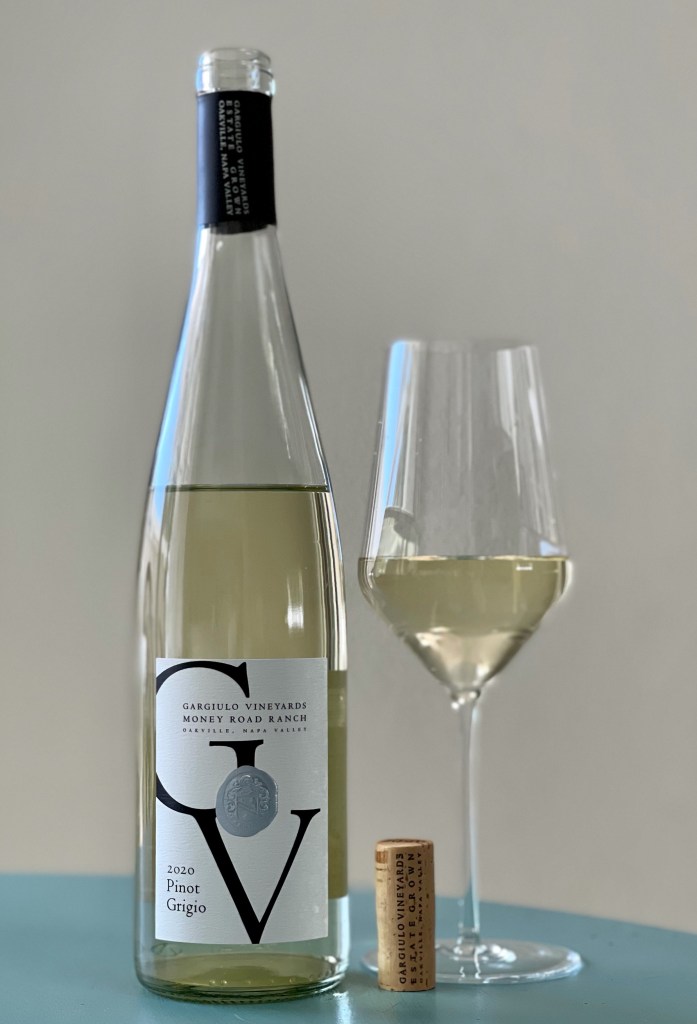
Today’s Wine: 2020 Money Road Ranch Pinot Grigio

100% Pinot Grigio; 12.5% ABV

The 2020 Money Road Ranch Pinot Grigio is pale yellow in color with mild greenish hues near the rim of the glass. The aromas are of medium intensity, with the nose showcasing notes of white peach, lemon zest, fresh cantaloupe, white wildflower, lemongrass, and wet stone. Meanwhile the flavors are also of medium intensity and the palate displays notes of green apple, lime zest, pear, nectarine, grapefruit, honeysuckle, and gravel. This refreshing dry white is light- to medium-bodied with vibrant and mouthwatering high acidity, medium alcohol, and a long finish. Very good representation of the variety, and one that isn’t too common in the Napa Valley.

Price: $40. This is very pricey for a Pinot Grigio, however the quality is impeccable and this is a great representation of the variety. Coupled with the wine’s great balance, small production, and purity I would buy this again. Very refreshing and enjoyable on a hot day.

Honest Blaufränkisch That Doesn’t Break the Bank

Today’s Story: Rosi Schuster

Rosi Schuster is a family owned and operated wine estate located in the town of St. Margarethen in the Austrian state of Burgenland. Established in 1979 by Rosi Schuster, the estate consists of nine hectares (22 acres) of vineyards planted in St. Margarethen and Zagersdorf with some of the finest and oldest vines for the area. Though Rosi Schuster is known for Blaufränkisch, she also produces Sankt Laurent, Zweigelt, and Grüner Veltliner amongst a selection of other obscure varieties. Rosi was joined in 2005 by her son Hannes, and though he runs the estate today Rosi is still involved as both a guide and sounding board throughout production. Stylistically, Hannes was greatly influenced by Roland Velich of Moric and he transitioned Rosi Schuster to organic viticulture to start. The wines are meant to be classic representations of Burgenland and its terroir, and are fermented in open-top wooden or stainless steel tanks with both alcoholic and malolactic fermentations accomplished naturally and spontaneously. Hannes works exclusively with Stockinger barrels which don’t impart much oak influence into the wines, ensuring each bottling is the best and most honest representation of variety and place possible.

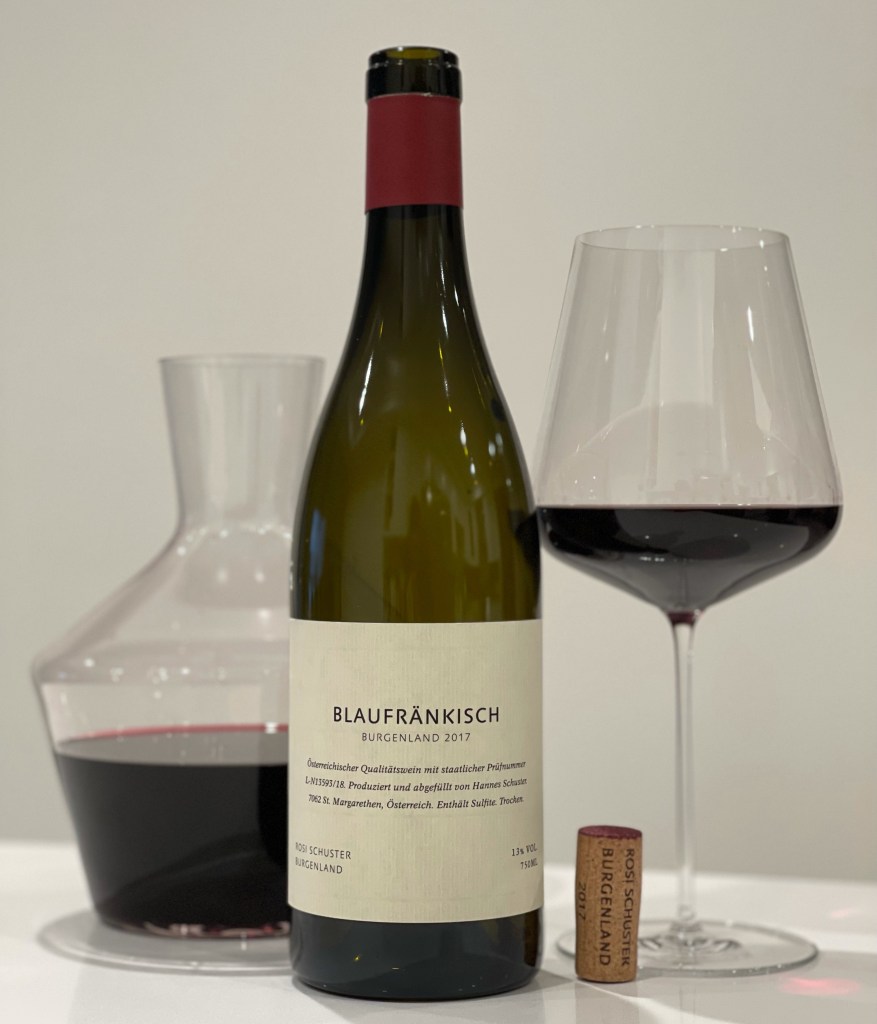
Today’s Wine: 2017 Blaufränkisch

100% Blaufränkisch; 13% ABV

The 2017 Blaufränkish is deep ruby in color with purple hues. I decanted this for about 45 minutes which seemed to be the right amount at this stage. The aromas are of medium intensity, with the nose showcasing notes of blackberry, black plum, blueberry, black cherry, violet, sweet tobacco, and allspice. Meanwhile the flavors are also of medium intensity and the palate displays notes of black cherry, brambly blackberry, blueberry, licorice, black pepper, smoke, and mild baking spice. This dry red is light- to medium-bodied with high acidity, medium tannins, medium alcohol, and a medium length finish.

Price: $20. Though the intensity and finish length could be better, I still think this offers solid value at its price-point and the balance is already very impressive. Given the acidity and how this opened up, I think this needs another year or two before it really starts coming into its own.

Fun Sicilian Amber Wine That Needs a Few More Years

Today’s Story: Azienda Agricola COS

Azienda Agricola COS is a revered wine estate established in 1980 in Vittoria on the Italian island of Sicily. COS was established by three friends, Giambattista Cilia, Giusto Occhipinti, and Cirino Strano, with the first letter of their last names creating the acronym of COS for which the project is named. COS is largely considered a pioneer and champion for Sicilian wines, namely seeking to prove that world-class and high-quality wines can come from the island. COS farms all of their vineyards adhering to organic and biodynamic principles, and they have never used synthetic or chemical fertilizers throughout the life of the venture. This philosophy carries over into the cellar as well, where the wines are made as naturally as possible. For instance, COS is an adopter of clay amphorae dug into the ground for aging because Occhipinti believes them to be a vessel that doesn’t mask any terroir-driven element of the wines. For any bottlings that do not age in amphorae, they use large neutral Slavonian oak botti or concrete tanks to similar effect. All wines see extended maceration, including the whites, which Occhipinti uses as natural preservative so zero sulphur needs to be added during winemaking and at most a minimal dose is added at bottling.

I previously wrote about the 2014 Cerasuolo di Vittoria Classico delle Fontane from COS, which is a fun wine made from 60% Nero d’Avola and 40% Frappato.

Today’s Wine: 2019 Pithos Bianco

100% Grecanico; 11% ABV

The 2019 Pithos Bianco is pale amber in color. Given some time to blossom in the glass, the aromas are of medium (+) intensity and the nose showcases notes of orange rind, apricot, tangerine, peach skins, honeysuckle, delicate dried green herbs, honeycomb, and finely crushed rock. Meanwhile the flavors are of medium intensity and the palate displays notes of peach, tangerine, apricot, melon, honey, saline, and crushed rock minerality. This dry amber wine is medium-bodied with medium (+) acidity, medium (-) tannins, medium (-) alcohol, and a long finish. Quite good, though this is lacking some intensity I was hoping for and I will be curious to see how this develops over the next several years.

Price: $35 (closer to $20 in Europe). This is a very good value closer to the prices found in Europe, however for an average price of $35 in the US (I paid $40) I think this is just okay in value terms. The nose is gorgeous and quite complex, though the palate is lacking in intensity for me to really wow me. Given the acidity, great balance, and length though this should only improve.

Traditional and Terroir-Driven Jura Built for the Cellar

Today’s Story: Les Matheny

Les Matheny is a small and relatively new winery, established in 2007 by the husband and wife team of Elise and Emeric Foléat in their hometown of Matheny in the Jura region of France. Emeric spent eight years working with legendary winemaker Jacques Puffeney before he and Elise started their own venture, which today consists of 3.5 hectares (8.6 acres) in the appellations of Arbois, Montigny-les-Arsures, and Poligny. Winemaking here is rather traditional and takes place in a no-frills converted farmhouse, with the resulting wines much more intense and terroir-driven compared to many of the lighter and more “popular” styles of the region. All wines ferment spontaneously in fiberglass tanks, there is no chaptalization or acidification, and malolactic fermentation occurs naturally in barrel. Whites age 4-9 years in neutral oak barrels, while reds age 18-30 months in neutral foudres and demi muids. All wines are then bottled unfined but with light filtration.

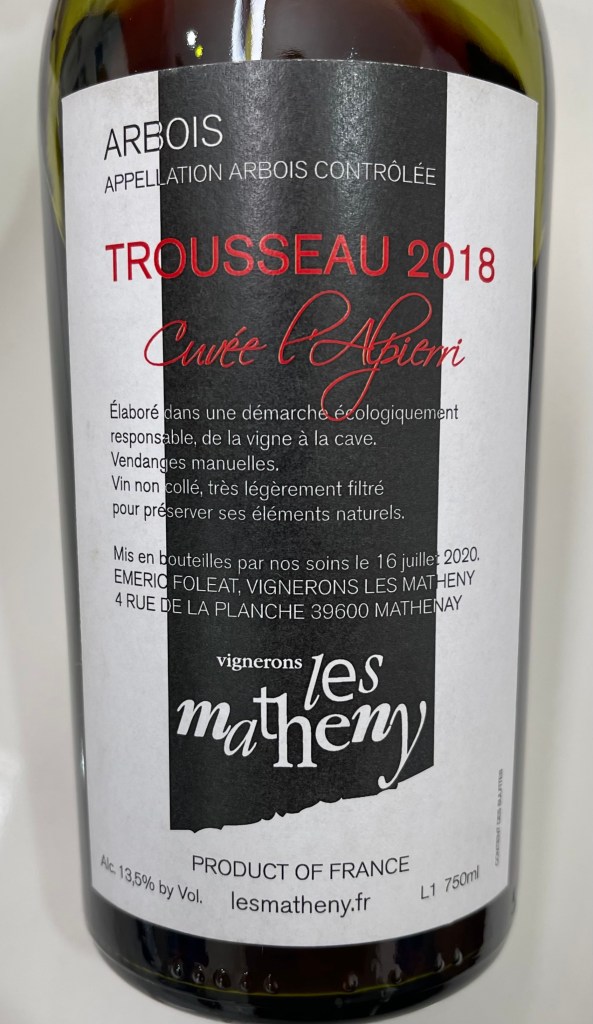
Today’s Wine: 2018 Trousseau Cuvée l’Alpierri

100% Trousseau; 13.5% ABV

The 2018 Trousseau Cuvée l’Alpierri is pale ruby in color. I didn’t decant this but simply let it open up in the glass for about 45 minutes to an hour. The aromas are of pronounced intensity, with the nose showcasing notes of ripe red cherry, strawberry, orange rind, violet, cured meat, black pepper, dried green herbs, and nutmeg. Meanwhile the flavors are more subdued and of medium intensity, while the palate displays notes of redcurrant, raspberry, wild strawberry, cherry, charred herbs, black pepper, and crushed rock. This dry red is light- to medium-bodied with medium (+) acidity, medium (+) tannins, medium alcohol, and a long finish.

Price: $48. I think this is very reasonably priced and just needs some time in the cellar to really show at its best. The nose steals the show at this stage, but overall the wine is rather complex, has solid intensity, and great length. Patience will be rewarded handsomely here given the acidity and tannin levels.