Revisiting an Old Friend

Today’s Story: Gargiulo Vineyards

Gargiulo is a small, family-owned winery in Oakville, Napa Valley that produces about 3,400 cases of wine each year from two vineyards. Owners Jeff and Valerie Gargiulo bought their first vineyard, Money Road Ranch, in 1992 to fulfill their winemaking dream, adding to the property in 1997 by purchasing the 575 OVX property. Founded as a Cabernet Sauvignon estate, Gargiulo produces three different Cabs and a Sangiovese, though they also have Cabernet Franc, Petite Verdot, and Merlot planted for blending in their G Major 7 Cab. Gargiulo produces small amounts of Chardonnay from Frank Wood Ranch and a rosé of Sangiovese as well.

I recently reviewed Gargiulo’s 2009 Money Road Ranch Cabernet Sauvignon in Gotta Get That Money (Road), so I thought it would be interesting to check in on the 2012 vintage while it is still fresh in my mind. Earlier, I reviewed Gargiulo’s 2015 Aprile Sangiovese in Italy’s Favorite Grape…from California?.
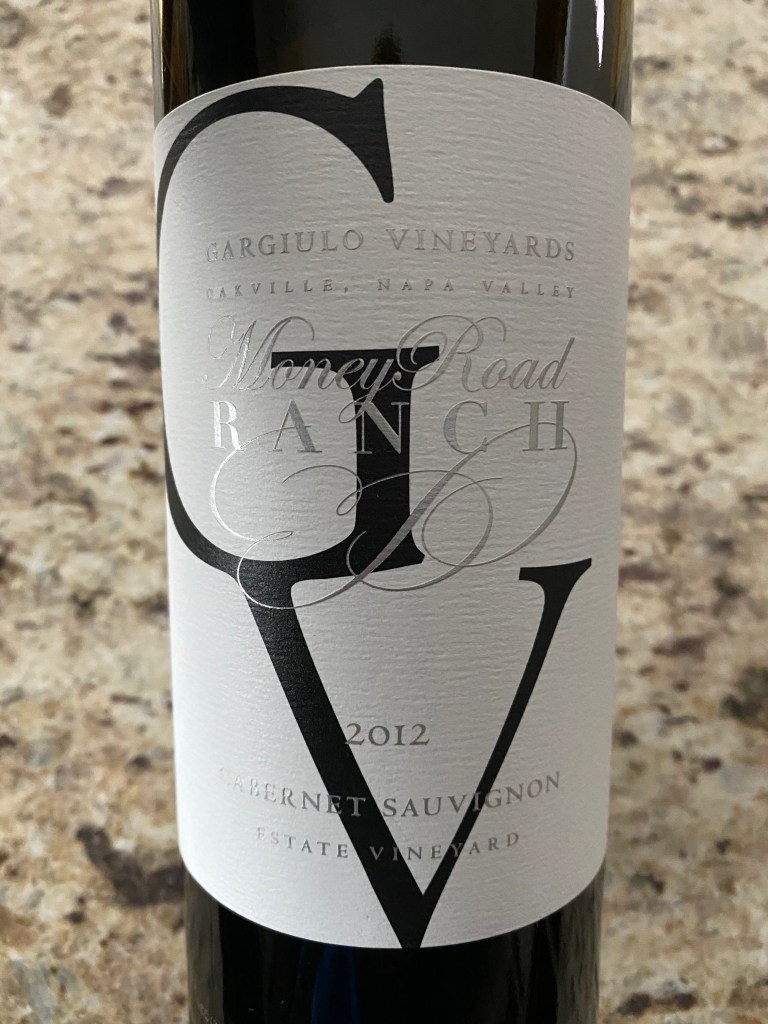
Today’s Wine: 2012 Money Road Ranch Cabernet Sauvignon

100% Cabernet Sauvignon; 14.6% ABV

The 2012 Money Road Ranch Cab is deep ruby/purple in color and almost entirely opaque. Once this opens up, the wine showcases aromas of blackberry jam, crème de cassis, wild blueberry, spiced plum, redcurrant, green herbs, tobacco, fresh leather, black volcanic soil, slate, and toasted oak. On the palate, I get notes of black cherry, juicy plum, boysenberry, licorice, cedar, damp rocky earth, ground black peppercorn, black tea, cardamom, and a hint of vanilla. This wine is medium- to full-bodied with moderate acidity, remarkably integrated and velvety medium (-) tannins, and a medium (+) length finish that adds notes of iron and smoke. Though you can certainly draw the parallels between the 2009 and 2012 vintages in terms of style and expression, the 2012 is certainly more elegant and velvety in its mouthfeel where I felt the 2009 was a bit more jammy and syrupy. 1,236 cases produced.

Price: $80 direct from the winery upon release. This is a very solid vintage for the Money Road Ranch bottling and, alongside the 2007 and 2013 vintages, one of my favorites that I’ve tried. Pair this with filet mignon, pepper-crusted ahi tuna, or lamb.
Velvety Smooth Sonoma Coast Pinot Noir

Today’s Story: Davies Vineyards

Davies Vineyards is one of the most storied wineries in the Napa Valley, tracing their roots back to 1862 when Jacob Schram purchased 200 acres and began developing hillside vineyards. The winery, at the time called Schramsberg, greatly ramped up production by the late 1800s and proved a success, however after Jacob Schram died in 1905 the winery sold in 1912 and fell out of prominence. Jack and Jamie Davies purchased the 200 acre Schramsberg property in 1965, however, and resurrected the great vineyards and Schramsberg name. Known for their Diamond Mountain Cabernet Sauvignon, Davies also produces sparkling wine under the Schramsberg label and an assortment of Pinot Noir from the Sonoma Coast to the Anderson Valley and beyond.

I first reviewed Davies wines with the 2012 Ferrington Pinot Noir in Who Wants Pie?, then the 2012 JD Cabernet Sauvignon in Easy-Drinking Cab, the 2013 Jamie Cabernet Sauvignon in The Matriarch of Diamond Mountain, and the 2005 J. Schram Sparkling Rosé in Premier American Sparkling. Check them out if you haven’t already for more history of the winery as well as tasting notes across other portfolio offerings.

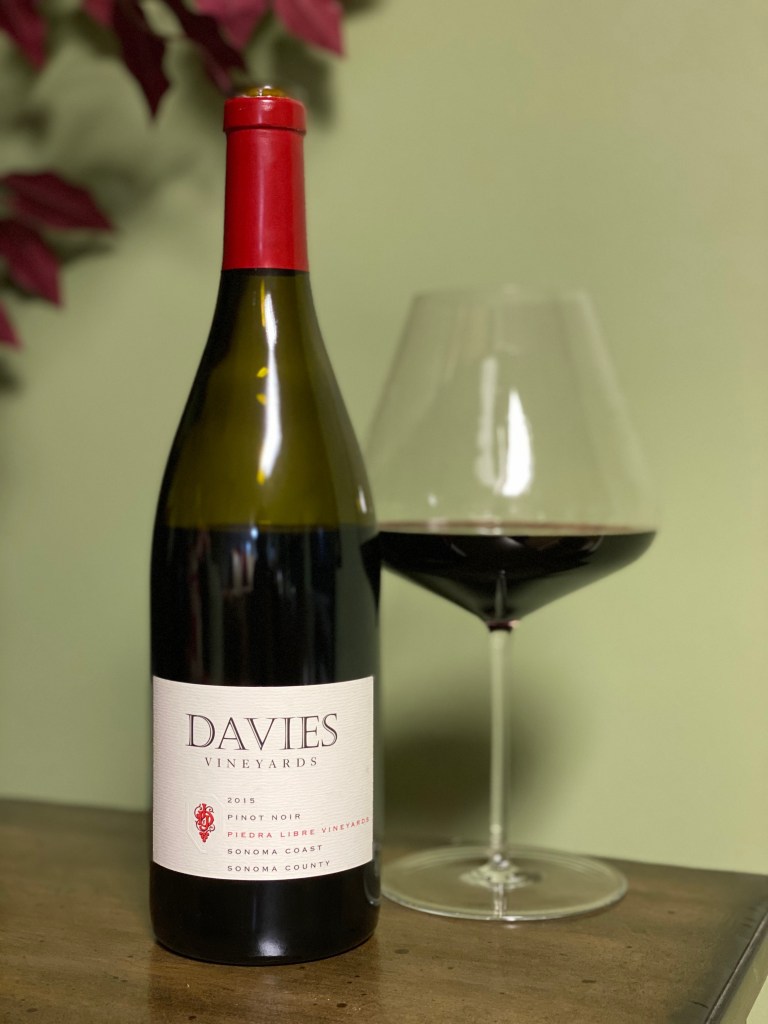
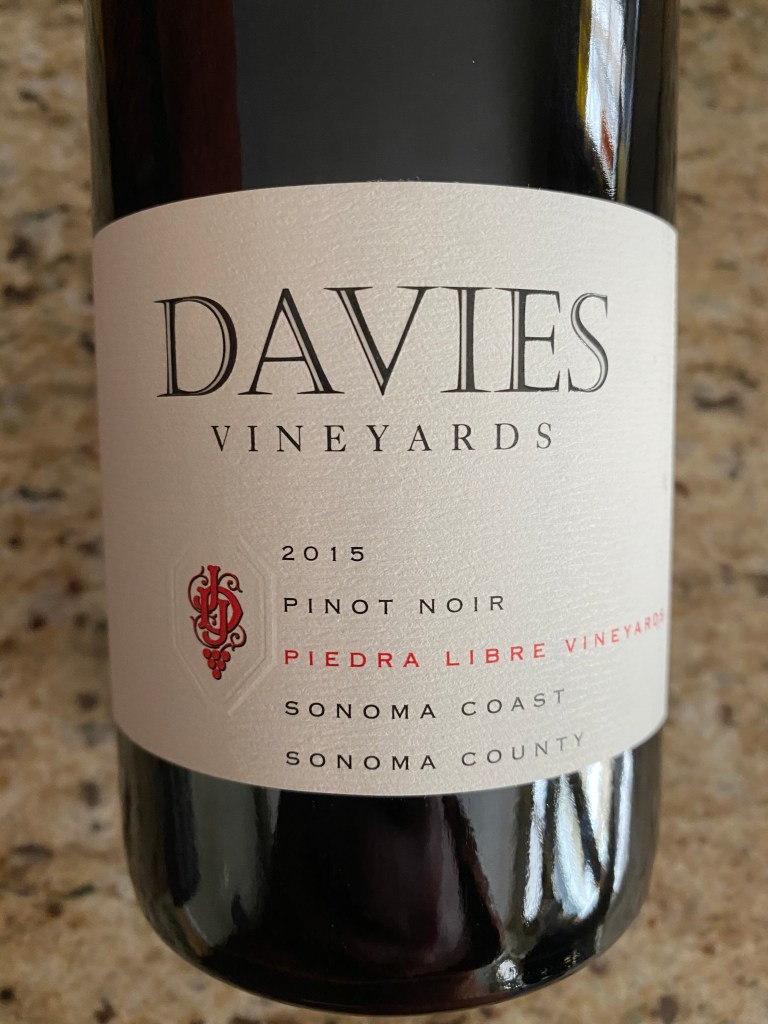
Today’s Wine: 2015 Piedra Libre Vineyards Pinot Noir

100% Pinot Noir; 14.2% ABV

The 2015 Piedra Libre Pinot Noir is medium ruby/purple in color with rose petal variation near the rim and is moderately transparent. On the nose, this wine showcases aromas of red cherry, blueberry, plum, violet, damp earth, tobacco, baking spice, white pepper, vanilla, and oak. There is also some heat from the alcohol. Once in the mouth, the wine offers notes of cranberry, raspberry, wild strawberry, cassis, cola, loamy soil, chocolate, coffee grounds, and rose. This is medium-bodied with mouthwatering medium (+) acidity, light tannins, and a long finish that ends in notes of cherry liqueur and mocha. 225 cases produced.

Price: $65 direct from the winery. Certainly one of my favorite Davies Pinots I’ve tried, but I can never get around to justifying the price-point on these wines. Pair this with pork stir fry, a bacon cheeseburger, or herb-roasted chicken.

A Friend of Henri Jayer Is a Friend of Mine

Today’s Story: Domaine Philippe Charlopin

Domaine Philippe Charlopin was established by Philippe when he purchased his first vines in Gevrey-Chambertin in 1978. The son of a vigneron who rented vines rather than owned his own, Philippe comes from humble beginnings and started his own career as a vigneron-ouvrier in 1977. Throughout his early years, Philippe was a student of the great Henri Jayer and his winemaking philosophy is greatly impacted by Henri, with the two later becoming close friends. Though Philippe expanded with a parcel of Clos St. Denis in 1983 and later throughout various appellations, he only made Pinot Noir until his son Yann joined the domaine in 2004. Yann was passionate for crafting white wines, so they purchased 5 hectares of vines in Chablis, 2 hectares in Pernand-Vergelesses, and a small parcel of Corton-Charlemagne to augment their portfolio with Chardonnay. Today, Domaine Philippe Charlopin encompasses 25 hectares of sustainably farmed vines across 36 different appellations which are divided into 140 parcels.

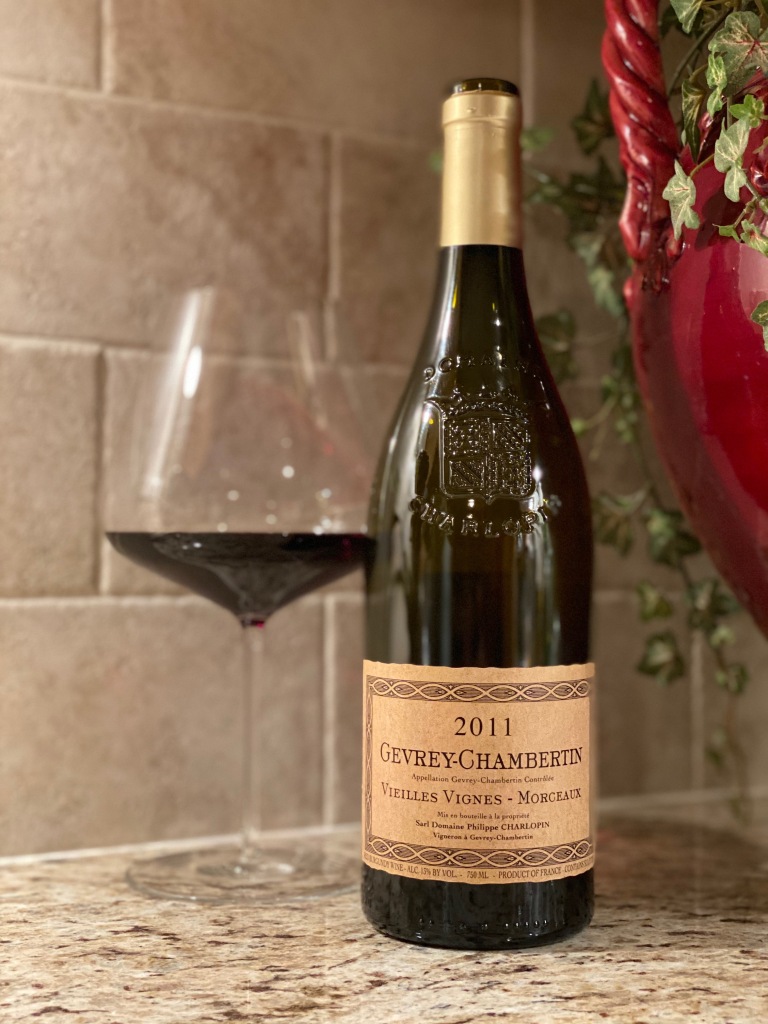
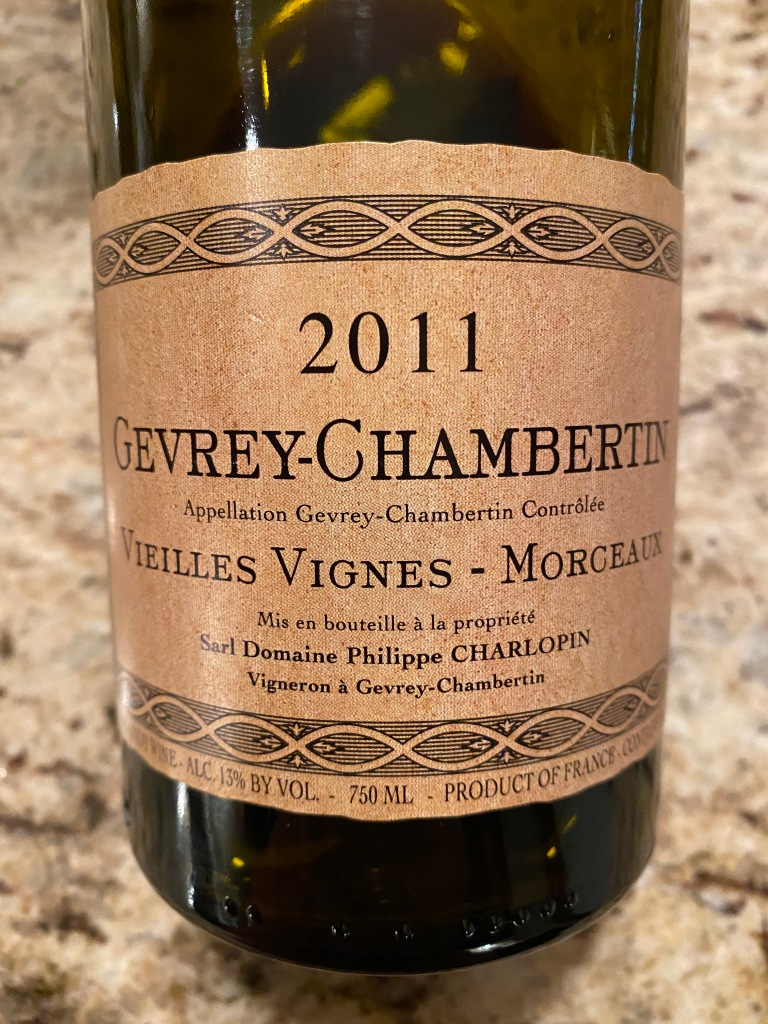
Today’s Wine: 2011 Gevrey-Chambertin Vieilles Vignes Morceaux

100% Pinot Noir; 13% ABV

The 2011 Morceaux is pale to medium ruby in color and moderately transparent. I let this breathe in the glass for about 30 minutes, allowing the nose to reveal aromas of black cherry, dried strawberry, blue florals, forest floor, worn leather, asphalt, tar, dried green underbrush, incense, and light oak. Once in the mouth, this wine showcases notes of cherry, cranberry, black raspberry, blood orange, violet, wet gravel, tobacco, rocky soil, iron, green herbs, and sandalwood. This is medium-bodied with medium (+) acidity, medium (-) tannins, and a medium (+) length finish. Sourced from 60- to 100-year-old vines planted in clay and limestone soil.

Price: $90 (though this is tough to find in the US and looks to originally sell around $65). This is a gorgeous Gevrey-Chambertin from one of the tougher vintages in recent past, and it doesn’t show pyrazines like some of the other 2011 Burgundy I’ve had. Pair this with beef bourguignon, saddle of lamb, or coq au vin.

Chianti Classico for a Remarkable Value

Today’s Story: Marchesi Antinori

Marchesi Antinori traces its roots to 1385 when Giovanni di Piero Antinori joined the Arte Fiorentina dei Vinattieri (Florentine Winemakers’ Guild) and the family has been making wine since through 26 generations. While the historic epicenter of the Antinori “empire” rests in Tuscany and Umbria, over time the family purchased vineyards in various regions throughout Italy and the world to bolster their portfolio and live a consistent goal of exploration and experimentation. Not only is Marchesi Antinori one of the largest wine companies in Italy, they are also one of the oldest family operated companies in the world. Today, Albiera Antinori is President of Marchesi Antinori and is supported by her sisters Allegra and Alessia, while their father Marchese Piero Antinori acts as the Honorary President.

Though the Antinori family owns what I’d say are too many estates for me to justify listing here, their website has great maps and lists of their properties here and it is worth checking out. Further, there is a really cool timeline tracing the family back to 1179 here, which I could not do any justice to in trying to reproduce myself.

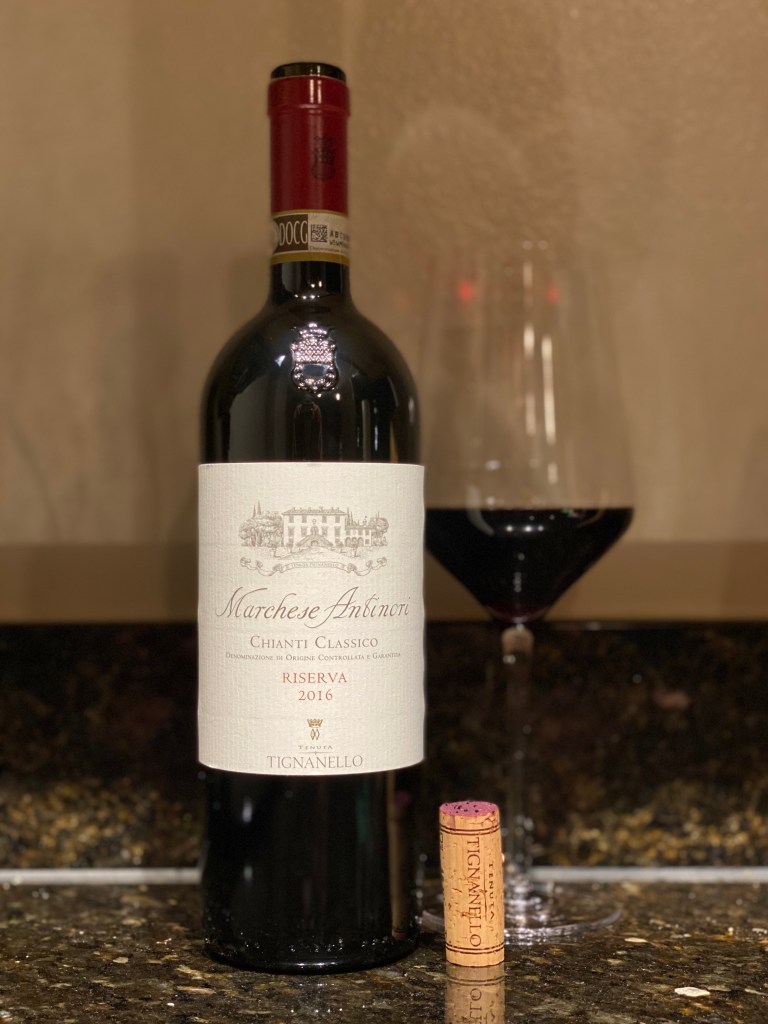
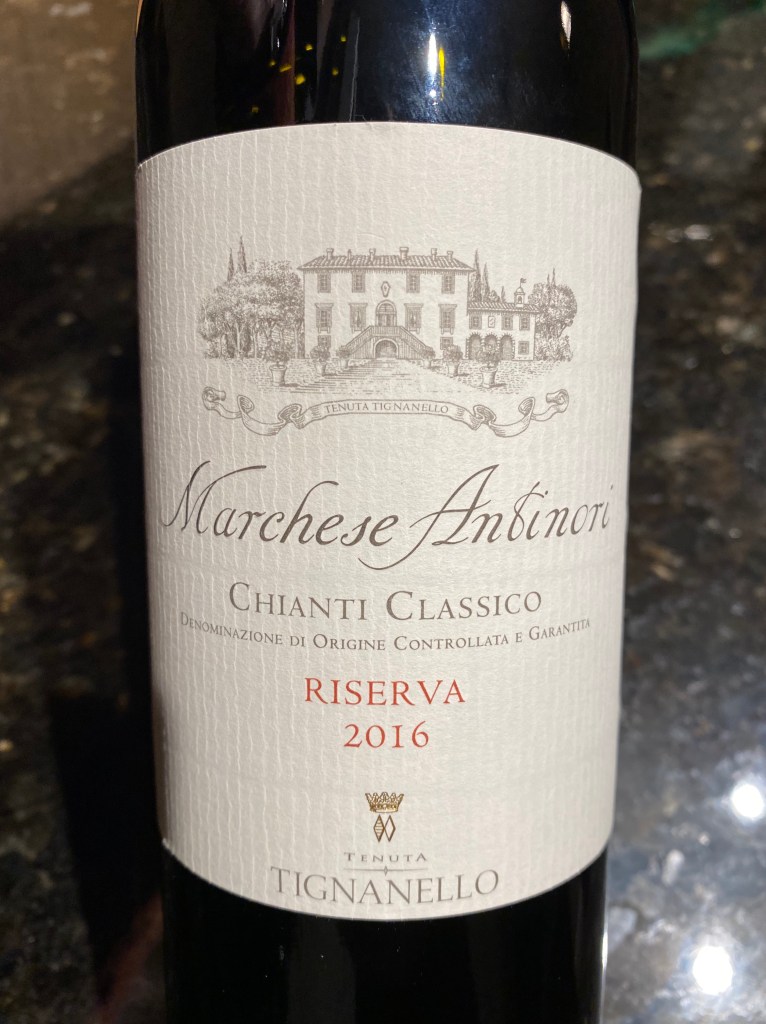
Today’s Wine: 2016 Chianti Classico Riserva Tenuta Tignanello

90% Sangiovese, 10% Cabernet Sauvignon; 14% ABV

The 2016 Chianti Classico Riserva is medium ruby in color and slightly transparent. Once this opens up, the nose showcases aromas of blackberry, cherry, cranberry, black licorice, chocolate, purple florals and rose, crushed rock, green herbs, and dried earth. On the palate, this wine displays notes of blackberry, blueberry, plum, forest floor, mocha, sweet tobacco, spice, savory herbs, and slight vanilla. This is full-bodied with medium (+) acidity, medium dusty tannins, and a long elegant finish.

Price: $35. One of the greatest Chianti Classicos I’ve enjoyed and consistently incredible value after Antinori switched exclusively to Tenuta Tignanello grapes in 2011. Pair this with red sauce meat pasta, pizza, veal marsala, or chicken parm.

Unique Blend from Walla Walla

Today’s Story: K Vintners

K Vintners was established by Charles Smith as his first winery in December 2001. Located at the base of the Blue Mountains in Walla Walla, Washington, K Vintners produces small lot single vineyard Syrah and field blends of Syrah, Cabernet Sauvignon, Grenache, Tempranillo, and Viognier which are all picked by hand, fermented using only natural yeasts, and basket pressed. Though Charles spent a lot of time during his developmental years traveling throughout the state of California and grew an appreciation for wine, his real passion for the beverage spawned during his time living in Scandinavia for roughly a decade. As a manager for rock bands and concert tours, Charles spent a great deal of time wining and dining before moving back to the United States in 1999. On a journey through Walla Walla in late 1999, Charles met a young winemaker who shared his passion for Syrah and Charles was convinced to move to the small city to make his own wine. In December 2001, Charles released 330 cases of his first wine, the 1999 K Syrah.

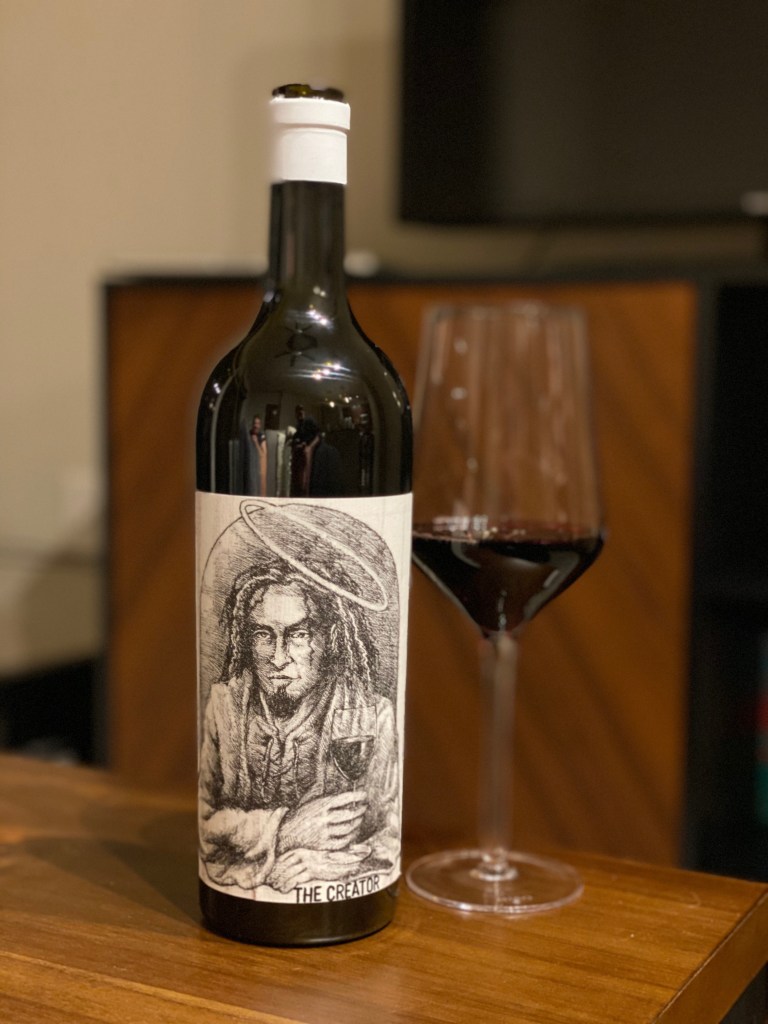
Today’s Wine: 2016 The Creator

80% Cabernet Sauvignon, 20% Syrah; 13.5% ABV

The 2016 The Creator is medium to deep ruby in color and moderately transparent. After some decanting, this wine showcases aromas of black cherry, blackberry, boysenberry, french style green beans, green bell pepper, ground black pepper, underbrush, coffee grounds, black olive, and smoke. The nose is rather herbaceous and earthy with fruit not necessarily leading the show. Once in the mouth, the wine displays notes of plum, blackberry, black raspberry, pomegranate, tobacco, forest floor, dried underbrush, herbal tea leaf, and flint. This is full-bodied with high acidity, medium (+) tannins, and a long finish.

Price: $50. Very pleasantly surprised with this wine, which offers a drinking experience I will remember for a long time thanks especially to the very unique nose. This is a supremely balanced wine for its youth and the velvety mouthfeel and lower than usual alcohol makes for an easy drinker. Pair this with herby red sauce pasta, a good burger, or veal.

Yountville Hidden Gem

Today’s Story: Kapcsándy Family Winery

Kapcsándy Family Winery was established by Lou Kapcsándy and is a small, family owned and operated estate in Yountville of the Napa Valley. An immigrant from Hungary, Lou arrived in the United States in 1956 and worked as a chemical engineer and manufacturer in the Bay Area of California and Seattle. Wine became a focal point for Lou during his successful career thanks to colleagues in the wine business, however his desire to establish his own winery one day came after a visit to Château Leoville Las Cases with his wife Bobbie in 1998. With their son Louis Jr., Lou and Bobbie started searching for property in the Napa Valley when they stumbled upon the 20 acre State Lane Vineyard in Yountville which had been destroyed the previous year by phylloxera. In May 2000, the Kapcsándy family closed on this historic property (it was the source of fruit for Beringer’s Private Reserve Cabernet Sauvignon) and embarked on massive replanting of the vineyards. They planted the main Bordeaux varieties of Cabernet Sauvignon, Merlot, Cabernet Franc, and Petit Verdot, though also planted several acres to Hungarian Furmint. When the winery was completed in 2005, Lou’s vision was finally realized and both he and Louis Jr. remain highly involved today.

Kapcsándy wines are inspired by Bordeaux both in terms of vineyard management and winemaking style, resulting in lower-alcohol wines made from 100% estate-grown fruit. With both Lou and Louis Jr. active in the vineyards and estate management everyday, Kapcsándy practices sustainable farming with great appreciation for their soil and the environment. The family constructed nesting boxes, perch poles, and songbird houses to avoid the use of chemicals for pest control, and they also add compost to the vineyards and natural fertilizers to supply bacteria, photo nutrients, and trace elements which prove beneficial for vine growth. Further, Kapcsándy plants cover crops between the vines to prevent erosion and encourage beneficial insects to inhabit the vineyards and enhance this natural ecosystem. For more, check out the Kapcsándy website here.

Today’s Wine: 2014 Estate Cuvée

72% Cabernet Sauvignon, 19% Merlot, 9% Petit Verdot; 13.8% ABV

The 2014 Estate Cuvée is deep ruby in color and almost fully opaque. I let this bottle decant for three hours before drinking any, and the nose showcases aromas of blackberry, blackcurrant, black cherry, anise, lilac, gravelly earth, black peppercorn, dried green herbs, and some light oak. Once on the palate, this wine offers notes of blackberry, blueberry, redcurrant, cherry, graphite, sweet tobacco, loamy earth, chocolate, rosemary, and rocky minerality. The wine is full-bodied with medium (+) acidity, silky but medium tannins, and a long finish. 750 cases produced.

Price: $140. Not a cheap bottle of wine, but for both its quality and rarity this is an outstanding bottle. Compared to the previous Kapcsàndy bottle I had (one multiple times this price) this is a great entry into the estate’s portfolio. Pair this with filet mignon, pepper-crusted Ahi tuna steak, or herb roasted lamb.

Baby Grange

Today’s Story: Penfolds

Penfolds was founded in 1844 by Dr. Christopher Penfold, an English physician by trade, and his wife Mary. Penfolds is one of the oldest and most famous wineries in Australia, with the first vines planted by Dr. and Mrs. Penfold with cuttings they brought when they emigrated there. Over time Penfolds grew successfully and their early production of Claret and Riesling proved popular, though many of the day-to-day operations of the winery fell to Mary since Christopher’s medical practicing occupied much of his time. When Christopher unfortunately passed in 1870, full responsibility fell to Mary. Mary later retired in 1884 and her daughter Georgina took over the estate when Penfolds was producing 1/3 of South Australia’s wine. When Mary died in 1896, the Penfolds legacy was continuing to grow with the exploration of new winemaking techniques and they became the largest winery in Australia by 1907.

In 1948, Penfolds hired who would become one of the most famous winemakers in Australia and throughout the world of wine: Max Schubert. An innovator in his field, Max catapulted Penfolds onto the global stage by crafting wines built for incredible aging through experimentation and ultimately the release of Penfolds Grange in the early 1950s. Labeled as “Grange Hermitage” and crafted with Shiraz, Grange is one of the world’s most famous wines and you often find it at the store for $700+ per bottle. In 1959, the unique “Bin” labeling started at Penfolds with the first being a Shiraz named simply for its storage area in the cellars. This Kalimna Bin 28 became the first Penfolds Bin numbered wine.

Though a lot has changed over the years at Penfolds, the experimental spirit of winemaking continues to live on to this day. All of their wines fit into categories of single vineyard or single block, single region or sub-region, and multi-region or multi-varietal blending in an effort to showcase each category’s character. The wine I’m reviewing today, for instance, fits into the multi-region or multi-varietal category while something like the Magill Estate Shiraz fits into the single vineyard or single block category. At the head of a team of roughly 10 winemakers crafting these wines, Peter Gago is chief winemaker today and the fourth in the history of Penfolds. For more about Penfolds, check out their website here.

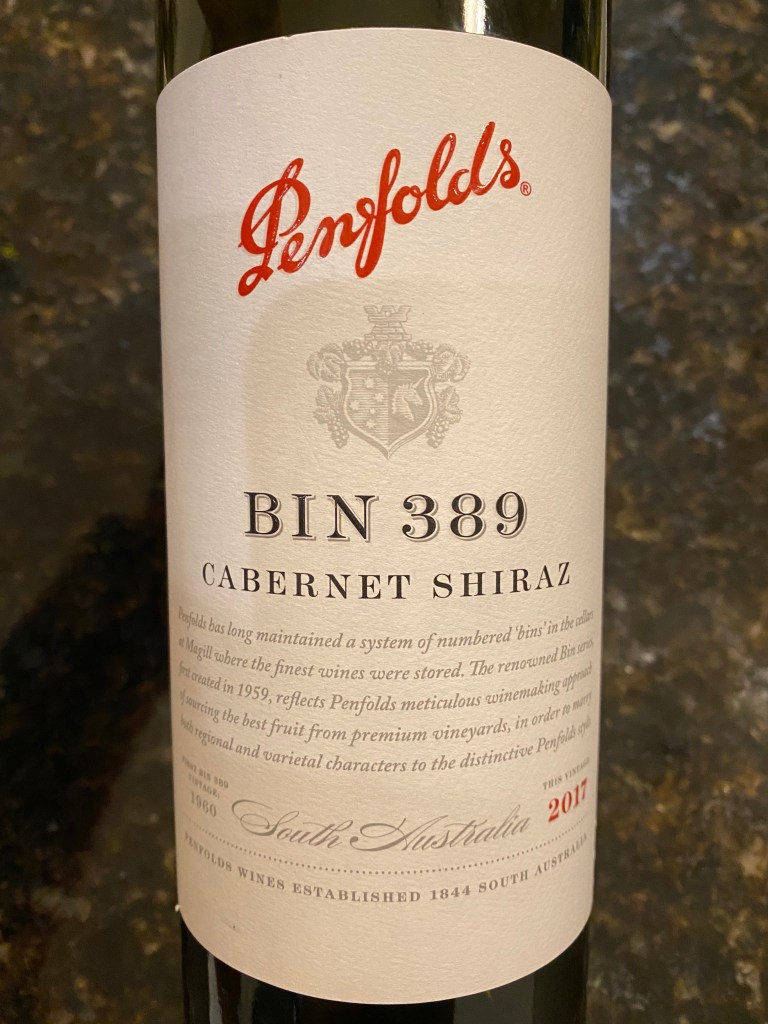
Today’s Wine: 2017 Bin 389 Cabernet Shiraz

54% Cabernet Sauvignon, 46% Shiraz; 14.5% ABV

The 2017 Bin 389 is incredibly opaque and deep purple in color with black at its core. Once this opens up (I drank this over four hours), the nose showcases aromas of blackberry compote, plum, blueberry, smoke, tobacco, forest floor after a rainstorm, wet slate, thyme, eucalyptus, nutmeg, and cedar. On the palate, I get notes of black raspberry, black cherry, blueberry, blackberry, cigar box, damp earth, dark chocolate, mint, vanilla, and oak. This wine is full-bodied with high acidity, medium (+) tannins, and a long finish.

Price: $50. This is a great bottle of wine and while not the cheapest from Grange a great introduction to their portfolio. Though young, this is drinking surprisingly well with some air but I’d lay this down a few more years. Pair this with beef carpaccio, roast beef, or roasted leg of lamb.

Ridge Hits the Mark Again

Today’s Story: Ridge Vineyards

I’m traveling today, so I figured I would make this easy and review a wine whose backstory I shared earlier in History. Quality. Ridge. when I reviewed the 2015 GSM and Consistently Delicious Zin when I reviewed the 2012 Geyserville. If you are unfamiliar with this historic Californian wine estate, I suggest checking out my first blog linked above or their website here. At the very least, between my prior two posts and this one today you can get tasting notes on three different wines in their portfolio!

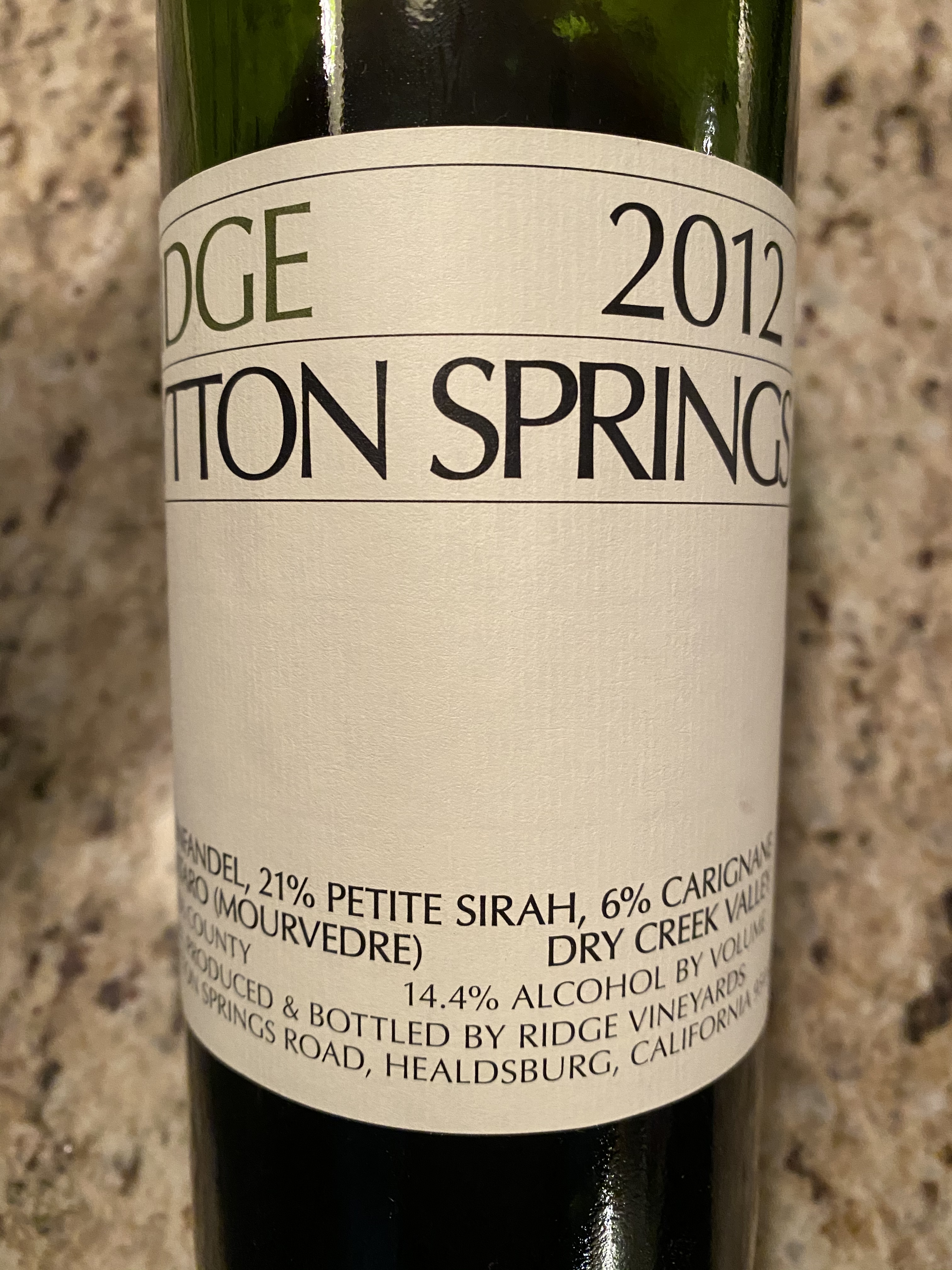
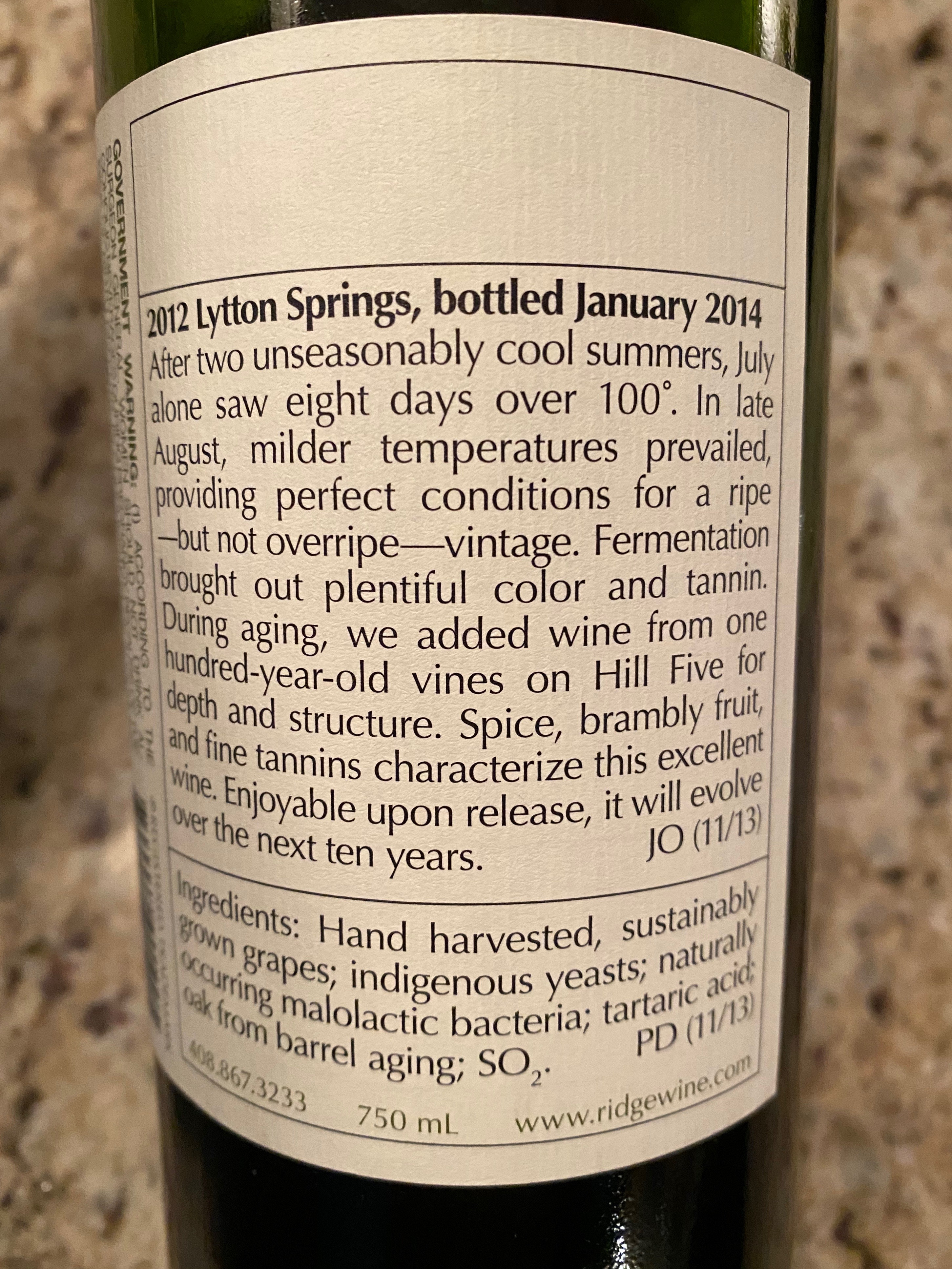
Today’s Wine: 2012 Lytton Springs

70% Zinfandel, 21% Petite Sirah, 6% Carignane, 3% Mataro; 14.4% ABV

The 2012 Lytton Springs is opaque purple in color and actually almost black at its core. Once this opens up over 30-45 minutes, the nose emits aromas of plum, dusty blueberry, blackberry, sweet tobacco, licorice, loamy earth, wet gravel, cola, and oak. On the palate, I get notes of jammy blackberry, prunes, juicy plum, damp rocky soil, tobacco leaf, black tea, chocolate, baking spice, and charred oak. This wine is full-bodied with medium (+) acidity, medium grippy tannins, and a medium (+) length finish dominated by black fruit compote and mocha.

Price: $35 direct from the winery. Though prices have come up a little for these (the average I can find online seems to be about $44 per bottle), Ridge makes some of the most consistent and quality Zinfandel blends. If you find some of their wine, particularly sub-$40, snag it. Pair this with red sauce meat pasta, barbecue chicken, or barbecue pulled pork sandwiches.

Fun Orange Wine for the Adventurous

Today’s Story: Tre Monti

Tre Monti was established in 1974 by Sergio and Thea Navacchia. Thea was a major driving force behind the winery throughout their inaugural decade-plus, and together with her husband Sergio became pioneers in a sense by planting large densities per hectare and experimenting with non-traditional vines. During the 1980s, the couple collaborated with a young Francesco Spagnolli before working with Vittorio Fiore and later Donato Lanati, all quite instrumental in making Tre Monti what it is today. Thea unfortunately passed away in 1989, however, though this tragic event inspired her children Vittorio and David to join their father in managing the estate. While Sergio continues to run the show, Vittorio controls the enological side of the business while David, who has a background in Law, controls the financial and marketing aspects.

In the cellars, Vittorio follows a minimal intervention philosophy in order to showcase the integrity of his fruit as well as the terroir from which it comes. The winery became certified organic in 2014 and the team refrains from using unnatural products in the vineyards thanks to this practice. To learn more about the estate, their farms, or their wines, check out the website linked here. If anything, it gives you a nice representation of how down to earth, friendly, and passionate the Navacchia family seems to be.

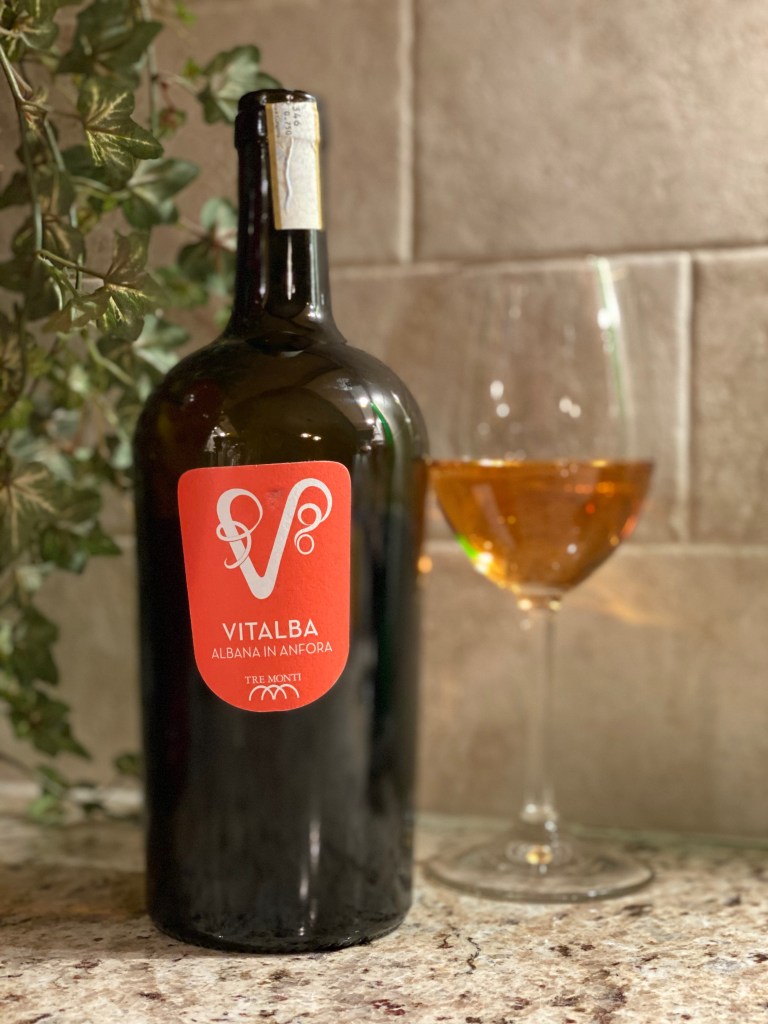
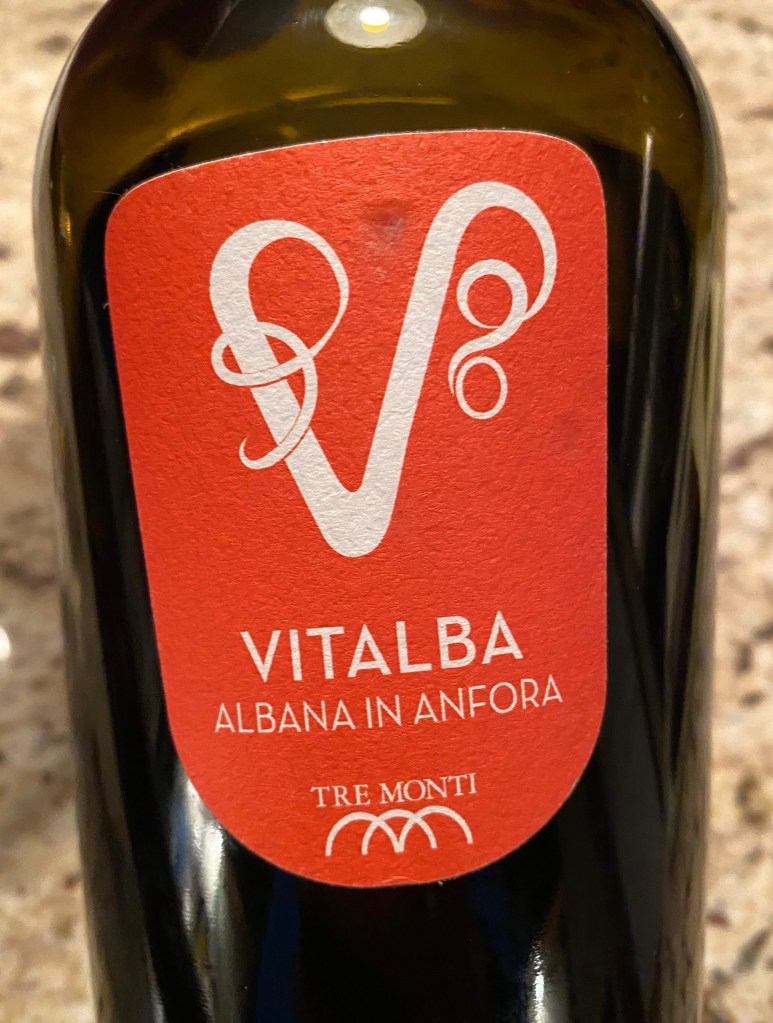
Today’s Wine: 2017 Vitalba Albana in Anfora

100% Albana; 14.5% ABV

The 2017 Vitalba is a fully transparent pale to medium amber color with peach variation. On the nose, this wine showcases aromas of apricot, cantaloupe, stone fruit, mango, orange marmalade, honey, white and yellow florals, and some bright herbaceous overtones. Once in the mouth, the wine offers notes of golden apple, peach, dried apricot, nectarine, lemon zest, pineapple juice, bright peppery mineral, and ginger. This is medium- to full-bodied with mouthwatering high acidity, light tannins (!), and a medium (+) length finish. Really refreshing and a fun wine to try, this is fermented in Georgian amphora (kvevri) using only natural yeasts and sees 95 day maceration. 125 cases produced.

Price: $24. For its price, this is a fun “orange wine” to try and offers a structure many wine drinkers probably do not experience from a white grape variety. If you come across this bottle and are in the mood for an adventure, check it out. Pair this with assorted white fish, goat cheese, fruit tarts, or apple pie.

Barolo That Won’t Break the Bank

Today’s Story: G.D. Vajra

G.D. Vajra was established in 1972 by Aldo Vaira and is named after his father Giuseppe Domenico. A few years earlier, in 1968 to be exact, Aldo joined a mass of student protestors in the streets of Turin however was discovered by his father and immediately sent to his grandparents’ farm in Barolo for a summer away from trouble. After spending several months on the farm, Aldo’s dream of one day starting a winery began to blossom and he joined Suolo e Salute in 1971 where he became a pioneer of organic agriculture in Piedmont. With the inclement weather and poor vintage of 1972, Aldo was faced with either leaving his fruit on the vines to rot or defiantly bottle wines, laying the foundation of G.D. Vajra. During the mid 1980s and early 1990s, Aldo’s three children Giuseppe, Francesca, and Isidoro were born and continue to operate the winery today as a family endeavor.

G.D. Vajra is located in the village of Vergne in the commune of Barolo, with vineyards planted 400 meters above sea level. Over time, Aldo gradually increased his land holdings under vine to 60 hectares of which 10 hectares are planted to Nebbiolo. With vines located in Bricco delle Viole, Ravera, Fossati, La Volta, and Coste di Vergne amongst other sites, Aldo crafts magnificent wines in a traditionalist style coupled with modern practices particularly when it comes to using oak. To learn more about G.D. Vajra or scroll through their portfolio of wines, check out the website here.

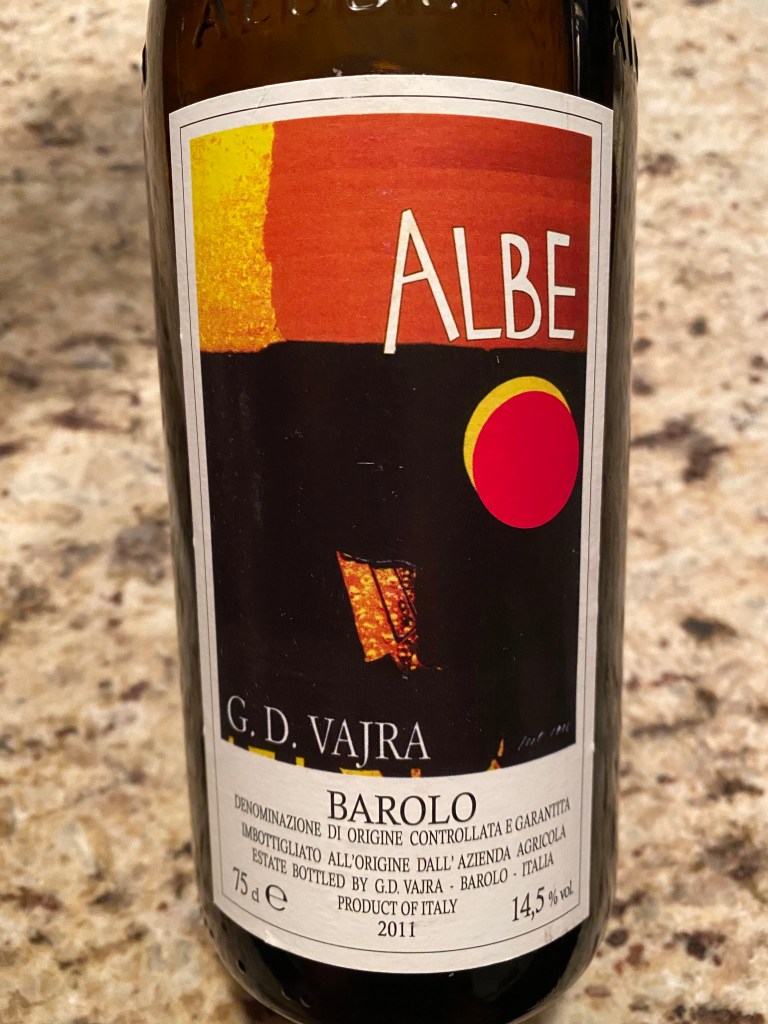
Today’s Wine: 2011 Barolo Albe

100% Nebbiolo; 14.5% ABV

The 2011 Albe is bright medium ruby red in color and moderately transparent. Once this opens up in the decanter, the nose offers aromas of black raspberry, bing cherry, licorice, rose petal, smoke, tar, forest floor, black tea, white pepper, and oak. There’s also some heat on the nose that will take some time to blow off. Once in the mouth, I get notes of sour cherry, raspberry, strawberry, truffle, scorched earth, tobacco, crushed granite, chocolate, and oaky spice. This wine is full-bodied with high acidity, medium (+) tannins, and a medium (+) length finish.

Price: $36. At this price point I was hoping for a lot out of this bottle in terms of value, but the wine seems a bit too out of balance for me particularly with the alcohol. While 2011 was not a bad vintage for Barolo by any means, maybe it would be better to try something from 2010 or 2015. Pair this with pheasant, duck, or pork chops.