Young but Promising Santa Barbara County Pinot Noir

Today’s Story: Liquid Farm

Liquid Farm is a Chardonnay-focused winery established in 2009 in the Sta. Rita Hills AVA of Santa Barbara County, California. Founded by Jeff and Nikki Nelson, Liquid Farm started with four barrels of wine and the dream to produce Old World style Chardonnay while supporting local viticulture. Two of these first four barrels showcased a more mineral-driven profile that reminded Jeff and Nikki of Chablis so they named it White Hill after the white chalky hills of Chablis. The other two barrels showcased warmer tones and fuller profiles reminiscent of Meursault, so they named that wine Golden Slope after the Côte d’Or. Though Liquid Farm expanded their portfolio over time, they still focus on four Chardonnay bottlings as well as a rosé and small amounts of Pinot Noir.

Sticking to their love of terroir-driven wines, the winemaking philosophy at Liquid Farm is rather hands-off. Under the guide of winemaker James Sparks, winemaking follows the path of minimal intervention from manual harvest through to native yeast fermentation and aging in neutral oak barrels. The team makes no machine adjustments or additions to the wine in order to preserve a sense of place and true-to-variety profile, ultimately even letting the wines go through malolactic fermentation naturally. Given the cool climate of Sta. Rita Hills, these wines are often bottled with higher natural acidity and lower alcohol which makes them perfect table wines for anyone who appreciates the style and an expression of terroir.

I previously reviewed the 2016 Golden Slope Chardonnay from Liquid Farm. You can also check out their website here.

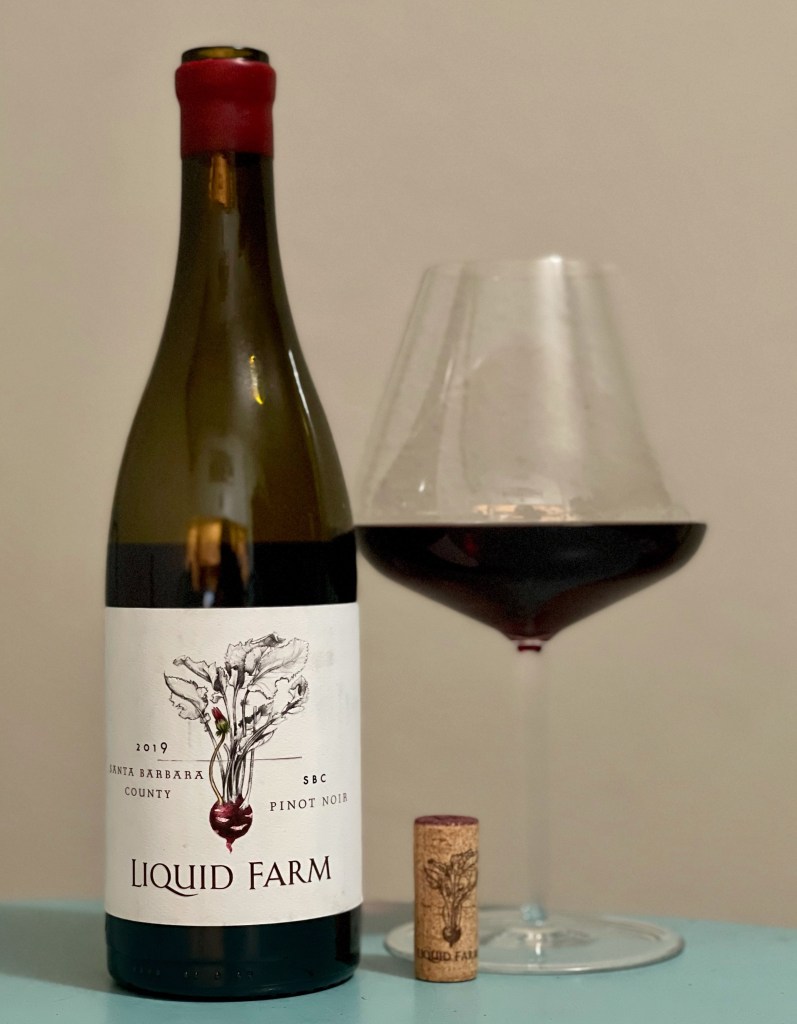
Today’s Wine: 2019 SBC Pinot Noir

100% Pinot Noir; 13% ABV

The 2019 SBC Pinot Noir is pale ruby in color. Due to the wine’s youth, I let this open up in the glass for about 45 minutes and it blossomed more and more as I drank it. The aromas are of medium (+) intensity, with the nose displaying notes of ripe red cherry, raspberry jam, cranberry, leather, violet, cola, clove, and very faint cedar. Meanwhile the flavors are also of medium (+) intensity and the palate showcases notes of black raspberry, strawberry, cherry cola, sweet tobacco, clove, cracked pepper, and a touch of ground herbs. This dry red is medium-bodied with medium (+) acidity, medium (-) tannins, medium alcohol, and a medium length finish. Fruit on this right now is gorgeous, though I’d recommend holding onto this for another year or two and I wager you’ll be rewarded as everything comes together.

Price: $45 (I found it for $40). I think this is pretty fairly-priced, particularly closer to the $40 level and with many stores selling this for $50. It’s a bit richer than I was expecting, though I think some of this can be attributed to youth and the wine should integrate well over the years to come. High quality is there, and this does a solid job of representing Santa Barbara County Pinot Noir.

California Rosé of a Unique Blend

Today’s Story: Arnot-Roberts

Arnot-Roberts is a boutique winery established in 2001 by Duncan Arnot Meyers and Nathan Lee Roberts, two childhood friends who grew up together in Napa Valley. After college, Nathan started working with his father as a cooper of oak wine barrels while Duncan pursued winemaking throughout Napa and Sonoma counties. Arnot-Roberts began with a single barrel of wine the duo produced in their basement and over time grew through the purchase of fruit from renowned vineyards in Napa, Sonoma, El Dorado, and Amador counties as well as the Santa Cruz Mountains. When selecting vineyards, Arnot-Roberts makes sure the farmers are both “passionate and conscientious” because their goal is to produce small quantities of honest, terroir-driven, and single-vineyard wines which truly express their unique place. The winemaking style is a mix of Old World and New World, with use of indigenous fermentation, little or no new oak, and often whole cluster.

I previously reviewed the 2016 Que Syrah Vineyard, 2018 North Coast Trousseau, 2018 Watson Ranch Chardonnay, and 2016 Vare Vineyard Ribolla Gialla from Arnot-Roberts.

Today’s Wine: 2020 Rosé

68% Touriga Nacional, 16% Gamay Noir, 11% Cabernet Franc, 5% Grenache; 11% ABV

The 2020 Rosé is pale copper in color with hues of pale salmon. The nose seems somewhat muted and aromas are of medium (-) intensity, showcasing notes of cantaloupe, white strawberry, raspberry, bubble gum, cured meat, and chalky mineral. Meanwhile the flavors are of medium intensity and the palate displays notes of white cherry, raspberry, watermelon, orange rind, bubble gum, and saline. This dry rosé is light- to medium-bodied with medium acidity, low alcohol, and a medium-length finish. Fun to try given the blend, but this is lacking in intensity and length I was hoping for.

Price: $30 (but you should be able to find this around $25 in some locations). I can’t call this wine a good value, especially since I paid slightly more than the average $30 price-tag online. It’s lacking in intensity, complexity, and length which is somewhat disappointing given the Arnot-Roberts wines I’ve enjoyed in the past. Having enjoyed the Triennes rosé the other day at half the price, I find this a tough sell for me personally albeit it’s fun to try nonetheless given the blend.

Terroir-Driven Pinot Noir Born From an American and French Collaboration

Today’s Story: Racines Wine

Racines Wine is a collaboration between Santa Barbara winemaker Justin Willett (Tyler Winery and Lieu Dit) and French vignerons Étienne de Montille (Domaine de Montille in Burgundy) and Rodolphe Péters (Pierre Péters Champagne). In 2016, Étienne and his Chef de Cave, Brian Sieve, took an exploratory journey to California and Oregon in pursuit of their first winemaking venture outside of Burgundy, ultimately settling on the Sta. Rita Hills of California with Justin as their winemaker. A year later, Rodolphe joined the team to provide insight into Chardonnay and sparkling wine production, with the sparkling wine set for release in the near future.

As one might expect, the winemaking philosophy at Racines meshes well amongst all parties as they come from backgrounds of producing terroir-driven and elegant Pinot Noir and Chardonnay. What’s more, they’re not trying to make something “Old World” or “Burgundian” per say, but rather simply showcasing the unique characteristics of the Sta. Rita Hills which has proven to be a rather high-quality AVA for Pinot Noir and Chardonnay. All this being said, Racines’ Pinot Noir is fermented whole-cluster with pigéage throughout, while the Chardonnay production follows closely with the traditions of Burgundy and Champagne.

Today’s Wine: 2017 Sta. Rita Hills Cuvée Pinot Noir

100% Pinot Noir; 13.5% ABV

The 2017 Sta. Rita Hills Cuvée Pinot Noir is medium ruby in color. I poured my glass and forgot about it for an hour or so, which this wine needs at its youthful stage. The aromas are of pronounced intensity, with the rather complex nose showcasing notes of black cherry, red plum, muddled strawberry, leather, violet, pine, cola, cinnamon, chopped green herbs, and wet gravel. Meanwhile the flavors are of medium (+) intensity and the palate displays notes of red cherry, black raspberry, strawberry, blood orange rind, sweet tobacco, licorice, violet, chalk, and crushed rock. This dry red is light- to medium-bodied with medium (+) acidity, medium tannins, medium (+) alcohol, and a long finish. Pretty well-balanced and I love the layers upon layers to this wine that surface over time.

Price: $60 (I paid $48). I don’t know if I can necessarily go as far as calling this a screaming value (because there are a plethora of Pinot Noir options for half the price that drink incredibly well), but there is no denying the intensity, complexity, and length to this wine are all worthy to note. This is a gorgeous wine now, though I’m excited to see what a few more years of bottle age will accomplish.

Lively, Precise, and Mineral-Driven Chenin Blanc

Today’s Story: Enfield Wine Co.

Enfield Wine Co. is a relatively small family-owned and operated winery established by John Lockwood and Amy Seese in 2010. John started working in the wine industry in 2004 at Heron Lake Vineyard, followed by harvests at Littorai, Bodega Melipal in Argentina, and Failla Wines. John remained with Failla for five years managing and farming their Sonoma Coast and Russian River estate vineyards, ultimately starting Enfield as a small passion project. In 2013, John left Failla and devoted his time entirely to Enfield.

Enfield focuses primarily on terroir as a starting point, working with small independent growers across a range of regions to source their fruit. John and Amy purchase fruit from Antle Vineyard and Brosseau Vineyard in the Chalone AVA, Haynes Vineyard in Coombsville, Heron Lake Vineyard in Wild Horse Valley, Jesus & Patricia’s Vineyard in Fort Ross-Seaview, and Shake Ridge Vineyard in Amador County. From these sites they acquire a range of varieties including Pinot Noir, Chardonnay, Syrah, Chenin Blanc, Cabernet Sauvignon, and Tempranillo amongst others, all with varying vine age as well. John’s philosophy is to harvest his fruit for balance and ferment the wines naturally in order to showcase each unique terroir, eschewing a heavy-handed winemaking style. The wines are often fresh, lively, and mineral-driven, though John does enjoy exploring esoteric bottlings as well.

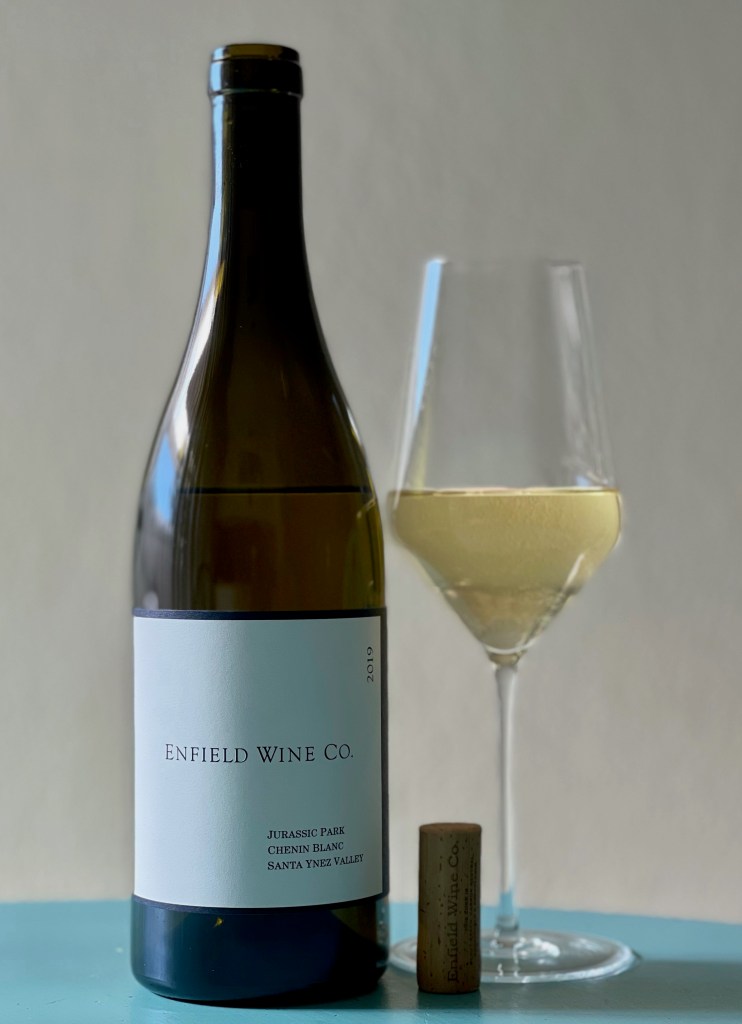
Today’s Wine: 2019 Jurassic Park Vineyard Chenin Blanc

100% Chenin Blanc; 12% ABV

The 2019 Jurassic Park Vineyard Chenin Blanc is pale gold in color. Given some time to blossom in the glass, the aromas are of pronounced intensity and the nose showcases notes of ripe yellow apple, pear, lemon zest, honeysuckle, ginger, flint, oyster shell, and saline. Meanwhile the flavors are of medium (+) intensity, and the palate displays notes of nectarine, white peach, yellow apple, honey, chamomile, crushed stone, and sea salt. This dry white is light- to medium-bodied with medium (+) acidity, medium alcohol, and a long finish. A very precise and well-balanced Chenin Blanc.

Price: $35. I think this is well-priced for how balanced, complex, and intense the wine is. Nothing sticks out of place here and this is a very solid representation of Chenin Blanc. Though it’s more expensive than the previous Jurassic Park Chenin Blanc I had, the intensity and quality level of this wine justify it.

Strong Value Grenache From a Relatively New Californian Producer

Today’s Story: Newfound Wines

Newfound Wines is a family-owned and operated wine estate established by Matt and Audra Naumann in 2016. With backgrounds in the wine industry and a shared passion for agriculture, they established Newfound Wines as a 40 acre ranch, vineyard, and winery in the Sierra Foothills of California. In addition to their estate High View Vineyard which needed replanting in 2016, Newfound sources fruit from several other sites including Cemetery Vineyard and Colombini Vineyard in Mendocino County, Enz Vineyard in the Lime Kiln Valley, Scaggs Vineyard and Yount Mill Vineyard in the Napa Valley, and Shake Ridge Vineyard in the Sierra Foothills. They focus on the varieties of Grenache, Carignane, Mourvèdre, Pinot Noir, Chardonnay, and Semillon with an emphasis on organic viticulture as well as minimal intervention winemaking in an effort to showcase each variety and terroir as purely as possible.

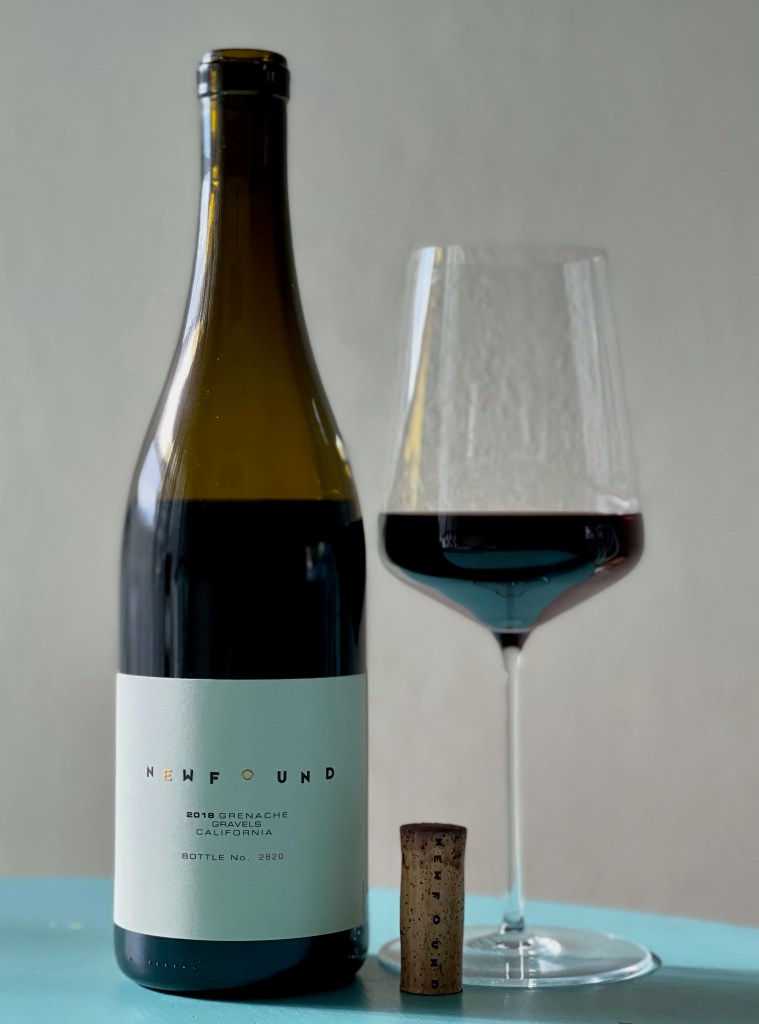
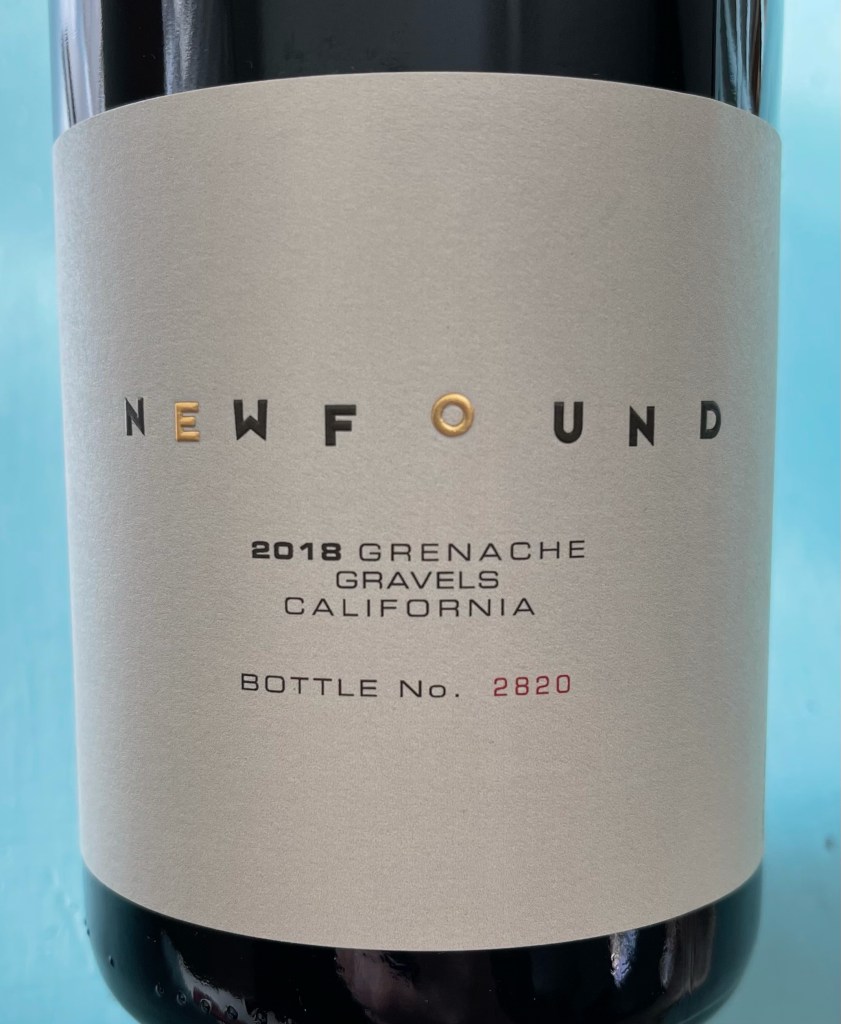
Today’s Wine: 2018 Grenache Gravels

100% Grenache; 13.9% ABV

The 2018 Grenache Gravels is medium ruby in color and I let this open up for about 30-45 minutes in the glass before I started drinking it. The aromas are of medium (+) intensity, with the nose showcasing notes of muddled strawberry, black raspberry, cherry, red plum, leather, dried green herbs, mint, and crushed rock. Meanwhile the palate displays notes of raspberry, tart cherry, blackberry, licorice, red rose, chalk, and cracked pepper with prominent mineral undertones. This dry red is medium-bodied with medium acidity, medium (+) and grippy tannins, medium alcohol, and a medium (+) length finish.

Fruit is sourced from 85% Cemetery Vineyard in Mendocino County, 10% Scaggs Vineyard in Napa Valley, and 5% Yount Mill Vineyard in Napa Valley.

Price: $30. I think this offers very solid value for the price, as the depth is rather impressive at this stage and quality is certainly very high for an “entry” bottling. Though the tannins are slightly out of balance at this stage, I think they will resolve with another year or two and you’ll be left with a wine striking well above its price-point.

Fun and Unique “Nighttime” Rosé

Today’s Story: Las Jaras Wines

Las Jaras Wines was founded in 2014 by winemaker Joel Burt and Hollywood comedian/director Eric Wareheim. Joel Burt, a winemaker at Domaine Chandon, was growing tired of making wines in a cookie-cutter, corporate, and mass-produced manner when he met Eric and the two realized they shared a passion for fine wine. The duo started planning their own wine label where they could produce wines in homage of “the old days” (think 1970s Napa) and Las Jaras was born. Joel describes their Cabernet “like a Dunn from the 80s, but way more approachable” and each wine in the portfolio is made largely using similar traditional techniques.

To achieve this style of wine, Joel remains very hands-off throughout the winemaking process. Las Jaras sources their fruit from various old vine vineyards, though most comes from Mendocino County. All fruit is hand-harvested and each variety goes through separate winemaking processes, all being hand-sorted at the crusher. Though each variety is vinified differently to best express that variety’s unique character, the long story short here is that Joel doesn’t add sulfur, the wines ferment with only natural yeasts, and bottling is accomplished with no fining or filtration.

I previously reviewed the 2018 Sweet Berry Wine from Las Jaras.

Today’s Wine: 2020 Superbloom Cuvée Zero Zero

27% Marsanne, 16% Roussanne, 16% Grenache Noir, 14% Mourvèdre, 10% Grenache Blanc, 10% Carignan, 7% Picpoul Blanc; 10.9% ABV

The 2020 Superbloom is deep salmon in color with pinkish hues, and it’s slightly hazy. This needed about 30 minutes to open in the glass, as there were some funky aromas that needed to blow off. The aromas are of medium intensity, with the nose showcasing notes of watermelon, grapefruit, white cherry, strawberry, white rose, and saline. Meanwhile the palate displays notes of raspberry, strawberry, candied watermelon, mild white pepper, and stony mineral. This dry rosé is light-bodied with medium (+) acidity, low alcohol, and a medium (-) length finish. Very chuggable and fun but I wish the finish was a bit longer. 1,500 cases produced.

Price: $27. I sought this wine from my local wine shops for quite some time, and am glad to finally find it since I’m a big fan of Joel and Eric. This is a very fun, chuggable, and interesting rosé made from quite the blend of co-fermented varieties, however I think for the price there are better values out there.

Complex Sonoma Coast Syrah Made in Miniscule Quantities

Today’s Story: Black Trumpet

Black Trumpet is a very, very small wine producer established in 2012 by Sophie Drucker and Garrett Pierce. Born out of their passion for Syrah and the Black Chanterelle Mushroom, Black Trumpet is a one to two barrel (25-50 case) annual production of Syrah from Sonoma and Mendocino Counties. They pick Syrah from some of their favorite organically-farmed sites (today’s 2019 bottling comes from the Charles Heintz Vineyard), and all harvesting is accomplished by hand. Grapes ferment in open-top barrels with partial stem inclusion and wild yeasts, with limited to no sulfur additions throughout the process. Come bottling, the wines are never fined or filtered to preserve both the variety characteristics and the expression of terroir.

Today’s Wine: 2019 Syrah

100% Syrah; 14% ABV

The 2019 Syrah is deep ruby in color and completely opaque. I decanted this for about an hour, as it’s still incredibly youthful. The aromas are of medium (+) intensity, with the nose showcasing notes of blueberry, black plum, blackberry, anise, violets, mild smoke, cured meat, and cracked pepper. Flavors are also of medium (+) intensity and the palate displays notes of blackberry, blueberry, licorice, bacon fat, charred green herbs, clove, black pepper, and chocolate. This dry red is medium-bodied with medium (+) acidity, medium tannins, medium alcohol, and a medium (+) length finish. 1-2 barrels (25-50 cases) produced each vintage.

Price: $35. I think this is very reasonably-priced given both the quality level and miniscule production numbers. In its youth, this is already very well-balanced with solid complexity and intensity. This also gives off a very Northern Rhône vibe while still showcasing the Californian fruit which I think can prove attractive for both Old and New World palates.

Light and Easy-Going Summer Sipper

Today’s Story: Kapcsándy Family Winery

Kapcsándy Family Winery was established by Lou Kapcsándy and is a small, family owned and operated estate in Yountville of the Napa Valley. An immigrant from Hungary, Lou arrived in the United States in 1956 and worked as a chemical engineer and manufacturer in the Bay Area of California and Seattle. Wine became a focal point for Lou during his successful career thanks to colleagues in the wine business, however his desire to establish his own winery one day came after a visit to Château Leoville Las Cases with his wife Bobbie in 1998. With their son Louis Jr., Lou and Bobbie started searching for property in the Napa Valley when they stumbled upon the 20 acre State Lane Vineyard in Yountville which had been destroyed the previous year by phylloxera. In May 2000, the Kapcsándy family closed on this historic property (it was the source of fruit for Beringer’s Private Reserve Cabernet Sauvignon) and embarked on massive replanting of the vineyards. They planted the main Bordeaux varieties of Cabernet Sauvignon, Merlot, Cabernet Franc, and Petit Verdot, though also planted several acres to Hungarian Furmint. When the winery was completed in 2005, Lou’s vision was finally realized and both he and Louis Jr. remain highly involved today.

Kapcsándy wines are inspired by Bordeaux both in terms of vineyard management and winemaking style, resulting in lower-alcohol wines made from 100% estate-grown fruit. With both Lou and Louis Jr. active in the vineyards and estate management everyday, Kapcsándy practices sustainable farming with great appreciation for their soil and the environment. The family constructed nesting boxes, perch poles, and songbird houses to avoid the use of chemicals for pest control, and they also add compost to the vineyards and natural fertilizers to supply bacteria, photo nutrients, and trace elements which prove beneficial for vine growth. Further, Kapcsándy plants cover crops between the vines to prevent erosion and encourage beneficial insects to inhabit the vineyards and enhance this natural ecosystem. For more, check out the Kapcsándy website here.

I previously reviewed the 2014 Estate Cuvée and 2005 Estate Cuvée from Kapcsándy.

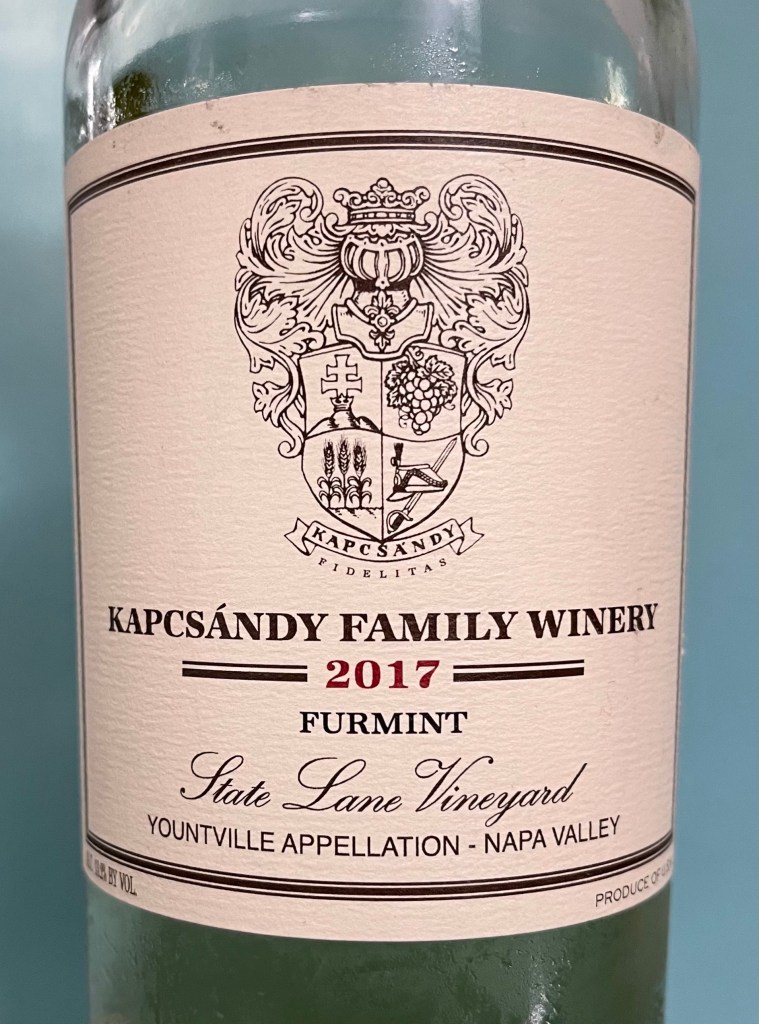
Today’s Wine: 2017 Furmint

100% Furmint; 13.2% ABV

The 2017 Furmint is pale yellow in color with greenish hues around the rim of the glass. This is an easy-going wine with aromas of medium intensity and a nose that showcases notes of lemon zest, ripe pear, green apple, lychee, honeysuckle, and wet stone. Meanwhile the flavors are also of medium intensity and the palate displays notes of green apple, grapefruit, guava, lemon, white florals, and ginger. This dry white is light- to medium-bodied with high acidity, medium alcohol, and a medium (+) length finish. Typically 100 or so cases produced.

Price: $30. While this may not necessarily be the most exciting white wine, it’s very high quality and well-made. It’s an easy-going summer sipper that’s fun to try, and is a highly unusual variety to find in the Napa Valley. If you like the Kapcsándy wines, this is worth trying at least once.

Perfectly Aged Napa Valley Cab

Today’s Story: Robert Mondavi Winery

Robert Mondavi is a historical and world-renowned Napa Valley winery established by Robert Mondavi in 1966. With the immense history and promise Mondavi felt with the To Kalon Vineyard in Oakville, he set up his winery there amongst the vines and set out to craft Napa Valley Cabernet Sauvignon that could compete with the greatest wines in the world. Mondavi did not only set his sights on Cabernet Sauvignon, however, releasing his first Fumé Blanc (made with Sauvignon Blanc) in 1968 which is the wine that ultimately became his signature bottling. As Mondavi’s prowess started to show in those early years, he also expanded into the Stags Leap District by acquiring the Wappo Hill Vineyard planted to Sauvignon Blanc, Merlot, and Cabernet Sauvignon in 1969. In 1970, Mondavi met for the first time with Baron Philippe de Rothschild and the duo voiced an idea of creating a joint venture that ultimately became Opus One, established in 1978 with an inaugural vintage of 1979.

As Mondavi’s wines grew in prominence, so did his reputation almost like a father to Napa Valley winemaking. He was instrumental in bringing music to the Valley with his Summer Music Festival, showcased his philanthropic mindset by helping to pioneer Auction Napa Valley, and advanced the magic of food and wine pairing by creating the Mission Tour, Great Chefs of France, and Great Chefs of America programs. Robert Mondavi’s impact on Napa Valley and the wine world beyond is as strong and steadfast now as it was back then, and the world of California winemaking will forever thank him.

I previously reviewed the 1981 Reserve Cabernet Sauvignon and 1980 Reserve Pinot Noir.

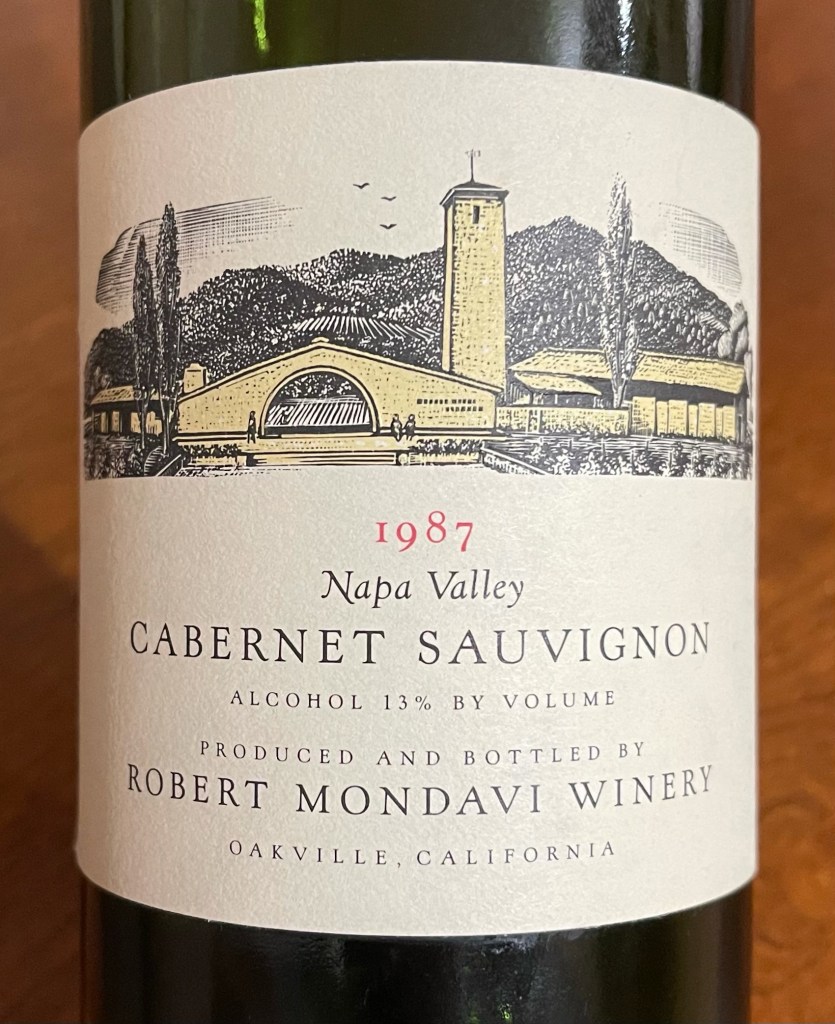
Today’s Wine: 1987 Cabernet Sauvignon

87% Cabernet Sauvignon, 8% Cabernet Franc, 5% Merlot; 13% ABV

The 1987 Cabernet Sauvignon is medium to deep garnet in color. I drank this as a pop and pour, and there really wasn’t a huge amount of sediment in the bottle. Given a short time in the glass, the wine blossoms with aromas of pronounced intensity and a nose of redcurrant, blackcurrant, forest floor, violet, graphite, green bell pepper, eucalyptus, clay, and cedar. Meanwhile the flavors are also of pronounced intensity and the palate displays notes of blackberry, redcurrant, mushroom, dried tobacco, charred green herbs, green bell pepper, crushed rock, and oaky spice. This dry red is medium-bodied with medium (+) acidity, mature medium tannins, medium alcohol, and a medium length finish.

Price: $110. This is a very fun wine to try and it’s showing very well, but I’d say it’s more of an experience wine than necessarily a “value wine.” The balance, intensity, and complexity are all great, but the shorter length of the finish does detract slightly from the overall experience of the wine.

Budget-Friendly Pinot Noir From Trader Joe’s

Today’s Story: Cotillion (Trader Joe’s)

Out of curiosity and at the urging of a friend, I decided to try a few wines from Trader Joe’s and this is one of them. It’s a light day background-wise, as this seems to be one of the many bottlings made for Trader Joe’s specifically and I cannot gather much information beyond the back label. The wine I’m reviewing today is a Pinot Noir vinted and bottled by Ashford Court in American Canyon within Napa County, though the fruit comes from Monterey County (56%), Sonoma County (33%), and Santa Barbara County (11%).

Today’s Wine: 2018 Cotillion Pinot Noir

100% Pinot Noir; 13.8% ABV (seems like it could be higher)

The 2018 Cotillion Pinot Noir is pale ruby in color and rather transparent. Given some time in the glass, the aromas blossom with medium (+) intensity and the nose showcases notes of black cherry, black raspberry, blood orange rind, leather, cola, baking spice, a hint of vanilla, and oak. Meanwhile the flavors are of medium intensity and the palate displays notes of strawberry, raspberry, red cherry, sweet tobacco, licorice, charred green herbs, and vanilla. Though the profile is exactly what I was expecting (fruity and with more oak influence than my personal preferred taste) this is better than I expected given the price. This dry red is medium- to full-bodied with medium (+) acidity, medium (-) tannins, high alcohol, and a medium-length finish.

Price: $10. Though not a wine I’d personally buy again, I think this is actually quite good given the accessible price-point. It has broad consumer appeal and offers better complexity and balance than many wines in the same ballpark. It seems to be pretty good quality overall as well.