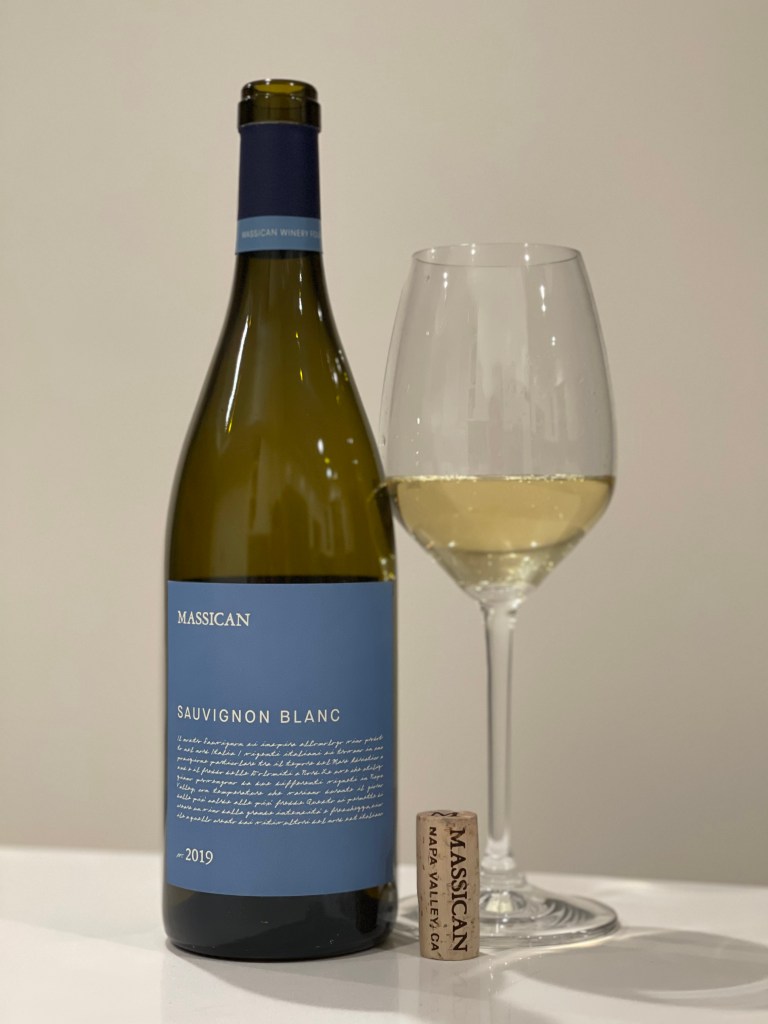
Massican Winery was established in 2009 by winemaker Dan Petroski (also of Larkmead Vineyards) and was born out of his passion for Italy and the country’s lifestyle, culture, and wines. Massican is a very unique endeavor in Napa Valley, focusing exclusively on white grape varieties including Tocai Friulano, Ribolla Gialla, Pinot Bianco, and Greco common in northeastern Italy as well as the more “expected” varieties of Sauvignon Blanc and Chardonnay. True to Dan’s mission, the Massican wines are not only made with uncommon varieties for Napa but they are also not the stereotypical oaky white wines the region is known for. Dan uses varying amounts of new and neutral oak as well as stainless steel, also not allowing his wines to go through malolactic fermentation so they maintain the crisp, fresh, and refreshing characteristics of each grape variety. Another contributing factor is how Dan picks his grapes at lower sugar levels, preserving the vibrant acidity and resulting in often lower-alcohol wines.
Today’s Wine: 2019 Sauvignon Blanc
100% Sauvignon Blanc; 13.3% ABV
The 2019 Sauvignon Blanc is pale yellow in color and transparent. The nose on this is absolutely gorgeous with pronounced intensity, showcasing aromas of green apple, tropical citrus, tangerine, white peach, lemon peel, white blossom, freshly cut grass, tennis ball canister, wet stone, and saline mineral. Meanwhile the flavors on the palate are also of pronounced intensity, with notes of lemon and lime zest, crisp green apple, sweet pineapple, apricot, lemongrass, mild green herbs, wet slate, white pepper, and brine. This dry white is medium-bodied with medium (+) acidity, medium alcohol, and a long finish. Blown away by the complexity here.
Price: $27. I know this is more expensive direct from the winery (though they’re sold out anyway), though finding this retail at $27 is a screaming value. The complexity and pronounced characteristics in this wine are truly impressive, and I will certainly be buying more.
Today’s Story: Domaine de la Grand’Cour (Jean-Louis Dutraive)
Domaine de la Grand’Cour is one of the oldest estates in Fleurie of the Beaujolais wine region, established by Jean Dutraive in 1969. A fourth generation winemaker, Jean acquired 9.7 hectares in Fleurie in addition to 1.8 hectares in Brouilly which was part of his family’s property there. In 1977, Jean was joined by his son Jean-Louis (who eventually took over in 1989) and the domain transitioned to organic viticulture under Jean-Louis. A traditionalist at heart, Jean-Louis hand-harvests his fruit prior to low temperature carbonic maceration and fermentation using only indigenous yeasts. The entire vinification process occurs without sulfur additions, and the wines are gravity fed to the cellar for aging. During élevage, SO2 is rarely added or at times only in minimal quantities (often just before bottling) and the wines are all bottled unfined and unfiltered. Dutraive’s wines are known to be highly aromatic and beautifully expressive examples of Fleurie and Brouilly, pleasant in their youth but with the stuffing to develop and age for at least a decade in strong vintages.
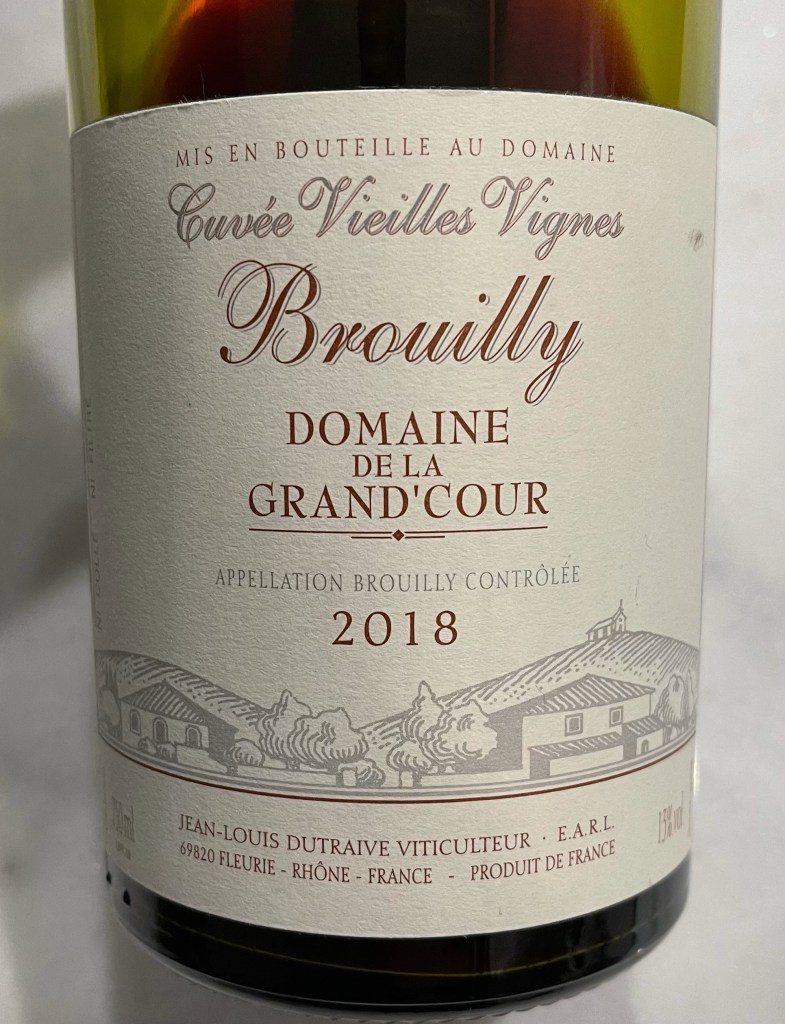
Today’s Wine: 2018 Brouilly Cuvée Vieilles Vignes
100% Gamay; 13% ABV
The 2018 Brouilly Cuvée Vieilles Vignes is translucent pale purple in color, certainly showing its youth. Given some time to blossom in the glass, the aromas of pronounced intensity consist of brambly blackberry, pomegranate, cranberry, violet, scorched earth, eucalyptus, dried herbs, and graphite. Meanwhile on the palate I get notes of dried strawberry, pomegranate, blackberry, black plum, violet, savory green herbs, and slate with medium intensity. This dry Beaujolais is light- to medium-bodied with medium (+) acidity, low tannins, medium alcohol, and a long finish.
Price: $40 (closer to $30-35 in Europe). Jean-Louis Dutraive is a legend in Beaujolais, with absolutely justifiable cause. This is my third time enjoying this wine (because it’s that good) and I think it offers very solid value. While a lot of good Beaujolais can be found for $20-25, I think this sits in a perfect place in the range of Beaujolais where some reach $80 or even higher.
Cuvelier Los Andes is a family-owned winery established by the Cuvelier family (of Château Léoville Poyferré) in 1998 using virgin land in the Valle de Uco of Mendoza, Argentina. From 1999 to 2006, they planted the vineyards which today consist of 55 hectares planted to Malbec, Cabernet Sauvignon, Merlot, Syrah, and Petit Verdot at 3,000 feet elevation in the foothills of the Andes Mountains. All farming is manual and adheres to organic and some biodynamic viticulture, with the yields quite low and typically around 5 to 7 tons per hectare. Designed as a “cousin” to Léoville Poyferré, Cuvelier Los Andes follows nearly identical practices and all wines are made with 100% estate fruit.
When it comes to winemaking and cellar practices, Cuvelier Los Andes begins with hand-harvested fruit. At the winery, fruit is first sorted by full cluster before being destemmed and sorted again by hand and berry by berry. The grapes are then loaded into their fermentation vats using gravity and experience cold maceration for 4-6 days before primary fermentation begins with only indigenous yeasts. The maceration process as a whole lasts 30-40 days typically, then malolactic fermentation occurs in tank or barrel. For aging, the Cuvelier Los Andes wines spend 12-18 months in French oak barrels which typically have a life of 3 years with 1/3 replaced each vintage.
To learn more or visit the source of today’s story, check out the Cuvelier Los Andes website here. They have a very cool, very detailed tab discussing their vineyards which I recommend reading.
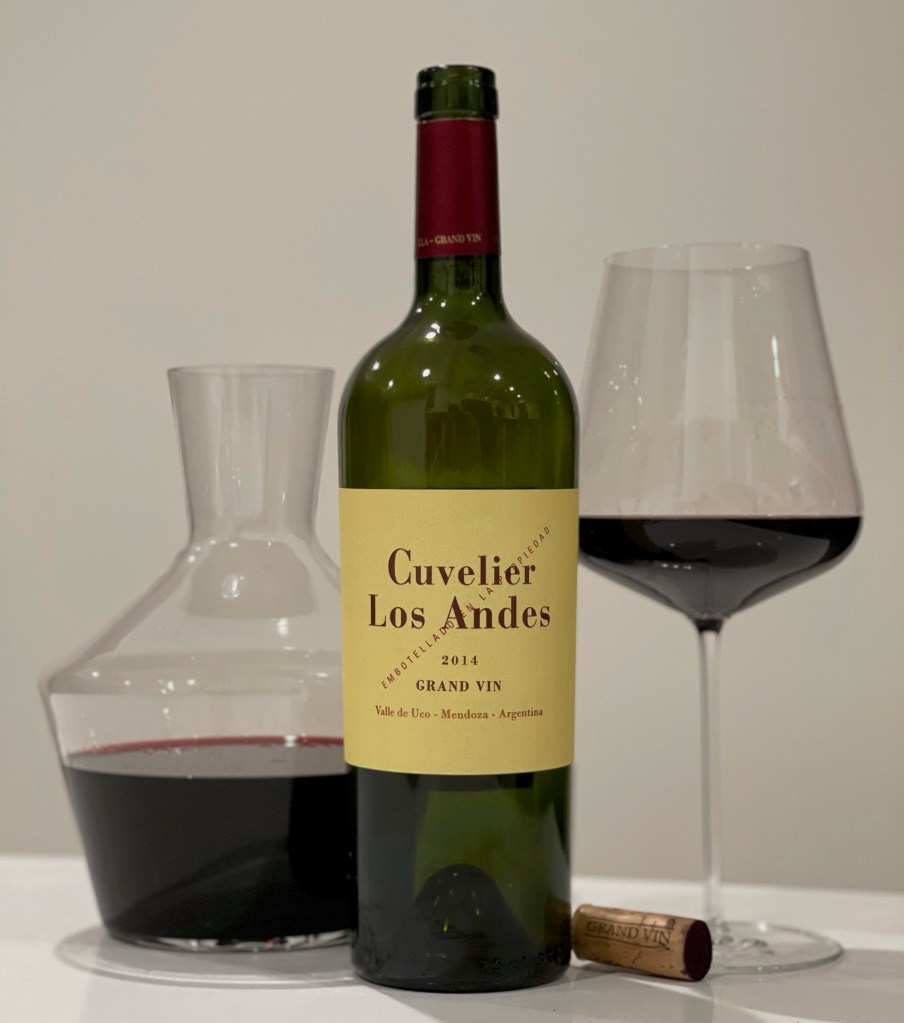
The 2014 Grand Vin is opaque deep purple in color. I gave this a good hour to decant, which I think is appropriate at this stage. The nose showcases pronounced aromas of blackberry, black plum, black cherry, tobacco, eucalyptus, clay, clove, cedar, and chocolate. Meanwhile on the palate I get pronounced notes of blackberry, blueberry, red plum, sweet tobacco, vanilla, charred oak, and cocoa powder. This dry red is full-bodied with medium acidity, medium (+) tannins, high alcohol, and a long finish.
Price: $40. To be perfectly honest, I am still trying to find a Malbec (or in this case Malbec-dominated blend) that I really like. While I think this is a very solid attempt to win me over, I did not know it was 15% ABV when I purchased it and the overall largess and opulence is a bit much for my terroir-driven preferences. This being said, objectively for the typical Malbec lover and lover of bigger, bolder wines I think this offers solid value at $40 because it does have a complexity and elegance I haven’t yet found in the variety. It’s a great wine, just a bruiser for me.
Immortal Estate is a very new winery in name, though the estate traces back to 1990 and Hidden Ridge Vineyard which lies in Sonoma County. Originally developed by Lynn Hofacket and Timothy Milos, Hidden Ridge Vineyard is situated on 150 acres in the mountainous terrain between Napa and Sonoma Valleys and, in its early years, developed somewhat of a cult following for the exceptional quality of the wines produced. In 2016, partners Tim Martin and Randy Nichols purchased the estate and, in an effort to increase exposure, rebranded it to Immortal Estate named after the “immortal jellyfish” to signify the wine’s lauded aging potential. Thanks to an exceptional terroir (and a unique slope of 55-degrees versus the now 15-degree maximum per county rules), the wines of Immortal Estate are often described as rich, complex, and long-lived.
Of Immortal Estate’s 150 acres, nearly 50 acres are planted to vine with 46 acres of Cabernet Sauvignon, 1 acre of Petit Verdot, and 1 acre of Chardonnay. The estate produces two wines, the Impassable Mountain Cabernet Sauvignon ($303) and the Slope Cabernet Sauvignon ($75). Fruit for both wines is hand-harvested over multiple pass-throughs, then hand-sorted at the winery before heading into native fermentation. Both wines see 50 days of maceration, then transfer to French oak barrels to age for 28 months. Come bottling, both are bottled unfined and unfiltered.
To learn more or view impressive images of the Immortal Estate vineyards, check out their website here.
Today’s Wine: 2014 Slope Cabernet Sauvignon
97% Cabernet Sauvignon, 3% Petit Verdot; 14.9% ABV
The 2014 Slope Cabernet Sauvignon is opaque deep ruby in color. After 2 hours in the decanter, the wine really opens up and showcases a complexity I was not expecting. The nose is filled with rather pronounced aromas of crème de cassis, jammy blackberry, black plum, violet, licorice, sweet tobacco, graphite, loamy earth, cedar, and clove. The alcohol heat does show, but not as much as I expected. Meanwhile the palate is also of pronounced intensity with notes of blackberry jam, blackcurrant, blueberry, black cherry, licorice, violet, tobacco, dried herbs, charred oak, vanilla, clove, and chocolate. Again the heat from the high ABV does show. This dry Cab is full-bodied with medium (+) acidity, medium (+) but velvety tannins, high alcohol, and a long finish. Overall this fits into the people-pleaser camp for me and the alcohol needs time to integrate, but this is still much more nuanced than I expected.
Price: $75 from the winery (I paid $65 retail). Though not particularly my style of Cab, this is in my opinion pretty fairly priced (particularly relative to some of the other Cabs of its style on the market). I am pleasantly surprised by the complexity, and given some time for the alcohol to integrate I think this could be a very solid wine in 5-7 more years. While I probably wouldn’t seek this out for myself again, it’s a great option for those who love the bigger style or for those who want to put a Sonoma County Cab up against the Napa Cabs they may be used to.
Domaine Vocoret et Fils is a family-owned and operated domain, established in Chablis in 1870 by Edouard Vocoret. Today Domaine Vocoret is under guide of the fourth generation of the family, and their holdings are quite impressive at around 40 hectares of sustainably-farmed vineyards. Of these holdings, roughly 16 hectares are Village level, 17 hectares are 1er Cru, and 4 hectares are the Grand Crus of Les Clos, Blanchot, Valmur, and Vaudésir with the balance Petit Chablis. Though Vocoret invested in modern and high quality winemaking equipment, the production of their wines remains very traditional for Chablis. Grapes are hand-sorted before heading to the pneumatic press, and after fermentation the wines head into stainless steel for aging to preserve their fresh fruit and vibrancy (though the 1er and Grand Crus do see some new oak which is becoming more popular in Chablis today).
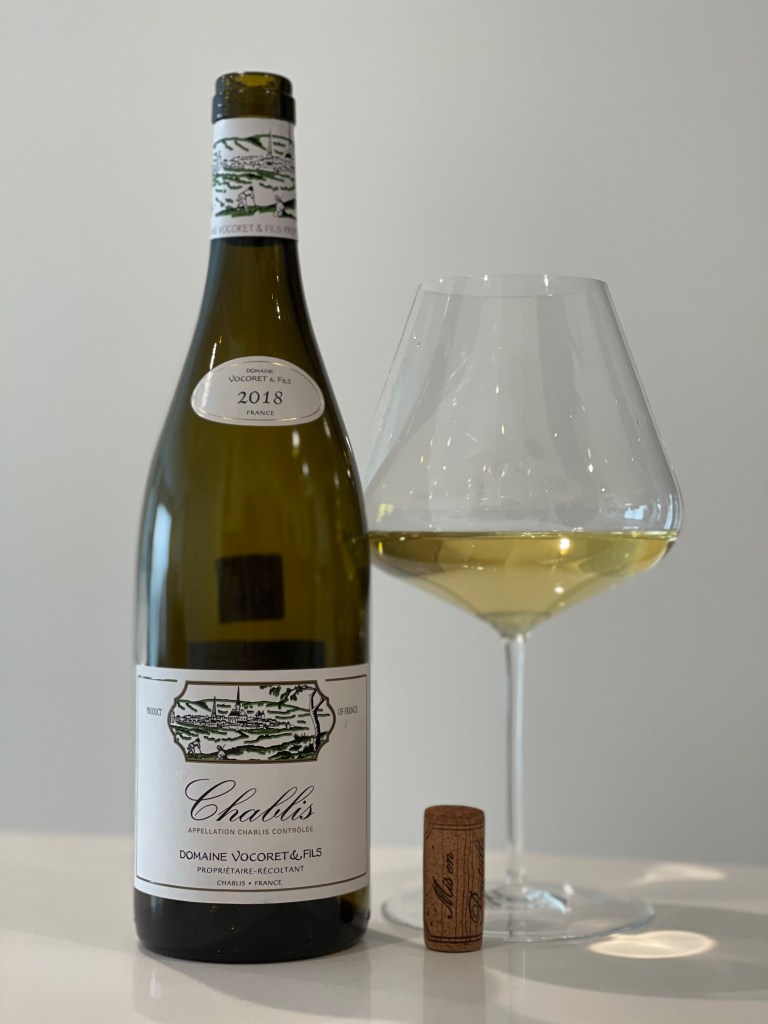
Today’s Wine: 2018 Chablis
100% Chardonnay; 12.5% ABV
The 2018 Chablis is transparent pale gold in color. Given some time to blossom in the glass, the aromas are of pronounced intensity with the nose showcasing notes of crisp green apple, lemon, unripe pear, white florals, flint, gunsmoke, wet river stone, and dill. Meanwhile on the palate, which is of medium intensity, I get notes of green apple, lime zest, quince, white peach, chalk, dried green herbs, and white pepper. This dry Chablis is medium-bodied with medium (+) acidity, medium alcohol, and a long finish.
Price: $25. This offers very, very good value for Chablis and Chardonnay as a whole. There is a beautiful and crisp purity of fruit here for its young age and price-point, and the lip-smacking acidity is gorgeous. I’m excited to try more of the Vocoret wines in the near future.
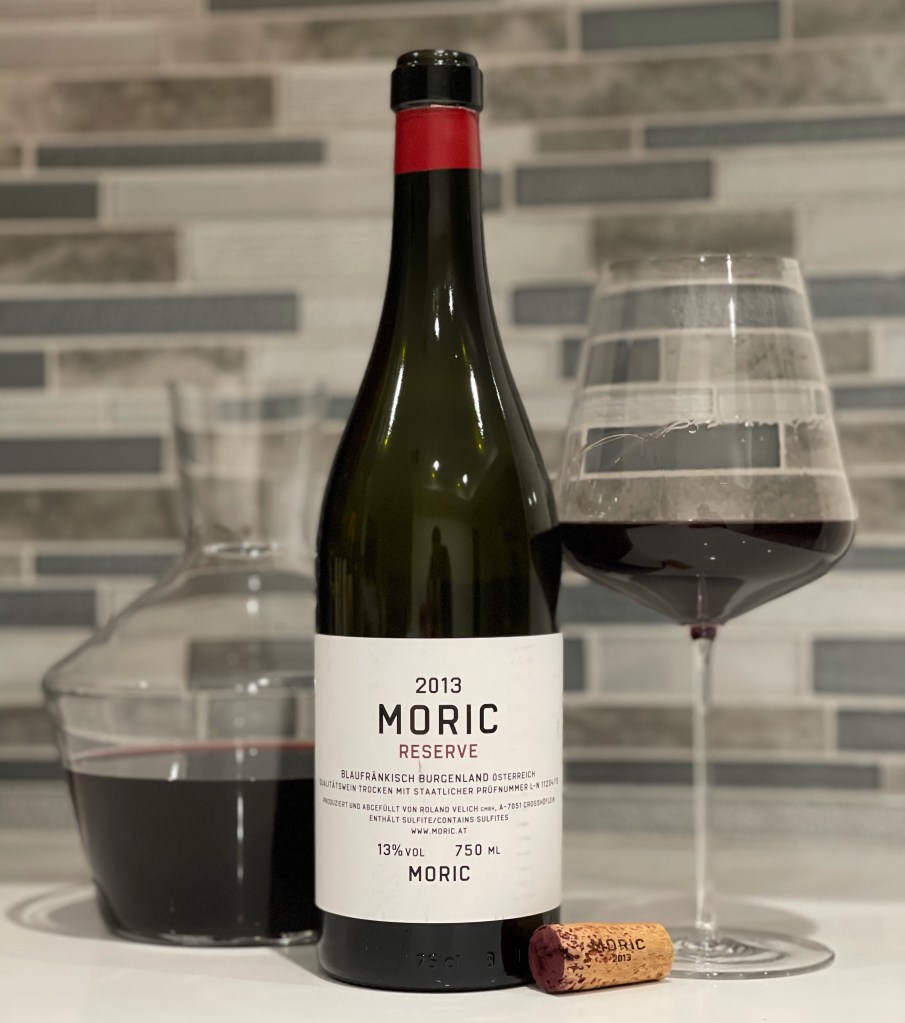
Weingut Moric (pronounced “Moritz”) is a highly regarded Austrian producer of Blaufränkisch, established in 2001 by winemaker Roland Velich. Roland is a staunch traditionalist, establishing Moric around the idea that very old vines, biodynamic viticulture, the climate of Burgenland, and minimally invasive winemaking methods could culminate into elegant and refined examples of Blaufränkisch at a time many of his neighbors sought the big, bold, powerful, and score-garnering wines of the times. Roland works most notably in Lutzmannsburg and Neckenmarkt (though his winery is in Grosshoflein), commanding exceptional yet difficult terroir for the variety to grow. Roland (and particularly the press) likens his drive to those crafting the finest Grand Cru Burgundies or the most legendary Barolos, offering a true-to-form Blaufränkisch with an immaculate depiction of its terroir.
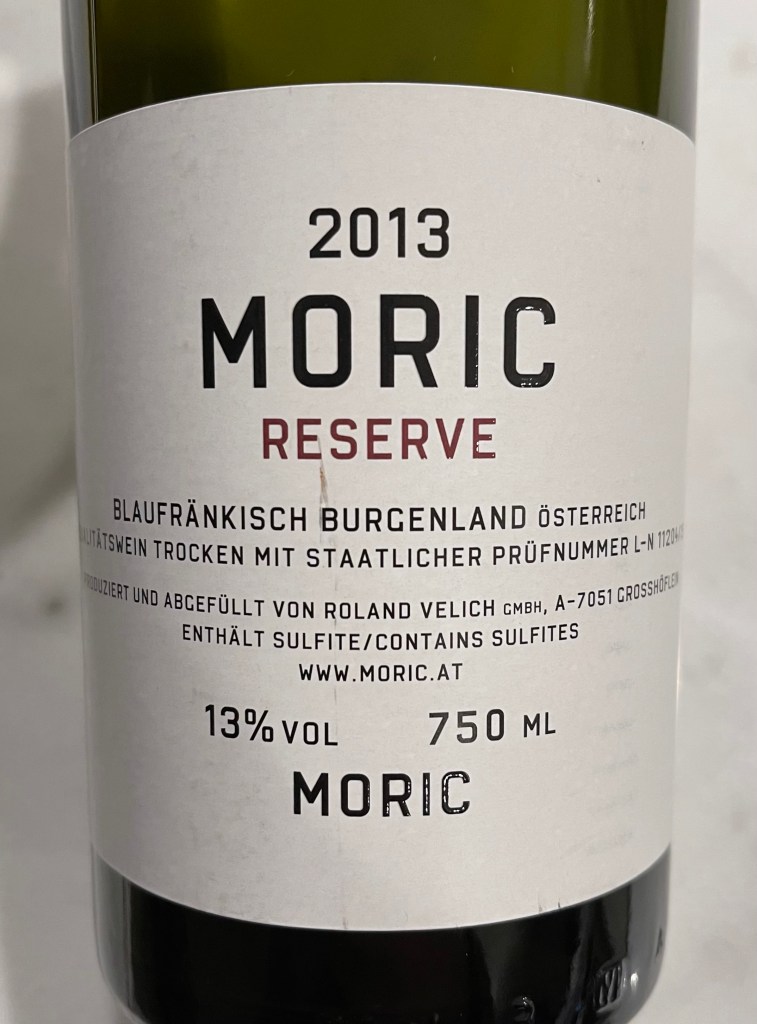
Today’s Wine: 2013 Blaufränkisch Reserve
100% Blaufränkisch; 13% ABV
The 2013 Blaufränkisch Reserve is opaque medium purple in color. This was fairly tight out of the bottle, so I decanted the wine for an hour before drinking. The nose is of medium intensity with aromas of brambly blackberry, black plum, black cherry, perfumed violet, licorice, leather, black pepper, crushed rock, charred wood, and allspice. Meanwhile the palate, also of medium intensity, showcases notes of black cherry, plum, blackberry, black raspberry, tobacco, dried green herbs, scorched earth, black pepper, dark chocolate, and smoke with iron on the finish. This dry red is medium-bodied with medium acidity, medium and unfortunately somewhat unripe tannins, medium alcohol, and a medium (+) finish. This is much more complex than I was expecting, but the slightly unripe tannins do detract from the wine. It took them several hours to become less noticeable.
Price: $50. Admittedly, this is my first Blaufränkisch so I’m not entirely sure where it stacks up on a value perspective to other bottlings of the variety. That being said, this does seem to be a good representation of the variety from what I’ve read but the tannins on this do sadly drop it a notch. Perhaps I will try another vintage.
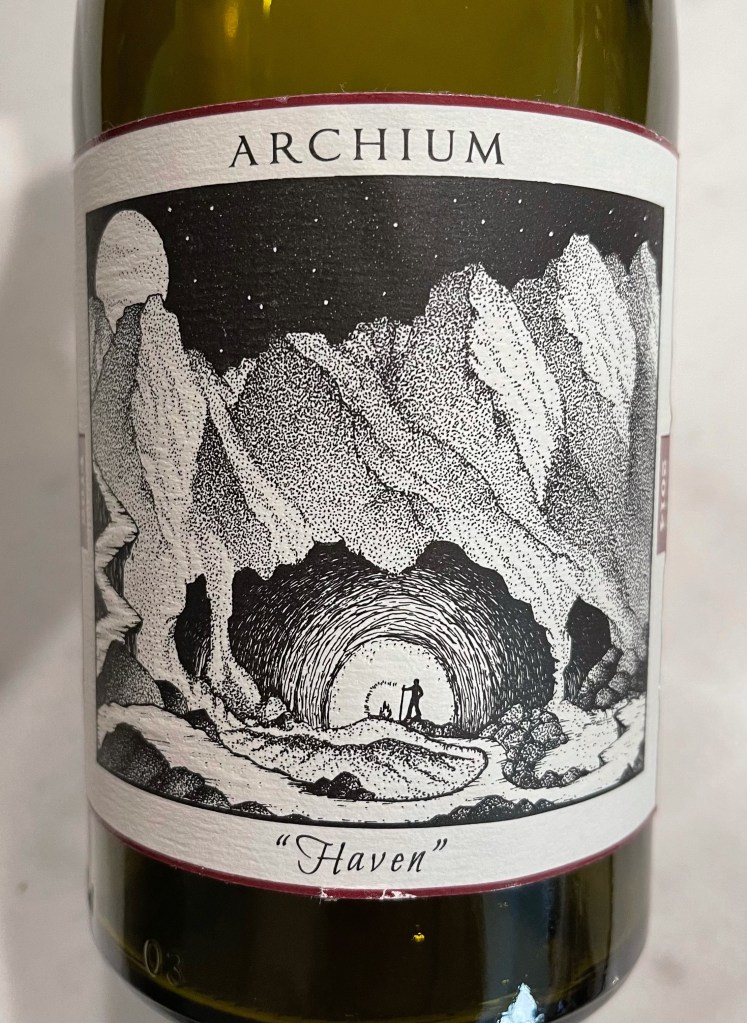
Archium Cellars is a relatively young passion project of Ian Sergy and Zach Jarosz, established in 2011 with a focus on Rhône varieties in the Central Coast of California. Though both Ian and Zach have backgrounds in the entertainment industry, travels throughout California wine country and Europe opened their eyes to the world of wines and the complexities that Rhône varieties can provide. When they realized they didn’t need to own their own vines to craft quality wines, they ventured into the Central Coast to create Archium. Though nowadays Archium has a small estate vineyard in Ventura County, they source most of their fruit from the Santa Ynez Valley and produce their wines at facilities in Buellton. The Thompson Vineyard provides Grenache and Mourvèdre while the Shokrian Vineyard provides Syrah, with both vineyards organically and dry-farmed with low-yielding vines.
Today’s Wine: 2014 Haven Grenache
100% Grenache; 14.5% ABV
The 2014 Haven Grenache is translucent medium garnet in color. I decanted this for about 45 minutes to an hour, helping the wine blossom as it is still fairly youthful. The nose is of medium (+) intensity, showcasing aromas of strawberry jam, raspberry, red plum, licorice, rose, leather, dried herbs, rocky earth, clove, coffee grounds, and a hint of oak that eventually blows off. Meanwhile on the palate, which is of medium intensity, I get notes of red cherry, stemmy strawberry, red plum, blood orange, sweet tobacco, charred green herbs, clove, cola, and white pepper. This dry red is medium- to full-bodied with medium (+) acidity, medium tannins, high alcohol, and a medium length finish. Typically 30 or fewer cases produced.
Price: $40 (2016 vintage on sale on winery website for $19). I think this is steep at the $40 level on a value perspective, perhaps why you can find the current vintage for about $19 on the winery website. It fits into the more people-pleasing camp for me in the ripeness of fruit, though it is surprisingly complex based on my expectations.
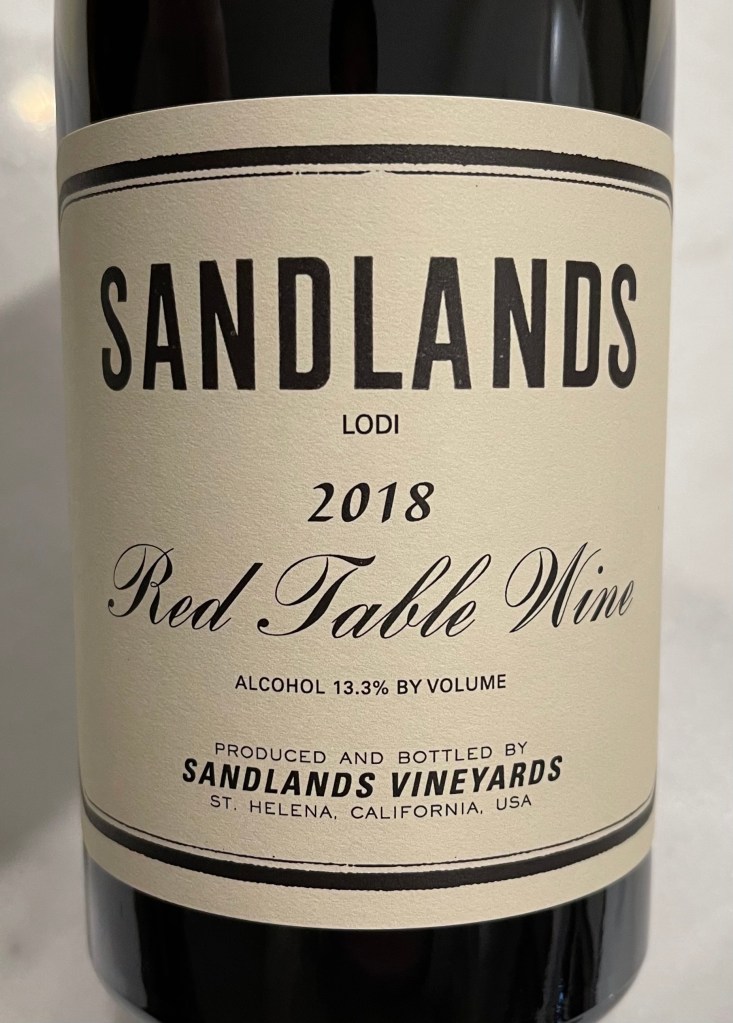
Sandlands Vineyards is a small family-owned and operated passion project of Tegan and Olivia Passalacqua established in 2010. Tegan, a winemaker with a proven track record of crafting fantastic old vine Zinfandel at Turley Wine Cellars, branched out into this side project with a focus on ancient and “forgotten” varieties. In the far reaches of California winegrowing in Lodi, Contra Costa County, Santa Lucia Highlands, Amador County, and the more familiar Sonoma Coast, Tegan sources Chenin Blanc, Cinsault, Trousseau, Carignane, Mataro, Syrah, Zinfandel, and other varieties from vines that are at times more than 100 years old. Though these varieties and the vineyards he sources from have been farmed for decades and generations, they oftentimes lay outside of the “norm” for California viticulture and are even mostly planted in decomposed granite (i.e. sand). What’s more, the vineyards Tegan works with are typically head-trained, dry-farmed, and own rooted. Tegan crafts these wines in a traditional and minimally invasive manner, allowing the unique terroir and vine to shine through in each bottling which results in lower alcohol, easy drinking, but complex wines. Production is miniscule and quantities are quoted by the barrel, so these can be hard to find and the mailing list is the easiest way. At the very least, I suggest checking out the Sandlands website here for incredible pictures of their source vineyards.
The 2018 Lodi Red Table Wine is pale to medium purple in color. I know this is young but I couldn’t resist trying my first bottle, so I let this open up for a couple hours and sampled it along the way to see it evolve. The nose is somewhat delicate with medium intensity and aromas of tart red cherry, red plum, cranberry, black raspberry, blackberry, violets, licorice, smoke, wet gravel, and stony mineral. Meanwhile the palate is also of medium intensity while showcasing notes of redcurrant, red cherry, ripe strawberry, wild raspberry, blueberry, black tea, sweet tobacco, smoked game, a hint of coffee grounds, and baking spice. This dry red blend is light- to medium-bodied with medium acidity, medium tannins, medium alcohol, and a long, captivating finish. This is very, very good already showcasing great balance and I am excited to see it evolve further in the bottle.
The Cinsault comes from the Bechthold Vineyard planted in 1886, the Carignane from the Spenker Ranch planted in 1900, and the Zinfandel from the estate-owned Kirschenmann Vineyard planted in 1915.
Price: $40. This is right in the absolutely worth its price to very solid value camp. I imagine these are slightly less expensive on the mailing list, but I will hands-down buy this again retail in the time being. The balance, complexity, and quality at such a young age are truly impressive and this is well worth a try.
I recently wrote about Château Haut-Brion when I reviewed the 2014 Le Clarence de Haut-Brion in November, 2020, so if your memory is quite sharp feel free to skip to today’s tasting notes below. If, however, you’d like a refresher you can read on for the history of this great estate.
Château Haut-Brion is a historic Bordeaux wine estate that traces back to at least 1521, and it was awarded First Growth (Premier Grand Cru) status in the Bordeaux Wine Official Classification of 1855. In 1533, Jean de Pontac acquired the land that would become Château Haut-Brion and he immediately set about renovating the vineyards and expanding the estate. He is also the owner who, in 1549, started building the château. Jean de Pontac was instrumental in each vintage under his ownership until he passed away in 1589 at the age of 101, though the estate remained in the Pontac family by passing to his son Arnaud II and then Arnaud II’s nephew Geoffroy. Geoffroy’s son Arnaud III took over during the early 17th century and expanded the château itself while doubling the size of the vineyards. He also used his political influence to extend the fame and reputation of Haut-Brion, particularly in England.
As the influence of Haut-Brion grew, particularly amongst nobility and the intellects of the time (including John Locke), Joseph de Fumel inherited the estate from his father in 1749. The estate’s influence took another leap when, in 1787, Thomas Jefferson visited the château and wrote with great admiration about the soils and wines of Haut-Brion. The rosiness ended during the French Revolution, however, as Joseph de Fumel was beheaded by guillotine and his holdings were divided. Over the next four decades or so, the estate changed hands several times.
In 1836, Joseph Eugène Larrieu purchased the estate and worked tirelessly to improve on the exceptional wines it was known for. His efforts were rewarded when Haut-Brion was awarded Premier Grand Cru status in 1855, though pain struck again through disease and political upheavals within the region in the latter half of the 19th century. In 1859, Amédée took over upon his father’s death and replanted the vineyards over time to deal with mildew. By 1873 when his son Eugène took over Haut-Brion, there was optimism which unfortunately proved futile when phylloxera struck with a vengeance in 1880. Eugène spearheaded a massive replanting of the vineyards yet again, this time using rootstock from North America that was resistant to the disease.
Jumping forward through multiple new ownerships, the Dillon family came into the picture during the early 1900s. The owner at the time, André Gibert, faced the need to find a proper owner for Haut-Brion with no heirs of his own. Clarence Dillon, a banker from New York, visited in 1934 and received notice on his way back to America he could buy the estate. The purchase was finalized in 1935 and the Dillon family remains the owner of Château Haut Brion to this day. This purchase by the Dillon family helped bring Haut-Brion to the modern age, with them first installing electricity, new plumbing, and renovating the cellars. Over the decades that followed leading up to current times, the family continued to improve the estate, modernized the winemaking process with a high tech vat room, and completely renovated the château with utmost attention to detail.
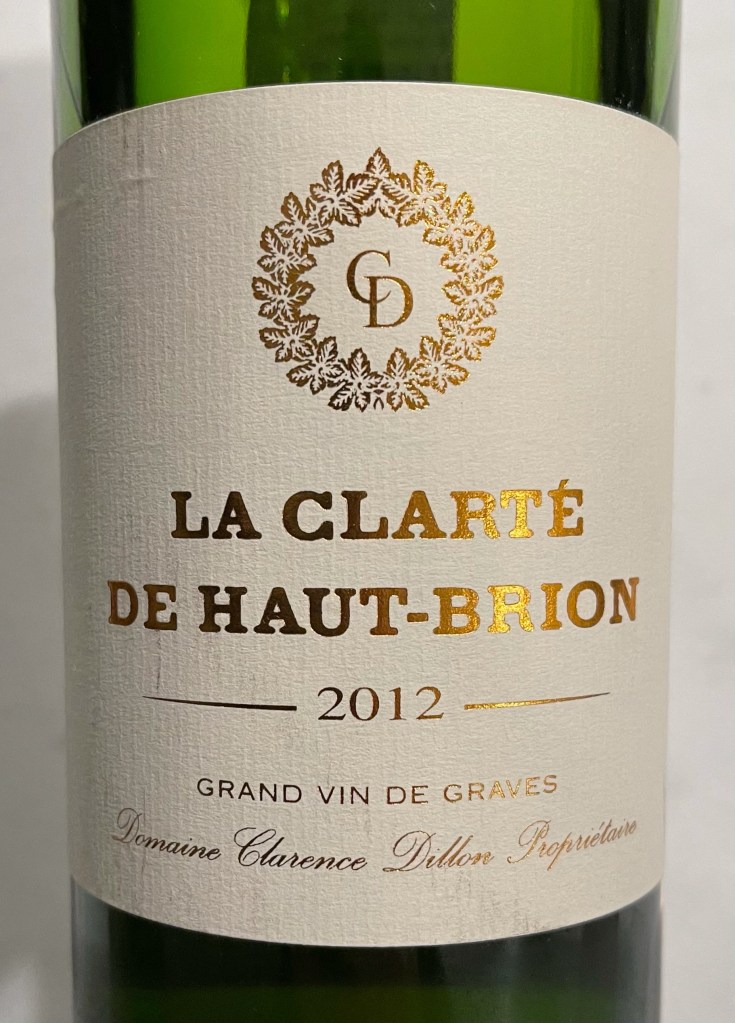
Château Haut-Brion today consists of 51 hectares of vineyards located in the Pessac-Léognan appellation of Bordeaux. Of the 51 hectares, 48 are planted to red varieties of Merlot, Cabernet Sauvignon, Cabernet Franc, and Petit Verdot while the remaining 3 hectares are planted to white varieties of Sémillon and Sauvignon Blanc. Situated across from Château La Mission Haut-Brion (which I wrote about recently as well), Château Haut-Brion shares the same gravelly soil of small quartz stones above a subsoil of clay, sand, and limestone. Following the same practices of their neighbor, all fruit is harvested by hand and then sorted before transferral to temperature controlled vats for fermentation. After two weeks, the vats are drained and the wine moves to barrel where it spends 20-24 months before bottling. Château Haut-Brion produces four wines: Château Haut-Brion, Château Haut-Brion Blanc, and two 2nd wines named Le Clarence de Haut-Brion (red) and La Clarté de Haut-Brion (white).
Today’s Wine: 2012 La Clarté de Haut-Brion
58% Sémillon, 42% Sauvignon Blanc; 14% ABV
The 2012 La Clarté de Haut-Brion is transparent pale gold in color. The medium intense nose showcases aromas of lemon, grapefruit, white peach, yellow apple, honeysuckle, dried herbs, chopped grass, white truffle, and wet stone. On the palate, I get medium intensity and notes of lemon, nectarine, grapefruit, dried pineapple, beeswax, chamomile, river stone, and saline mineral. This dry Bordeaux Blanc is medium-bodied with medium (+) acidity and a well-rounded mouthfeel into a medium (+) length finish.
Price: $100 (I paid $89). While not really a great vintage overall for Bordeaux, this was actually a very solid wine and showcases its age beautifully. I think the price I paid is fair given my experience, though I would probably seek out stronger vintages if I’m buying this bottling again.
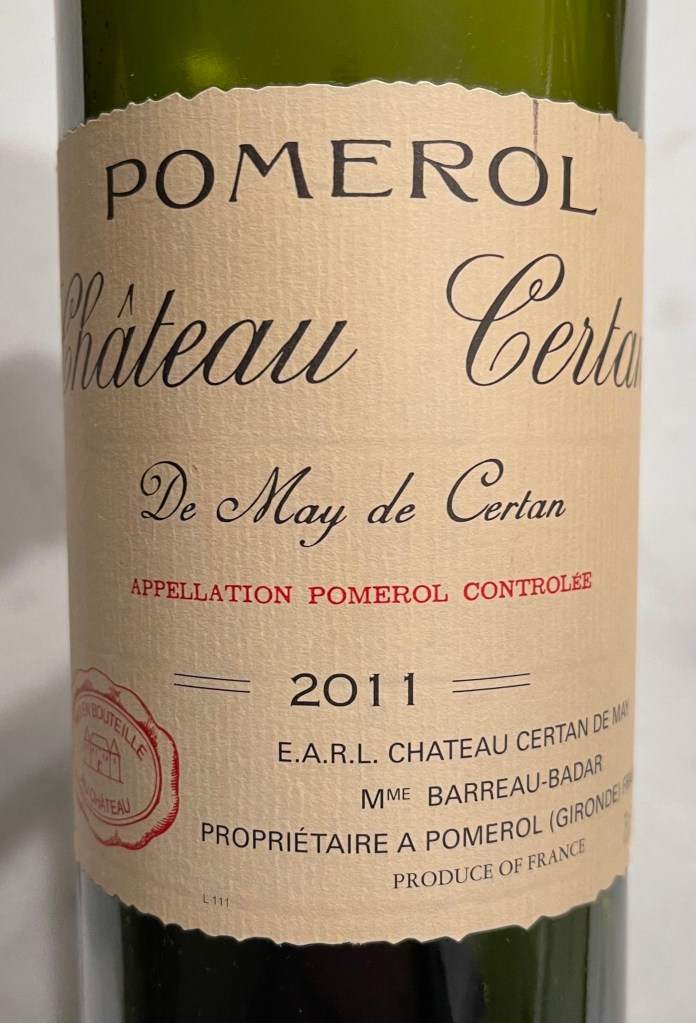
Château Certan de May (fully Château Certan de May de Certan) is a relatively small but historic wine estate situated in the Right Bank appellation of Pomerol in Bordeaux. The estate was established by the de May (Demay) family, who were Scottish settlers in France during the Middle Ages and received the land by royal decree during the 16th century. It wasn’t until the 18th century, however, that the de May family started producing wines which were well-regarded and products of this excellent terroir. To provide you an idea, the estate once included what is now Vieux Château Certan and Château Certan-Giraud but was divided up following the French Revolution. When the last member of the de May family passed away in 1925, the estate passed to the Barreau-Badar family and they own it to this day under Jean-Luc Barreau.
Relatively small in size, Château Certan de May consists of 5.5 hectares of vineyard land planted to 70% Merlot, 25% Cabernet Franc, and 5% Cabernet Sauvignon with an average vine age of 35 years. The vineyard soils are made up of clay and deep gravel, in turn yielding grapes and wines that are powerful and structured, yet elegant and complex. All of the fruit is hand-harvested and the winemaking style is quite traditional before the wines age in 60-80% new oak barrels for 16-20 months. From the mid to late 1980s until the mid to late 2000s, quality was hit or miss but has been drastically improved since then. Annual production sits around 2,000 cases per vintage, and pricing generally isn’t too “terrible” relative to many other wines in the appellation.
Today’s Wine: 2011 Château Certan de May
Merlot dominant proprietary blend (vineyards planted to 70% Merlot, 25% Cabernet Franc, and 5% Cabernet Sauvignon); 13% ABV
The 2011 Château Certan de May is opaque medium ruby in color. This certainly requires decanting, and I found it showing beautifully around the three hour mark and it only got better from there. The aromas are of medium intensity and include blackcurrant, black raspberry, plum, anise, violets, cigar box, forest floor, black truffle, grilled green herbs, and crushed rock. Meanwhile the flavors on the palate are of medium intensity and showcase black cherry, plum, blackcurrant, dried tobacco, earthy mushroom, chocolate, cola, cracked pepper, green herbs, and cedar. This dry red is medium- to full-bodied with medium acidity, medium tannins, and a long finish.
Price: $80. I was pleasantly surprised with this bottle, and I believe it offers very solid value given the “ok” vintage. For instance, the incredible 2009 and 2010 vintages sell for closer to $120 or $130. This is a very strong effort.









 JB's Wine Talk