Beautiful Paso Robles GSM

Today’s Story: Epoch Estate Wines

Epoch Estate Wines, located in the Willow Creek District of Paso Robles, was established by Liz and Bill Armstrong in 2004. Liz and Bill are geologists by trade, and knowing the importance of terroir in winemaking they settled on Paso Robles for its weather, rugged terrain, breadth of soils, and fruitfulness for Rhône varieties. The couple purchased the Paderewski Vineyard in 2004 and later expanded with the Catapult Vineyard in 2008 and York Mountain Winery in 2010. Paderewski is composed of limestone and calcareous rocky soils, Catapult of shale, clay, and silt rocky soils, and York Mountain of sand and fragmented sandstone. Though very different in climate and soil composition, all Epoch vineyard sites have one thing in common: they force the vines to struggle, reach deeply for nutrients, and produce concentrated and quality fruit. Across these incredibly diverse vineyards, Epoch plants Grenache, Mourvèdre, Petite Sirah, Syrah, Tempranillo, Zinfandel, and Cabernet Sauvignon for the red varieties and Grenache Blanc, Roussanne, Picpoul Blanc, and Viognier for the whites.
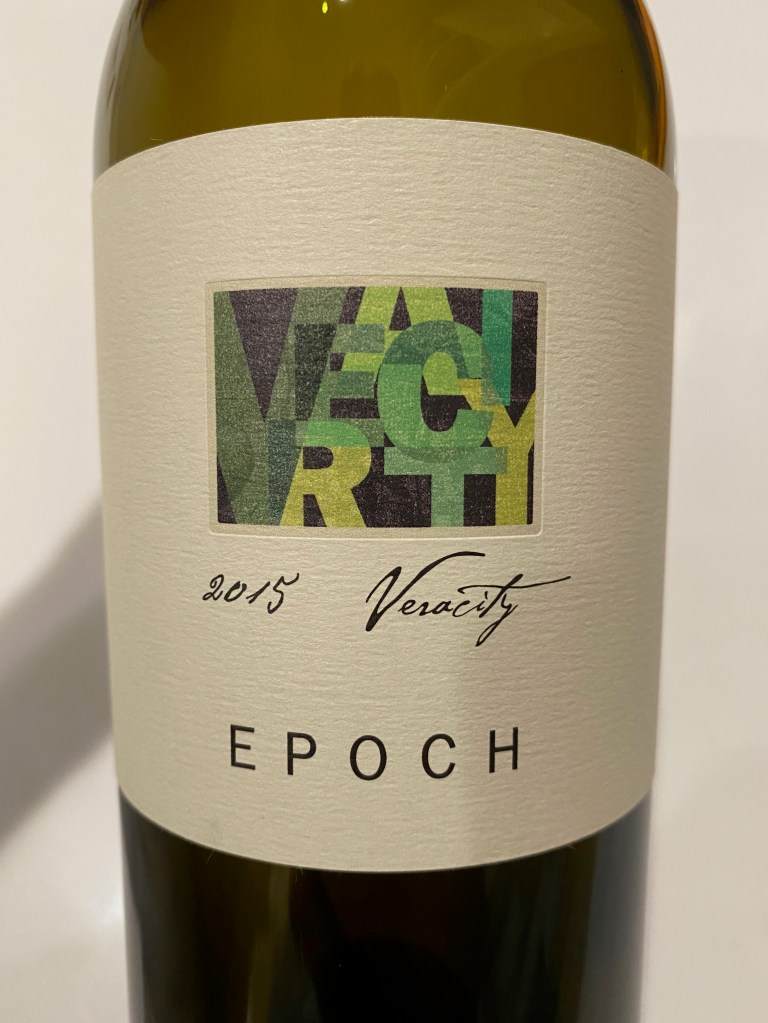
Today’s Wine: 2015 Veracity

47% Grenache, 34% Mourvèdre, 19% Syrah; 15.4% ABV

The 2015 Veracity is opaque medium purple/ruby in color. I gave this 2 hours to open up, but the wine really started showing beautifully an hour or so in. The expressive nose showcases aromas of blackberry, blueberry, plum, violet, cigar box, graphite, smoked game, black pepper, and chocolate. Once on the palate, this wine displays notes of blackcurrant, spiced black plum, black cherry, anise, tobacco, rocky soil, ground pepper, clove, and coffee grounds. This is medium-bodied with medium acidity, fine-grained medium (+) tannins, and a long finish.

Price: $65. This is very fairly priced, and one of the better GSMs I’ve had from Paso Robles save for Saxum (but there’s a significant price jump there). This Epoch is very well-balanced, expressive, and the high ABV goes unnoticeable. Pair with herb-roasted lamb, barbecue pork ribs, or mushrooms.

One of My Favorite CdP’s

Today’s Story: Domaine du Pégau

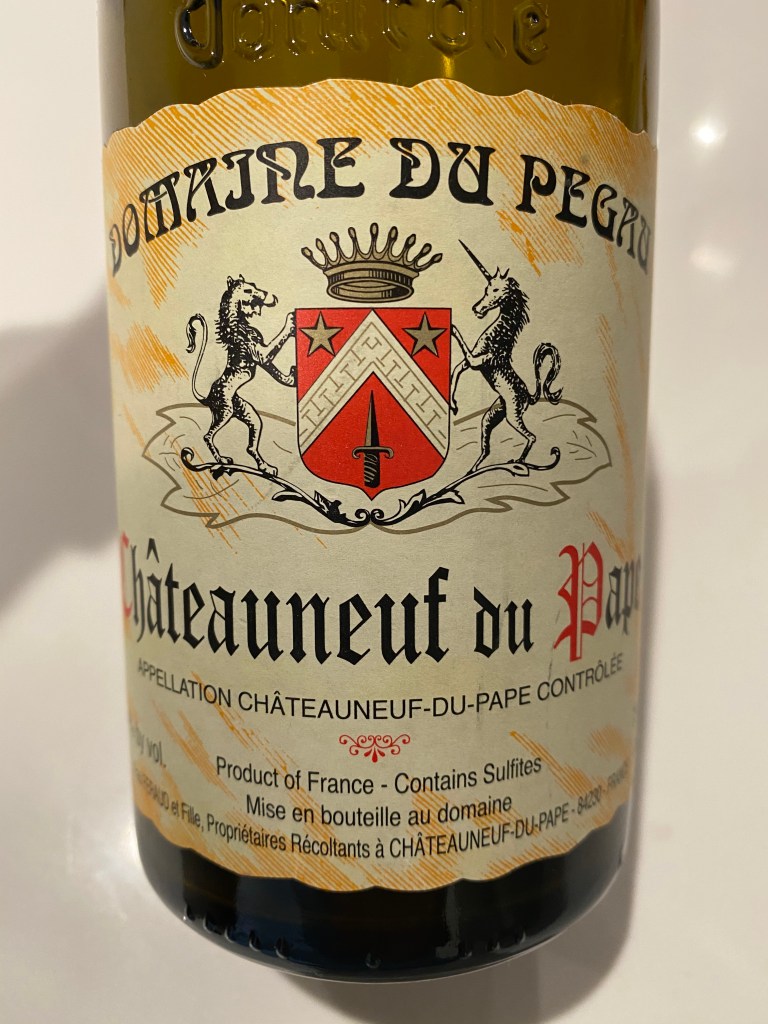
Domaine du Pégau is one of the great estates in Châteauneuf-du-Pape, and though it became officially established in 1987 its roots and those of its proprietors extend significantly further back in time. Today the domaine is under guidance of Paul Féraud and his daughter Laurence, though the Féraud family can be traced as far back as 1670 in Châteauneuf-du-Pape. Titles to the earliest Féraud vineyards reach 1733, though the family sold most of their production in bulk to top négociants (like Jaboulet-Aîné, David & Foillard, and Guigal) when Paul joined the family business. In 1964, however, this all changed when Paul decided to bottle about 420 cases under his own name when estate bottling really started to pick up. 1987 marked the year when Laurence joined her father and the duo changed their name and label from Domaine Féraud to Domaine du Pégau. Pégau spanned a somewhat small 17 acres of vines at this time, with still a significant amount of produce sold to négociants, but as Laurence took a larger and larger role they phased out selling fruit and the 1990 harvest was fully used for their own wines. Today the domaine consists of 21 hectares of vines in Châteauneuf-du-Pape with another 5 hectares in Côtes du Rhône, 20 hectares in Côtes du Rhône Villages, and 19 hectares classified Vin de France.

Today’s Wine: 2009 Châteauneuf-du-Pape Cuvée Réservée

85% Grenache, 9% Syrah, 4% Mourvèdre, with the balance Counoise and other authorized varieties (best guess – no tech sheet); 14% ABV

The 2009 Cuvée Réservée is opaque deep garnet in color with medium ruby variation. I decanted this for 3 hours, which allowed some funk to blow off the nose. Once this opens up, aromas of blackcurrant, black raspberry, boysenberry, cigar box, graphite, forest floor, truffle, slate, clove, and underbrush leap from the glass. On the palate, I get notes of brambleberry, figs, black cherry, anise, red and purple florals, tobacco, charred earth, earthy mushroom, rocky mineral, coffee grounds, and game. The wine is medium-bodied with medium acidity, dusty medium (+) tannins, and a long finish with added notes of iron and smoke. This is drinking magnificently right now, given the time to open up.

Price: $100. I think this is very fairly priced, as Pégau with the 2009 vintage produced a wine of depth, elegance, and complexity that reaffirms them as an estate to beat in CdP. Pair with herb-grilled lamb, wild boar, or charcuterie.

Chuggable Rhône Blend

Today’s Story: Ad Vinum

Ad Vinum is a small natural wine producer established in 2016 by Sébastien Chatillon, a former sommelier at Le Chateaubriand in Paris. Sébastien was not always interested in wine, however, and after dropping out of college he worked as a candy salesman, stablehand, and rock band member amongst other odd jobs. Sébastien’s interest in wine actually stemmed from partying with his friends in one of their father’s wine caves, thanks to his realization that he truly loved the beverage and wanted to learn more about it. After his time at Le Chateaubriand and taking a deep dive into natural wines, Sébastien moved to Vallabrix in the Gard department of southern France with the goal of making his own wine. Ad Vinum’s fruit is all organically farmed and hand-harvested, with the fermentation process accomplished spontaneously with only indigenous yeasts. Some of the wines also see carbonic or semi-carbonic maceration. Practicing restraint in the cellar, Sébastien wants his wines to speak for themselves and the terroir and he bottles them unfined, unfiltered, and with zero added SO2.

Today’s Wine: 2018 Bim!

Blend of Grenache, Cinsault, and Mourvèdre (no tech sheet); 12.5% ABV

The 2018 Bim! is mostly opaque pale to medium purple in color. Once this opens up, the nose becomes incredibly aromatic and fresh with aromas of blackberry, candied plum, stemmy red berries, violet, crushed rock, black pepper, and bright mineral. On the palate, this lively wine displays notes of blueberry, boysenberry, brambly raspberry, strawberry licorice, sweet tobacco, green underbrush, and rocky mineral. This is medium-bodied with medium acidity, medium tannins, and a medium (+) length finish.

Price: $35. This is a delicious, highly chuggable wine that can be perfect for those branching into natural wines. Bim! is wonderfully balanced and made with carbonic maceration and spontaneous fermentation in stainless steel tanks, providing a beautiful freshness to it. Pair this with grilled lamb, spicy Mediterranean chicken, or barbecue.

A Journey for the Mind and Palate

Today’s Story: Jolie-Laide

Established by Scott Schultz, Jolie-Laide is a small, boutique winery crafting wines in Forestville, California. Jolie-Laide is a French term of endearment for something unconventionally beautiful that translates to “pretty-ugly,” and Scott decided to use it in naming his winery following experiences in the restaurant business. When he worked at Bouchon in Yountville, Scott realized that the majority of people didn’t seem to explore the wine list but rather stick to Chardonnay, Pinot Noir, or Cabernet Sauvignon. He thought this was a travesty of sorts, given the wonderful varieties including Gamay, Valdiguié, Vermentino, or Trousseau Gris. Eventually Scott transitioned out of the restaurant business and found himself working alongside Pax Mahle, a wildly skilled winemaker in his own right. One year, Pax allowed Scott to make a wine of his own using 1-2 tons of fruit and he decided to use none other than Trousseau Gris because of how fascinating of a variety it is to him. Alas, Jolie-Laide was born and continues to produce magnificent and wildly fun wines today.

When it comes to sourcing his fruit, Scott works with farmers he has known for years who largely follow organic practices and work incredibly unique sites. After harvest, all of the Jolie-Laide red fruit is foot crushed and left whole cluster with some of the varieties (like Gamay) seeing carbonic maceration. Thanks to Scott’s selection of incredible sites, he can be pretty hands-off during the rest of the winemaking process and let the terroir and fruit speak for itself. Jolie-Laide lets their wines ferment naturally and, instead of using temperature control, says “we stick things in the sun if we need to get them warm” (source). Furthermore, Scott adds little SO2 when necessary in part because his wines tend to be bottled young to both preserve freshness in the fruit and provide barrels for the following year’s harvest.

Today’s Wine: 2016 Provisor Vineyard Grenache

100% Grenache; 12.8% ABV

The 2016 Provisor Vineyard Grenache is pale ruby/garnet in color and moderately transparent. I drank this over 4.5 hours (don’t ask me how I restrained myself) and it is remarkable how drastically this picked up weight over time. The nose showcases aromas of candied strawberry, juicy raspberry, black cherry, red licorice, sweet tobacco, granite, oregano, and cinnamon. Once on the palate, the wine displays notes of muddled strawberry, tart red raspberry, candied plum, anise, tobacco, dark leather, crushed rock, green herbs, and peppery spice. This is medium- to full-bodied with medium (+) acidity, medium (+) tannins, and a long finish. While this started off thin and falling off by mid-palate, my patience was handsomely, handsomely rewarded.

Price: $38. Buy it. All I can say is if you can find this bottle close to the price, it is supremely worth the adventure. If you do though, and haven’t taken heed of my commentary above, I implore you once again to give this air. Pair with braised pork, wild boar, or smoked charcuterie.

Unique Natural Côtes du Rhône

Today’s Story: Domaine Gramenon

Domaine Gramenon was established in 1978 in Montbrison-sur-Lez which rests in the northernmost area of southern Côtes du Rhône in France. Located on the foothills of the Alps, Domaine Gramenon sits at about 1,150 feet above sea level on soils made largely of limestone, sands, and clay once covered by the sea 86 million years ago. The domaine is largely planted with Grenache thanks to its adaptability to the elevation and region, and many of their vines are old with ages ranging from 50 to 120 years old. Since the domaine’s founding, they practice natural and organic vineyard cultivation though adopted biodynamic practices and received the DEMETER certification in 2010. All harvesting is accomplished by hand and rigorous selection goes into sorting the fruit before they are ultimately shaken (never crushed by tools) into concrete vats. All Domaine Gramenon wines are meant to showcase their terroir in unadulterated fashion, so spring cuvées age in vats and old vine cuvées age in old barrets and minimal (if any) SO2 is added.

To learn more about the domaine, particularly with a wonderful depiction of their terroir, check out the website here.

Today’s Wine: 2018 l’élémentaire

75% Grenache, 25% Syrah; 14.3% ABV

The 2018 l’élémentaire is opaque deep purple in color which leaves heavy staining on the glass. This needs at least an hour or two to decant, but once it opens up the nose showcases aromas of blackberry, black plum, cassis, anise, tobacco, clay, wet gravel, chocolate, and dark roast coffee bean. On the palate, I get notes of blackberry compote, jammy blueberry, plum, black cherry, leather, loamy soil, dried herbs, black pepper, and smoky spice. This wine is medium- to full bodied with medium acidity, medium tannins, and a medium (+) length finish. Drinks better on the second day.

Winemaking process: Produced from 45 year old vines cultivated with biodynamic farming; fruit is sorted manually; 15 day maceration in concrete vats; partially de-stemmed clusters; natural yeast fermentation; light addition of SO2.

Price: $30. Not a bad price for this fun “natural” wine, and it’s one of those that is different than what most people expect from a Grenache/Syrah blend. Pair this with grilled beef, smoked game, or smoky barbecue chicken.

Value Cotes du Rhône

Today’s Story: Domaine de Coste Chaude

Though the estate stretches further in history, Domaine de Coste Chaude as it exists today was remodeled during the 1960s and André Guichon, a wine merchant from Chambéry, bought it in 1969. The estate again changed hands in 1994 when it was purchased by the Fues family and they further developed the property by planting new varieties, altering storage methods, and processing grapes differently. In my opinion, however, the greatest contribution of the Fues family is their transition to organic farming in 2014 (Ecocert certified). Vincent Tramier took over the estate in 2018, with his major goals being improved wine quality and the introduction of new cuvées to widen the offering portfolio.

Domaine de Coste Chaude consists of 37 hectares of which there is 14 hectares of forest and 23 hectares planted to vine. The domaine is located on a hill at an elevation of 360m behind the Eastside of the village of Visan, creating hillside vineyards with Southern exposure. Thanks to the domaine’s location, the vineyards face a nearly constant breeze that helps fight against fungal diseases and spring frosts, while also experiencing slightly colder temperatures than the lowlands which creates fresh wines. Soil in the vineyards consists of limestone gravels and pebbles mixed into ocher, yellow, and brown clays deposited during the Miocene period. For some pictures of their property, check out the Domaine de Coste Chaude website here.

As part of the domaine’s organic farming practices, Coste Chaude uses green or organic fertilizers depending on soil variety and maintains natural ground cover when possible to protect against erosion while fostering biodiversity in the vineyards. Further, they use less stressful pruning methods on their vines (especially on their old vines 40+ years old) to oversee fruit quantity in an effort to foster concentrated and healthy grapes. When it comes to winemaking at the domaine, Vincent mixes traditional methods with modern technology to produce wines that reflect the terroir. The winery is located in the middle of the vineyards so harvested fruit can arrive as quickly as possible for sorting and minimal intervention is the name of the game from harvest to bottling.

Today’s Wine: 2014 Cotes du Rhône Visan Cuvée L’Argentière

80% Syrah, 20% Grenache; 13.5% ABV

The 2014 L’Argentière is medium ruby/garnet throughout and slightly transparent. The nose showcases aromas of blackcurrant, plum, cherry, smoke, forest floor, barnyard, green herbs, green peppery spice, and black olive. Once in the mouth, I get notes of blackberry, black raspberry, wet rock, smokey cedar, tobacco, leather, stone minerality, and green vegetation. This is medium- to full-bodied with high acidity, medium tannins, and a medium (+) length finish.

Price: $18. This is a great value Cotes du Rhône I picked up after an in-store tasting at one of my local shops. If you like terroir-driven wine at a great price, this is for you. Pair this with steak au poivre, roasted lamb, or a charcuterie with some hard goat’s cheese.

Historical Châteauneuf-du-Pape – for a Great Value!

Today’s Story: Château La Nerthe

Château La Nerthe was established in 1560 by the Tulle de Villefranche family, though they had lived in Avignon since the 14th century. Located in the Provence region in southeast France, Château La Nerthe sits about 80km north of Marseille and occupies 92 hectares of vines in the Châteauneuf-du-Pape appellation. The estate’s vines are organized into 57 different plots representing all of the appellation’s terroir variation, as well as the 13 grape varieties planted there. Château La Nerthe practices organic farming (ECOCERT certification in 1998); hand-picks, table-sorts, and destems their fruit before fermentation; uses only indigenous yeasts during fermentation; vinifies by individual plots to showcase terroir variation; and blends only after the wines have aged for 12 months.

While the proprietorship of the Tulle de Villefranche family lasted several centuries, the estate grew drastically under Marquis Jean-Dominique Tulle de Villefranche (1711-1760) when he developed the vineyards to become one of the preeminent estates throughout the Rhône Valley. Between 1736 and 1784, the castle at the estate took shape as it exists today and allowed the family to not only live on the property but host guests in elegant style. Coincidentally during this time (and the 18th century as a whole more or less), members of the Tulle de Villefranche family in high military positions embarked on marketing endeavors throughout Europe and the wines of Château La Nerthe were sold in Russia, America, England, Germany, Italy, and Spain. In 1776, Château La Nerthe became the first estate in Châteauneuf-du-Pape to ship their wines in bottles while gradually fading out barrels.

Château La Nerthe was destined for arguably its greatest change, however, in 1870 when the Tulle de Villefranche family sold it to Commander Joseph Ducos. At this time, many of Joseph Ducos’ neighbors were tearing up vineyards and replanting the land with fruit trees, however he replanted his new estate with phylloxera resistant rootstocks. These visionary efforts accomplished by Joseph Ducos helped shape his neighbors’ changes in winemaking and certainly find their place in overall history of the appellation. In 1985, the estate changed hands yet again when the Richard family purchased it and promised to ensure revival of the original values of excellence and innovation at Château La Nerthe.

Today’s Wine: 2015 Châteauneuf-du-Pape

50% Grenache Noir, 30% Syrah, 15% Mourvèdre, 5% Cinsault; 14.5% ABV

The 2015 La Nerthe CdP is moderately transparent and medium garnet in color with ruby variation near the rim. Once this breathes for about 45 minutes, the nose showcases aromas of cherry, baked strawberry, tomato sauce, cedar, cola, worn saddle leather, clay, mineral, freshly baked bread, and oak-driven spice. In the mouth, I get notes of sour cherry, tart raspberry, strawberry leaf, purple and blue florals, dried tobacco, parched dusty earth, a hint of bitter chocolate, and sandalwood. This CdP is full-bodied with high acidity, medium (+) tannins, and a long finish. This was drinking very nicely after an hour and a half decant.

Price: $50. This is a good value CdP, though there are a number of other options in the same price range that seem to be drinking better now. I’m curious to see how this develops with some bottle age. Pair this with game, steak, or lightly spiced lamb.

History. Quality. Ridge.

Today’s Story: Ridge Vineyards

Ridge Vineyards, another historic California winery, found its beginnings near the top of Monte Bello Ridge in 1885. Osea Perrone, an Italian doctor in San Francisco, bought 180 acres and constructed the winery into three levels of the mountain using native limestone. He produced the first vintage under the Monte Bello Winery label in 1892, however later as Prohibition crippled the wine industry the facilities were abandoned.

Once Prohibition ended (thankfully), a man by the name of William Short purchased the winery and replanted several parcels to Cabernet Sauvignon in the late 1940s. The breakthrough came, however, in 1959 when the winery changed hands again to Dave Bennion, Hew Crane, Charlie Rosen, and Howard Ziedler and the partnership produced a quarter-barrel of “Estate” Cabernet. One of the greatest Cali Cabs at the time, this Monte Bello wine inspired Dave Bennion to leave Stanford Research Institute (where all partners worked) to focus on winemaking full-time.

As winemaking ramped up at Ridge, I would be remiss not to mention their Zinfandel, first made in 1964 from vines further down the mountain. In 1966, they produced their first Geyserville Zin that many of you should be able to find at your local wine store. By 1968, the winery was approaching 3,000 cases of annual production and had grown from 15 to 45 acres following an acquisition of the original Monte Bello terraces. Ridge demonstrated a quality and character in the upper echelon of California wines, with their 1971 Cab ultimately entered into the Paris Tasting of 1976, which I briefly talked about in my Chateau Montelena post.

As further background on Ridge, I’d like the opportunity to discuss their winemaking practices as well. Calling their style “pre-industrial,” Ridge shies away from chemicals and additives prevalent in the industry nowadays. They ferment their wines only with natural yeast, do not use commercial enzymes or nutrients to affect color, flavor, or tannin in the wines, and are certified organic. Further, one of my favorite features of a bottle of Ridge is the back label that tells the winemaking process and lists ingredients, which is not common.

And finally…

Today’s Wine: 2015 Syrah/Grenache/Mataro

35% Syrah, 23% Grenache, 42% Mataro; 14.3% ABV

Most of you who know me know how much I love Syrah, and Rhône varietals in general, so I was very excited to find this bottle of ’15 GSM to taste and review. Our wine is medium ruby in appearance and fairly transparent. On the nose are aromas of black and blue fruits, redcurrant, lavender, mild earthy white cheese, cured meat, and slate. This was still somewhat tight as a pop-and-pour so I gave it about 30 minutes of air before drinking. Once in the mouth, the wine showcases notes of blueberry, ripe blackberry, dried cranberry, parched dirt, mushroom, underbrush, and a touch of blood. Full-bodied with medium (+) acidity, medium tannins, and a long (surprisingly bright fruit) finish.

Price: $40. Though I’ve watched the prices for Ridge rise over the past several years, I still think their wines (especially the range of Zins) are some of the best values for the quality. Today’s GSM blend is no different and, quite honestly, this was better than I expected. Pair this with red meat and mushroom sauce.