Beautiful Trousseau From a Winemaking Legend of Oregon

Today’s Story: The Eyrie Vineyards

The Eyrie Vineyards is a highly-regarded and family-owned winery in the Dundee Hills AVA of Oregon’s Willamette Valley. It was established in 1965 by David Lett and his wife Diana, shortly after David graduated from UC Davis with a degree in viticulture and enology. David planted 3,000 vinifera grape cuttings he acquired from UC Davis and select growers, and he was the first ever to plant Pinot Noir and Chardonnay in the Willamette Valley and the first in the US to plant Pinot Gris. Since he planted these cuttings in a temporary nursery plot, David began the search for his own vineyard land and settled on 20 acres at the south end of the Dundee Hills in 1966. Late that year David and Diana cleared the land and moved their cuttings from the temporary nursery, ultimately producing their first vintage in 1970.

Winemaking at The Eyrie Vineyards is rather traditional, rooted in David’s original belief that the Willamette Valley could produce wines to compete with Burgundy. Fermentation is accomplished using only native yeasts for Pinot Noir and Chardonnay, and it proceeds naturally and slowly without the use of artificial temperature control. The Pinot Blanc and Pinot Gris, however, are inoculated with a yeast strain from their own vineyards. In barrel (which are very minimal percentages of new oak), the wines experience minimal racking, extended lees contact, and full and natural malolactic fermentation. The wines are also never fined but slightly filtered, and minimal if any sulfur is added.

Today The Eyrie Vineyards consists of five separate vineyard holdings, and they are all certified organic. Since 2005, second generation Jason Lett has been proprietor and winemaker while he carries on the philosophies of his father David before him. To learn more or view the source of the information above, please visit the Eyrie Vineyards website here.

Today’s Wine: 2017 Trousseau

100% Trousseau; 11.5% ABV

The 2017 Trousseau is pale ruby in color with garnet hues. Given some time to open up in the glass, the aromas are of pronounced intensity and the nose showcases notes of cranberry, tart cherry, spiced red plum, lavender, barnyard, fennel, mushroom, green bell pepper, and pine. Meanwhile the flavors are of medium (+) intensity, with the palate displaying notes of pomegranate, ripe red cherry, tart crunchy cranberry, red licorice, graphite, charred green herbs, moss, and wet gravel. This dry red is light-bodied with high acidity, medium (-) tannins, medium alcohol, and a long finish.

Price: $33. I wasn’t sure what to expect with this wine, but I was blown away by the complexity and intensity. The balance is outstanding as well, and this is well worth the price.
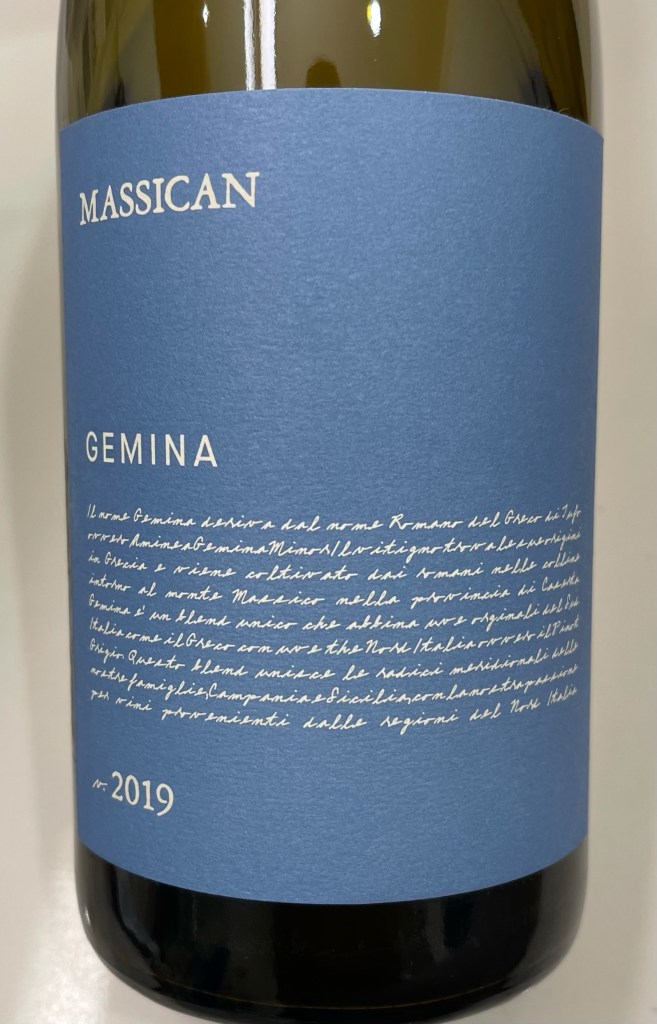
Fun and Refreshing Napa Valley White Blend

Today’s Story: Massican Winery

Massican Winery was established in 2009 by winemaker Dan Petroski (also of Larkmead Vineyards) and was born out of his passion for Italy and the country’s lifestyle, culture, and wines. Massican is a very unique endeavor in Napa Valley, focusing exclusively on white grape varieties including Tocai Friulano, Ribolla Gialla, Pinot Bianco, and Greco common in northeastern Italy as well as the more “expected” varieties of Sauvignon Blanc and Chardonnay. True to Dan’s mission, the Massican wines are not only made with uncommon varieties for Napa but they are also not the stereotypical oaky white wines the region is known for. Dan uses varying amounts of new and neutral oak as well as stainless steel, also not allowing his wines to go through malolactic fermentation so they maintain the crisp, fresh, and refreshing characteristics of each grape variety. Another contributing factor is how Dan picks his grapes at lower sugar levels, preserving the vibrant acidity and resulting in often lower-alcohol wines.

I previously reviewed the 2019 Sauvignon Blanc and 2019 Annia from Massican, both pure and fun Napa Valley white wines.

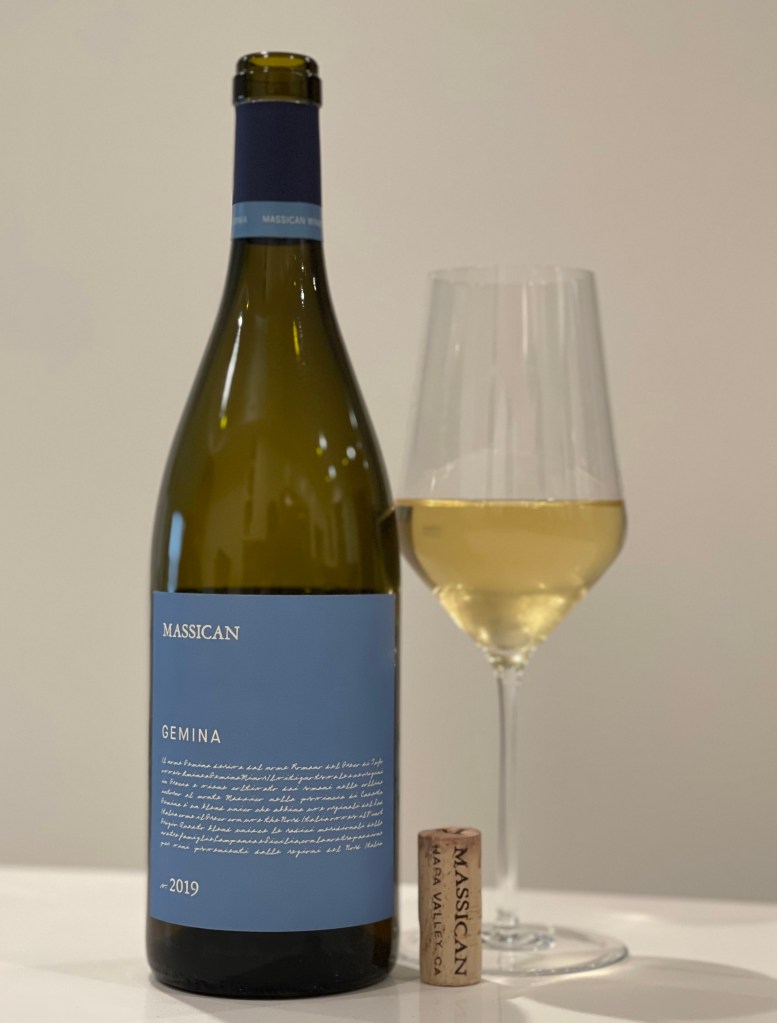
Today’s Wine: 2019 Gemina

74% Pinot Bianco, 26% Greco; 13% ABV

The 2019 Gemina is pale to medium yellow in color. The aromas are of medium intensity, and the nose showcases notes of white peach, pear, yellow apple, lemon zest, honeysuckle, dried almond, and oyster shell. Meanwhile the flavors are also of medium intensity, with the palate displaying notes of lemon zest, ripe pear, yellow apple, peach, crushed rock, and saline mineral. There’s a slight herbal characteristic to the wine as well. This dry white is medium-bodied with high acidity, medium alcohol, and a long finish.

Price: $30. This is pretty good value given the quality, and it’s a fun uncommon blend for Napa and Sonoma. I was a big fan of this wine, and it’s a very refreshing white for a hot day.

Delicate but Beautifully Pure Syrah and Lagrein Blend

Today’s Story: Whitcraft Winery

Whitcraft is a small, family-owned and operated winery in Santa Barbara, CA known for their traditionally made and “unadulterated” Pinot Noir and Chardonnay. Established in 1985 by Chris and Kathleen (Barnato) Whitcraft, the winery started as a passion for both the craft of winemaking and the lifestyle. Chris learned from California greats including Joe Heitz, Dick Graff, and Burt Williams while simultaneously hosting a radio show about wine from 1978 to 1989. Chris and Kathleen’s son Drake joined the family winery and took over in 2007, maintaining the traditional practices of hand-harvesting, foot-pressing, no added enzymes, and native yeast fermentation. Whitcraft’s wines are pure, well-balanced, and honest representations of the fruit and terroir, often remaining low in alcohol and not seeing much added SO2. Drake hand fills and corks his wines, with production incredibly limited and often reserved for mailing list clients or restaurants. Though Chris passed away in 2014, his vision and passion live on through Drake to this day.

Whitcraft is one of my favorite California producers of terroir-driven wines, and I previously wrote about the 2016 Pence Ranch Clone 828 Pinot Noir, 2018 Stolpman Vineyard Grenache, and 2016 Presqu’ile Vineyard Chardonnay.

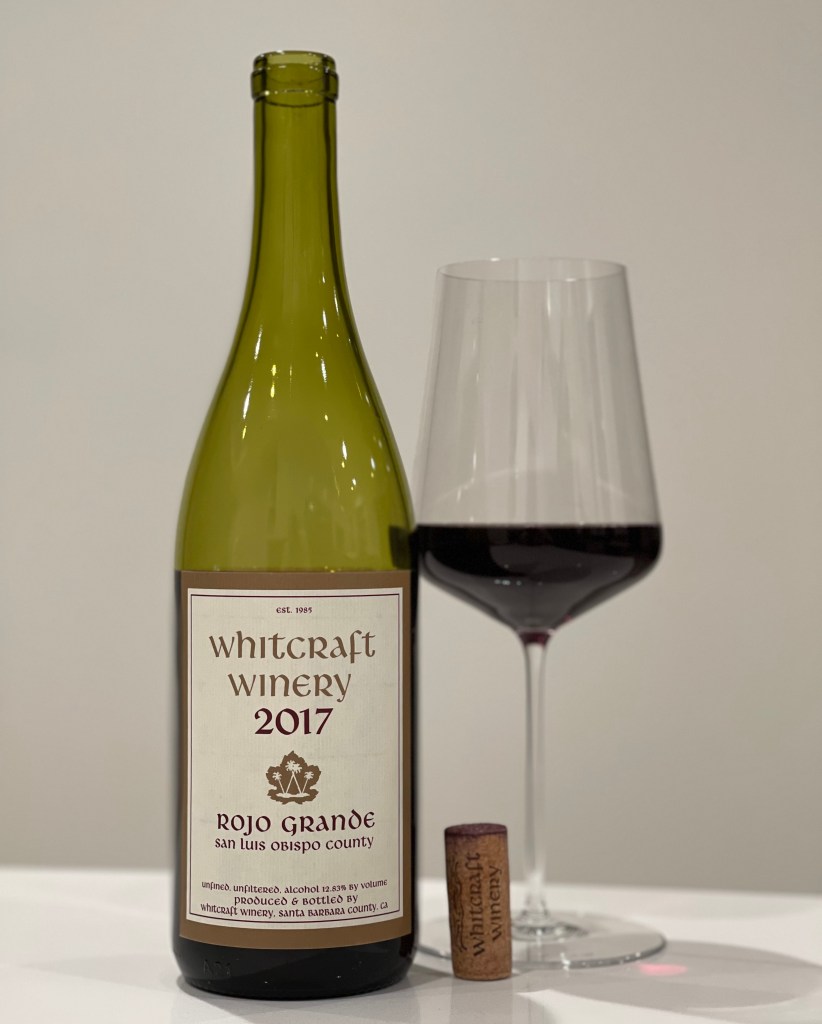
Today’s Wine: 2017 Rojo Grande

Blend of Syrah and Lagrein; 12.83% ABV

The 2017 Rojo Grande is medium purple in color and rather opaque. Given some time to blossom in the glass, the aromas are of medium intensity and the nose showcases notes of cherry, blueberry, plum, violet, forest floor, dried green herbs, coffee grounds, and clay pot. Meanwhile the flavors are also of medium intensity, and the palate displays similar notes of black cherry, red plum, wild blueberry, soft licorice, lavender, sweet tobacco, cola, and clay. This dry red blend is light-bodied with medium (+) acidity, medium (-) tannins, medium alcohol, and a medium (+) length finish. This is an easy-drinking and beautifully-balanced wine.

Price: $30. This is a very solid price-point for this wine and I’d say it offers decent value. While it’s not the most intense in profile, the wine is of impeccable quality and makes for an incredibly enjoyable drinking experience.

Precise Oregon Chardonnay for a Great Value

Today’s Story: Big Table Farm

Big Table Farm is a relatively small winery and farm established in the Willamette Valley of Oregon in 2006 by winemaker Brian Marcy and artist/farmer Clare Carver. Brian worked with wine in Napa Valley prior to starting Big Table Farm, spending a decade with stints at heavyweights like Turley Wine Cellars, Neyers Vineyards, Blankiet Estate, and Marcassin to hone his craft. Meanwhile Clare is a gifted artist and designs wine labels, many of which have been awarded. Dedicated to Pinot Noir, Chardonnay, and small amounts of Pinot Gris and Syrah, Big Table Farm commenced with only 150 cases of wine and has grown to a few thousand cases today. The wines are made in a minimal style, designed to showcase each unique source’s terroir and all wines are bottled unfined and unfiltered. With a major emphasis on sustainability and Clare’s passion for farming, the duo’s 70 acre property also acts as a working farm where they produce seasonal vegetables and raise animals. A visit to the property will not only showcase the wines, but you will see hens, pigs, goats, draft horses, and cows wandering about with an area dedicated to bee hives as well.

I previously wrote about the 2014 Willamette Valley Chardonnay from Big Table Farm, so please check out those tasting notes as well if you missed them!

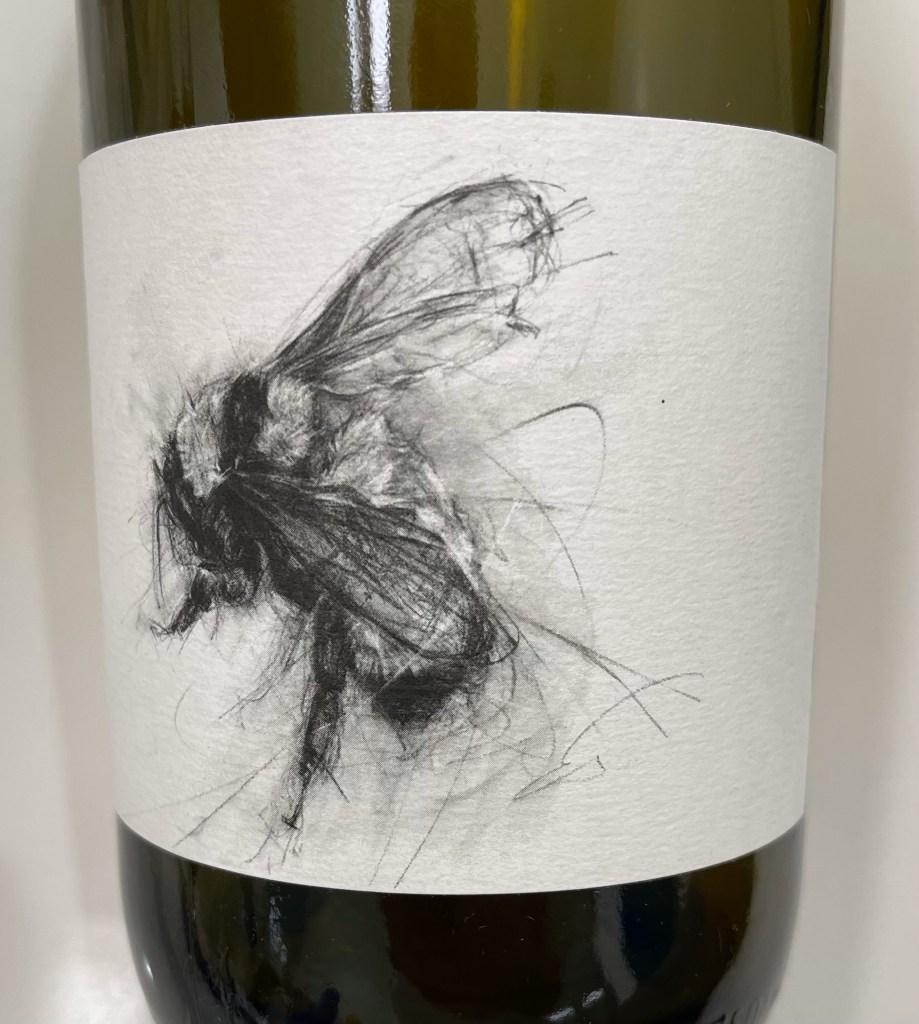
Today’s Wine: 2019 The Wild Bee Chardonnay

100% Chardonnay; 12.3% ABV

The 2019 Wild Bee Chardonnay is medium yellow in color. This needs about 45 minutes to open up in the glass, then it begins to sing. The aromas are of pronounced intensity, with the nose showcasing aromas of green apple, pear, lemon curd, white floral blossom, flint, dill, and honeycomb. Meanwhile the flavors are also of pronounced intensity, and the palate displays notes of green apple skins, lemon and lime zest, ripe pear, wax, wet stone, dill, and saline mineral. This dry white is medium-bodied with high acidity, medium alcohol, and a long finish. This is a beautiful, precise Chardonnay and I’m excited to see where it goes over the next few years in bottle.

Price: $30. This is a very, very good value Chardonnay. I can’t pull any faults out of this wine, and the quality, balance, length, and intensity are profound. It’s fairly complex at this stage, and should only add further complexities over the next few years.

New Zealand Riesling That Offers Exceptional QPR

Today’s Story: Te Whare Ra

Te Whare Ra is a small family-owned winery established in 1979 but under the guide of winemakers Anna and Jason Flowerday since 2003. TWR’s vineyard is one of the oldest in Marlborough and consists of 11 hectares planted to Gewürztraminer, Riesling, Sauvignon Blanc, Pinot Gris, Chardonnay, Pinot Noir, and Syrah. Anna and Jason manage their vineyard adhering to organic and biodynamic principles, while also practicing minimal intervention in the cellar. The duo keeps their yields low, all fruit is hand-picked and hand-sorted, no chemicals are used in the vineyards, and the wine is made as naturally as possible with no fining agents, chemical tannins, or chemical yeast nutrients added. TWR is a founding member of Marlborough Natural Winegrowers (MANA) and is certified organic by BIOGRO NZ. To learn more about TWR’s farming and winemaking practices, explore their portfolio, or meet the team (including their cows and dogs), check out the website here.

I previously wrote about the 2014 Pinot Noir SV5182 from TWR, which is another very solid value and beautiful representation of terroir.

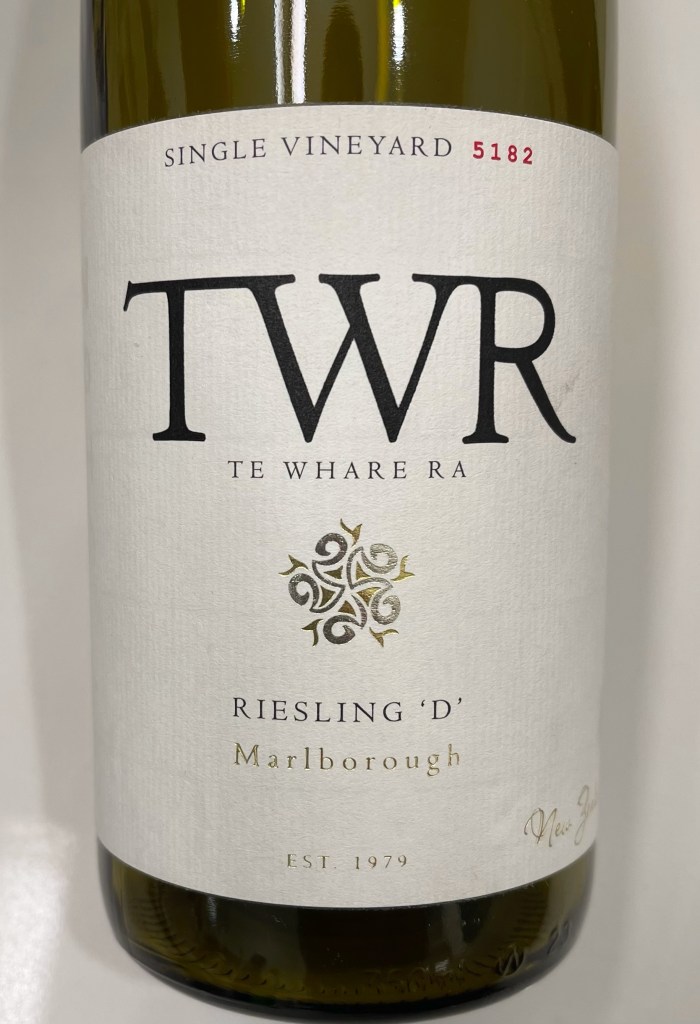
Today’s Wine: 2018 Riesling “D” SV5182

100% Riesling; 12.5% ABV

The 2018 Riesling “D” SV5182 is medium straw in color. Aromas are of pronounced intensity, and the nose showcases notes of lime zest, white peach, grapefruit, jasmine, petrol, limestone, and saline. Meanwhile the flavors are of medium (+) intensity, and the palate displays notes of lemon, lime zest, grapefruit, white florals, exotic white spice, and beeswax. This dry Riesling is light- to medium-bodied with high acidity, medium alcohol, and a long finish. 235 cases produced.

Price: $20. This is a very, very strong value play and should only get better with a few more years of cellar age. This wine’s balance, length, and intensity team up to strike above the price-point and, though this is hard to find, I’d buy it if you come across it.

Terroir-Driven and Ageworthy Cru Beaujolais

Today’s Story: Jean Foillard

Jean Foillard is one of the most highly-regarded producers in Beaujolais, though his status stretches throughout all of France as well. Jean and Agnès Foillard took over Jean’s father’s domaine in 1980, and their holdings today consist of almost 14 hectares (34 acres) of vineyards with many planted on the famed Côte du Py in the cru of Morgon. Since taking over, Jean follows the teachings of Jules Chauvet who was a staunch traditionalist in Beaujolais. Jean farms all of his vineyards organically with zero synthetic herbicides or pesticides, then harvests the fruit manually before rigorous sorting to ensure only the highest quality fruit makes it into the wines. The fruit sees traditional semi-carbonic maceration and fermentation with only native yeasts, and minimal or zero sulfur is added throughout the winemaking process. Jean never engages in chaptalization, ages his wines in used Burgundy barrels, and bottles the wines without filtration. The end result yields wines that are elegant, complex, and structured while showcasing the terroir in honest fashion. Like most Beaujolais these are delicious in their youth, but they often have the structure of ageworthy examples as well.

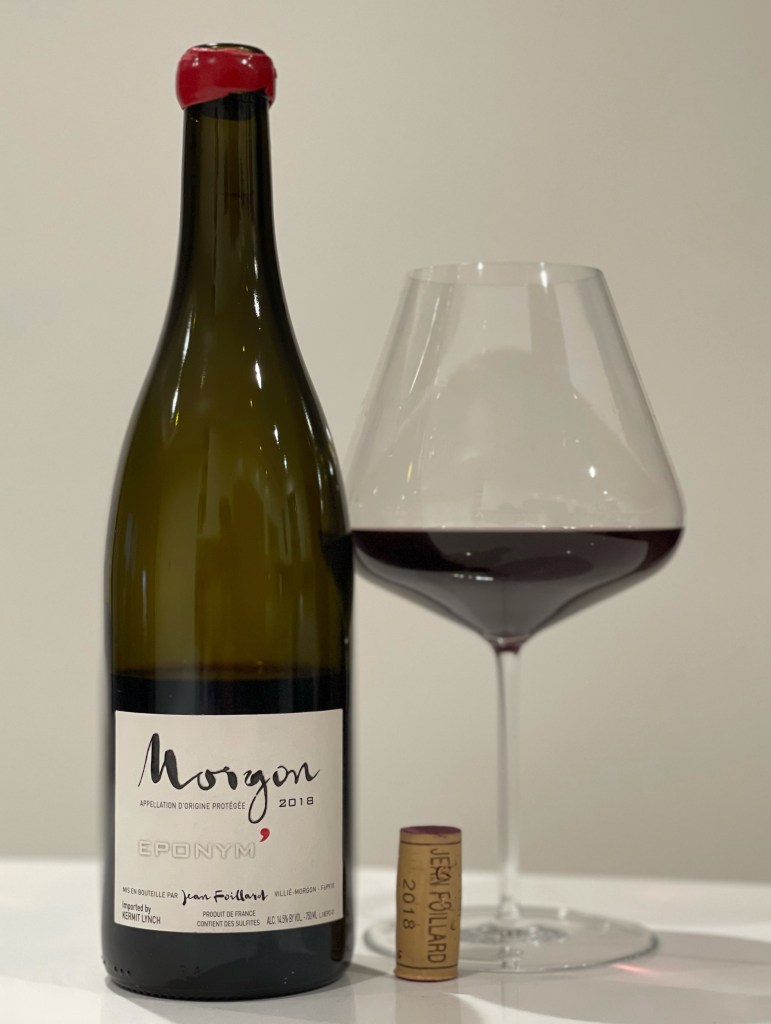
Today’s Wine: 2018 Morgon Eponym

100% Gamay; 14.5% ABV

The 2018 Morgon Eponym is deep purple in color and completely opaque. Given some time to open up in the glass, the wine blossoms with aromas of medium (+) intensity and a nose that showcases black cherry, plum, blackberry, granite, mint, underbrush, pencil shavings, cracked black pepper, and crushed rock mineral. Meanwhile the flavors are of medium intensity and the palate displays notes of black cherry, black plum, anise, red meat, iron, wet gravel, charred green herbs, and smoke. This dry red is medium-bodied with high acidity, low tannins, high alcohol, and a medium (+) length finish. This was somewhat jammy out of the gates, so it definitely needs the air time at this point in its life.

Price: $45. I was a little worried out of the gates with this wine in terms of a value perspective (due to how jammy it came across), however as this opened up over the course of 45 minutes or so the quality and value proposition showcased itself. This is a beautiful Cru Beaujolais while being fairly complex and finessed but with the structure to drink well for several years ahead.

Simple but Tasty California Gamay

Today’s Story: Jolie-Laide

Established by Scott Schultz, Jolie-Laide is a small, boutique winery crafting wines in Sebastopol, California. Jolie-Laide is a French term of endearment for something unconventionally beautiful that translates to “pretty-ugly,” and Scott decided to use it in naming his winery following experiences in the restaurant business. When he worked at Bouchon in Yountville, Scott realized that the majority of people didn’t seem to explore the wine list but rather stuck to Chardonnay, Pinot Noir, or Cabernet Sauvignon. He thought this was a travesty of sorts, given the wonderful varieties including Gamay, Valdiguié, Vermentino, or Trousseau Gris. Eventually Scott transitioned out of the restaurant business and found himself working alongside Pax Mahle, a wildly skilled winemaker in his own right. One year, Pax allowed Scott to make a wine of his own using 1-2 tons of fruit and he decided to use none other than Trousseau Gris because of how fascinating of a variety it is to him. Alas, Jolie-Laide was born and continues to produce magnificent and wildly fun wines today.

When it comes to sourcing his fruit, Scott works with farmers he has known for years who largely follow organic practices and work incredibly unique sites. After harvest, all of the Jolie-Laide red fruit is foot crushed and left whole cluster with some of the varieties (like Gamay) seeing carbonic maceration. Thanks to Scott’s selection of incredible sites, he can be pretty hands-off during the rest of the winemaking process and lets the terroir and fruit speak for itself. Scott lets his wines ferment naturally and, instead of using temperature control, says “we stick things in the sun if we need to get them warm” (source). Furthermore, Scott adds little SO2 when necessary in part because his wines tend to be bottled young to both preserve freshness in the fruit and provide barrels for the following year’s harvest.

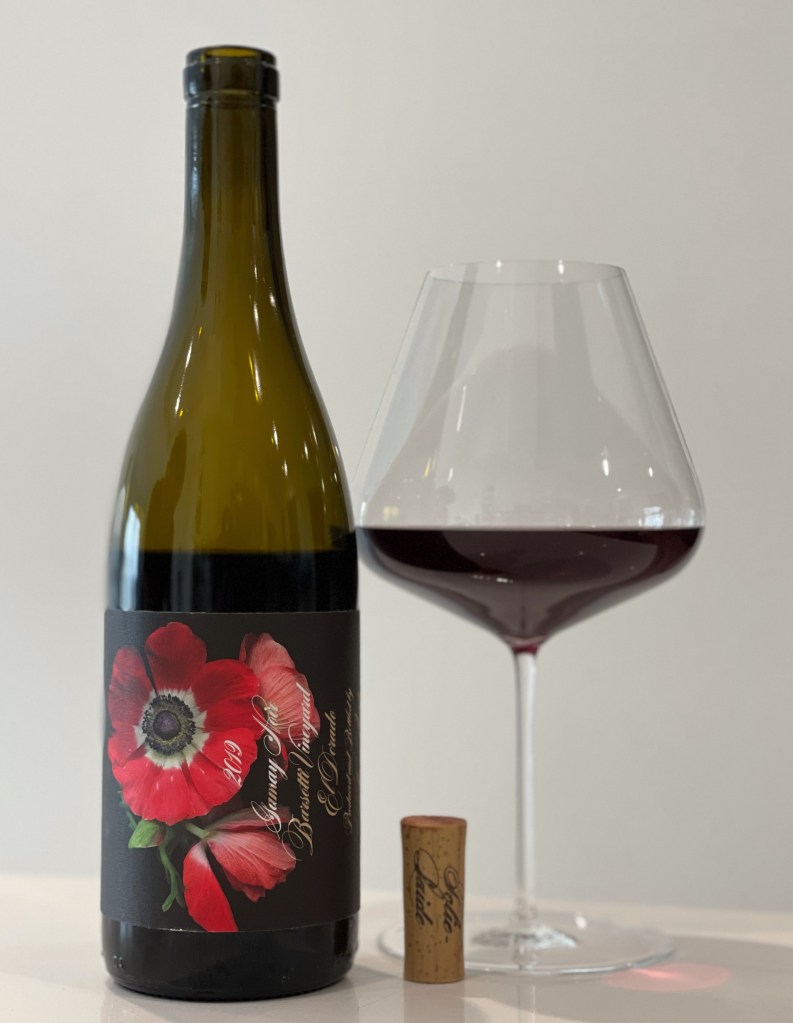
I reviewed a number of wines from Jolie-Laide last year, but wanted to check back in with the Gamay bottling that I haven’t tried yet. For prior reviews, you can check out the 2016 Provisor Vineyard Grenache, 2019 Trousseau Gris, 2016 Halcon Vineyard Syrah, and 2017 Shake Ridge Vineyard GSM.

Today’s Wine: 2019 Barsotti Vineyard Gamay Noir

100% Gamay; 12% ABV

The 2019 Barsotti Vineyard Gamay Noir is pale ruby in color. Given some time to blossom in the glass, this opens with aromas of medium intensity and a nose that showcases notes of cherry, strawberry, red plum, cranberry, and dried underbrush. Meanwhile the flavors are also of medium intensity, with the palate displaying notes of ripe red cherry, strawberry, raspberry, licorice, dried green herbs, and cola. This dry red is light-bodied with medium (+) acidity, low tannins, medium alcohol, and a medium length finish. Though this is a very enjoyable and chuggable wine, I would like to see more depth and complexity to it especially on the nose.

Price: $30. I think this is priced fairly well given how high the quality is and how enjoyable it is to drink. While it’s not the most complex or expressive Gamay I’ve had, it’s perfect for warmer days when you want a red over a white.

Beautifully Pure Amador County Chenin Blanc

Today’s Story: Sandlands Vineyards

Sandlands Vineyards is a small family-owned and operated passion project of Tegan and Olivia Passalacqua established in 2010. Tegan, a winemaker with a proven track record of crafting fantastic old vine Zinfandel at Turley Wine Cellars, branched out into this side project with a focus on ancient and “forgotten” varieties. In the far reaches of California winegrowing in Lodi, Contra Costa County, Santa Lucia Highlands, Amador County, and the more familiar Sonoma Coast, Tegan sources Chenin Blanc, Cinsault, Trousseau, Carignane, Mataro, Syrah, Zinfandel, and other varieties from vines that are at times more than 100 years old. Though these varieties and the vineyards he sources from have been farmed for decades and generations, they oftentimes lay outside of the “norm” for California viticulture and are even mostly planted in decomposed granite (i.e. sand). What’s more, the vineyards Tegan works with are typically head-trained, dry-farmed, and own rooted. Tegan crafts these wines in a traditional and minimally invasive manner, allowing the unique terroir and vine to shine through in each bottling which results in lower alcohol, easy drinking, but complex wines. Production is miniscule and quantities are quoted by the barrel, so these can be hard to find and the mailing list is the easiest way.

I’ve been in love with Sandlands’ wines that I’ve tried, and I previously reviewed the 2018 Lodi Zinfandel, 2018 Lodi Red Table Wine, and 2018 Santa Lucia Highlands Syrah.

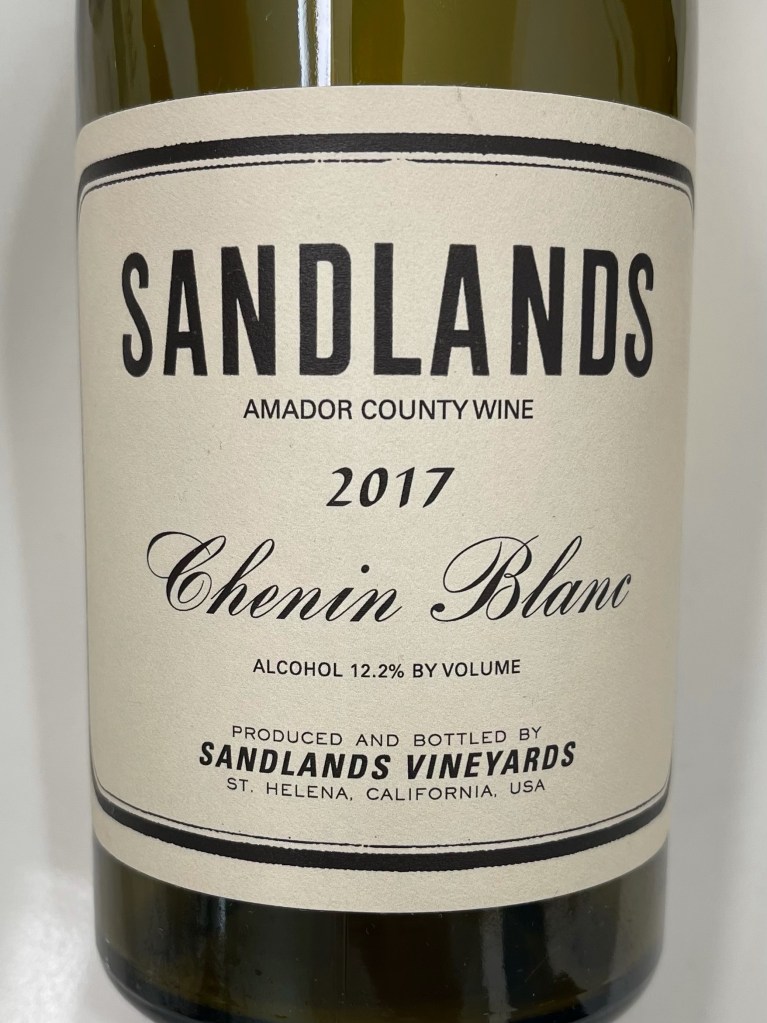
Today’s Wine: 2017 Amador County Chenin Blanc

100% Chenin Blanc; 12.2% ABV

The 2017 Amador County Chenin Blanc is pale gold in color and transparent. The aromas are of medium intensity, with the nose showcasing notes of lemon curd, crisp yellow apple, quince, honeysuckle, honeycomb, wet stone, and saline. The flavors are also of medium intensity, and the palate displays notes of lemon zest, underripe pear, yellow apple, chamomile, honey, crushed rock minerality, and oyster shell. This dry white is light- to medium-bodied with high acidity, medium alcohol, and a long finish. This took some time to come alive in the glass, but once it did the wine did not last long. Very tasty.

Price: $50. I know this is significantly cheaper direct from the winery, though retail pricing in the secondary market seems to be around $50. If you can buy this on the mailing list, don’t hesitate because it is a gorgeous wine that’s both beautifully balanced and fairly complex. As far as price I paid, I have no qualms.

Fresh, Elegant, and Budget-Friendly Red Burgundy

Today’s Story: Marchand-Tawse

Marchand-Tawse is a Burgundian négociant created through a collaboration between Pascal Marchand and Moray Tawse. Both Pascal and Moray are French Canadians, making their success in Burgundy somewhat unusual.

Pascal Marchand comes from a background in wine (after working a few years as a merchant sailor on freighters in the Great Lakes), having taken over Clos des Epeneaux in Pommard in 1985 at the age of 22. Pascal was one of the early adopters of organic and biodynamic viticulture in Burgundy, bringing heightened quality to Clos des Epeneaux and world renown to its name. Jean-Charles Boisset later approached Pascal to run his family’s Domaine de la Vougeraie in 1999, and he remained there until 2006 when desiring more freedom in his ventures. Pascal took over at Domaine Jean Fery, all the while setting the stage for his own label that would eventually become Marchand-Tawse.

Moray Tawse, on the other hand, has a background in finance and co-founded First National in Canada which focuses on real estate lending. He has had a long-standing love of wine, however, which led him to establish Tawse Winery which is one of Canada’s leading wineries. Thanks to his love of Burgundy, Moray approached Pascal in 2010 and the two established their partnership.

Marchand-Tawse sources fruit from a great number of vineyards, most of which are either organically or biodynamically farmed. The négociant produces a wide range of wines, spanning appellation and village bottlings up to some of the greatest Grand Crus. Pascal’s winemaking style is rather traditional, seeking to have the fruit and terroir express themselves in a most honest and transparent form. Much of the fruit is left 100% whole cluster and not destemmed before fermentation in stainless steel tanks. Furthermore, aging for many of the wines occurs in minimal or even 0% new French oak barrels and there is no fining or filtration before bottling.

I previously reviewed the 2016 Coteaux Bourguignons from Marchand-Tawse, which is a lovely Gamay offering exceptional value.

Today’s Wine: 2017 Côte de Nuits Villages

100% Pinot Noir; 13% ABV

The 2017 Côte de Nuits Villages is pale ruby in color. This needs about 45 minutes to open up at this point, but once it does you find an elegant, fresh, and vibrant expression of Pinot Noir. The aromas are of pronounced intensity, with the nose showcasing notes of cherry, strawberry, red rose, cured meat, dried gravel, underbrush, and white pepper. Meanwhile the flavors are of medium (+) intensity and the palate displays notes of black raspberry, cherry, strawberry, red licorice, dried tobacco, dried green herbs, and crushed rock minerality. This dry red is light- to medium-bodied with medium (+) acidity, medium (-) tannins, medium alcohol, and a medium (+) length finish. 133 cases produced.

Price: $40. This is a red Burgundy that offers very, very good value. It’s incredibly difficult nowadays to find quality red Burgundy for this price-point, and the expression of variety and terroir here is very well done. This is no doubt young, but the elegance and vibrancy are already hard to resist.

Fruity, Floral, and Refreshing Summer White

Today’s Story: Arnot-Roberts

Arnot-Roberts is a boutique winery established in 2001 by Duncan Arnot Meyers and Nathan Lee Roberts, two childhood friends who grew up together in Napa Valley. After college, Nathan started working with his father as a cooper of oak wine barrels while Duncan pursued winemaking throughout Napa and Sonoma counties. Arnot-Roberts began with a single barrel of wine the duo produced in their basement and over time grew through the purchase of fruit from renowned vineyards in Napa, Sonoma, El Dorado, and Amador counties as well as the Santa Cruz Mountains. When selecting vineyards, Arnot-Roberts makes sure the farmers are both “passionate and conscientious” because their goal is to produce small quantities of honest, terroir-driven single-vineyard wines which truly express their unique place. The winemaking style is a mix of Old World and New World, with use of indigenous fermentation, little or no new oak, and often whole cluster.

Arnot-Roberts is a producer I keep coming back to, as I previously reviewed the 2016 Que Syrah Vineyard, 2018 North Coast Trousseau, and 2018 Watson Ranch Chardonnay.

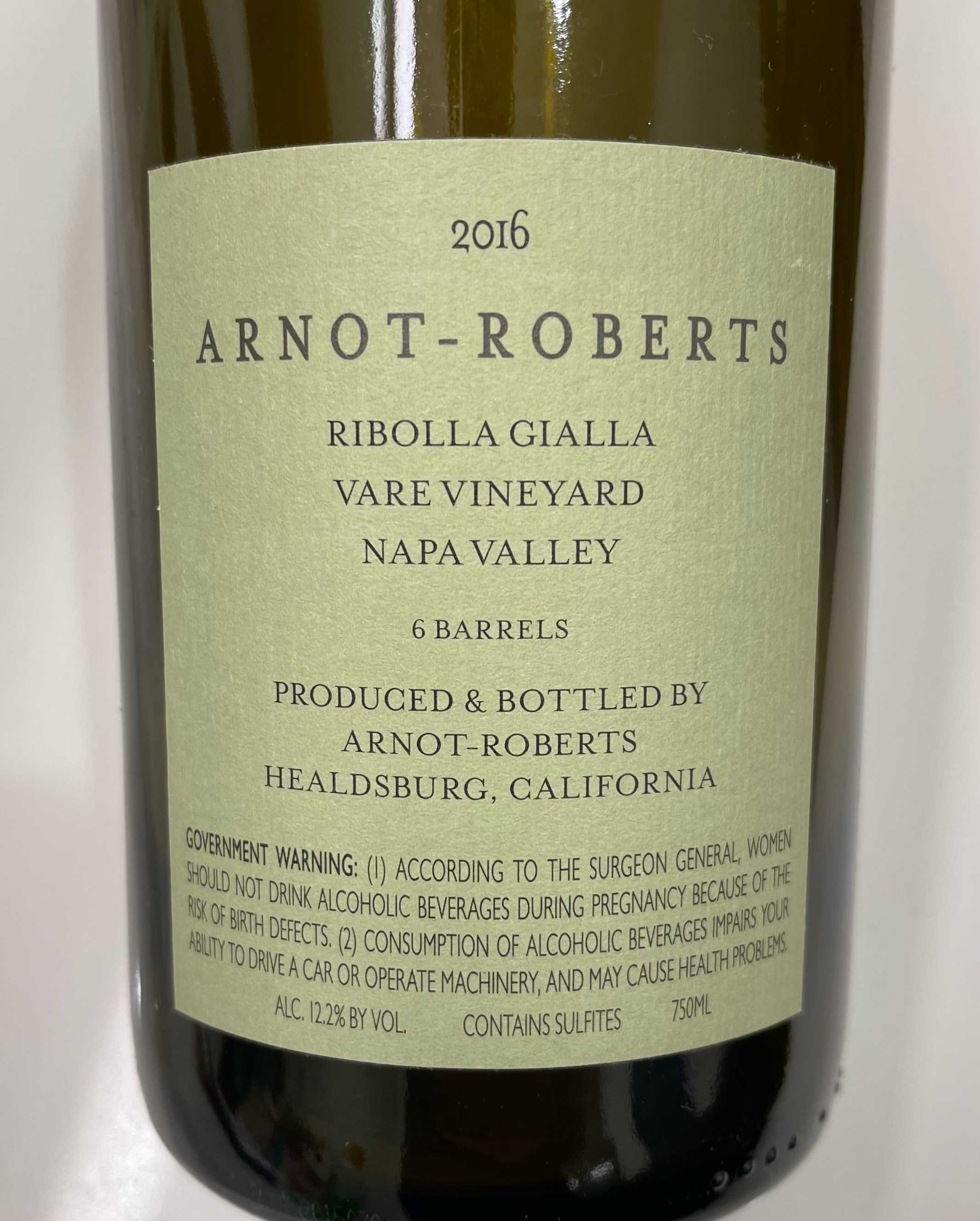
Today’s Wine: 2016 Vare Vineyard Ribolla Gialla

100% Ribolla Gialla; 12.2% ABV

The 2016 Vare Vineyard Ribolla Gialla is pale gold in color and transparent. The delicate and inviting aromas are of medium intensity, and the nose showcases notes of pear, lemon zest, green apple skins, white lily, beeswax, and delicate dried green herbs. Meanwhile the flavors are also of medium intensity and the palate displays notes of fresh pear, green apple, lemon peel, tangerine, white florals, dried thyme, and chalky mineral. This dry white is light- to medium-bodied with medium (+) acidity, medium alcohol, and a long finish. Very refreshing and enjoyable, so I could see this becoming a staple for my summer. 6 barrels produced.

Price: $44. Though this isn’t inexpensive and there are better “values” out there, I believe this is very fairly-priced and I would certainly buy it again over and over. I think this is a very nice representation of the Ribolla Gialla variety, and the beauty and purity in this wine is quite impressive.